
Used by NASA · the FBI · the U.S. Navy · Since 1999
Spotlight On eProvided Founder Bruce Cullen
- No Data, No Data Recovery Fee
- 98% success rate
- Las Vegas lab, customers worldwide
- Free evaluation, no obligation
Who Is eProvided’s Founder?
Bruce Cullen founded eProvided in 1999, more than 27 years ago. He built it into a chip-level flash recovery lab in Las Vegas with a 98% success rate. Its work has been used by NASA, including the Helios mission data recovered after 6 weeks in saltwater, the FBI and the U.S. Navy.
“I started this lab to fix the cases nobody else wanted. That is still how I pick the work.” — Bruce Cullen, founder, eProvided
eProvided stands out as a premier data recovery service provider. Founded by industry expert Bruce Cullen, the company has established itself as a leader in the field. Today, we shine a spotlight on Bruce, a key figure in our success story. The primary lab is based in Las Vegas. Experienced technicians handle everything from forensic data recovery to retrieving lost files, including recovering files from NAND, USB and other flash memory drives. Notably, they repair everything from damaged microchips to external drives.
Who Founded eProvided?

Bruce Cullen is the founder of eProvided, the data recovery company he opened in 1999, more than 27 years ago. He built the firm into a chip-level and flash-memory recovery specialist whose work has been used by NASA, the FBI and the U.S. Department of the Navy, with a 98% success rate. eProvided’s full range of chip-level and flash recovery is available through its professional data recovery services page. Before eProvided, he worked on Wall Street with A.G. Edwards & Sons Securities and as a Quality Assurance Engineer at Ingram Micro, and that testing background shaped how the lab works. He focused the company on flash memory at a time when few labs worked at the chip level. Under his lead, the lab has handled saltwater-damaged NASA mission data, forensic cases for law enforcement, and everyday cases from students, photographers and small businesses. He also set the No Data, No Data Recovery Fee policy that the company still runs on today.
- Who Founded eProvided?
- 8 Facts About Bruce and eProvided
- eProvided Review Facts
- Bruce Beyond the Lab
- Career Before and Beside eProvided
- NASA Data Recovery in Plain Terms
- Leveraging Experience and Passion
- Who Owns eProvided?
- 1999 to Today
- Cases Other Labs Gave Up On
- What You Can Expect
- What Our Customers Say
- Frequently Asked Questions
- Work With Bruce’s Lab
- Related Recovery Services
8 Facts About Bruce and eProvided
1. NASA’s Helios Mission
 Enlarge
Bruce had great success from the start after opening eProvided more than 27 years ago. NASA contacted him after the Helios mission crashed in the Pacific Ocean, to recover the lost Helios mission data, which had been submerged under saltwater for 6 weeks. eProvided successfully recovered the saltwater-damaged mission data. The lost data included very important environmental data collected worldwide by this mission.
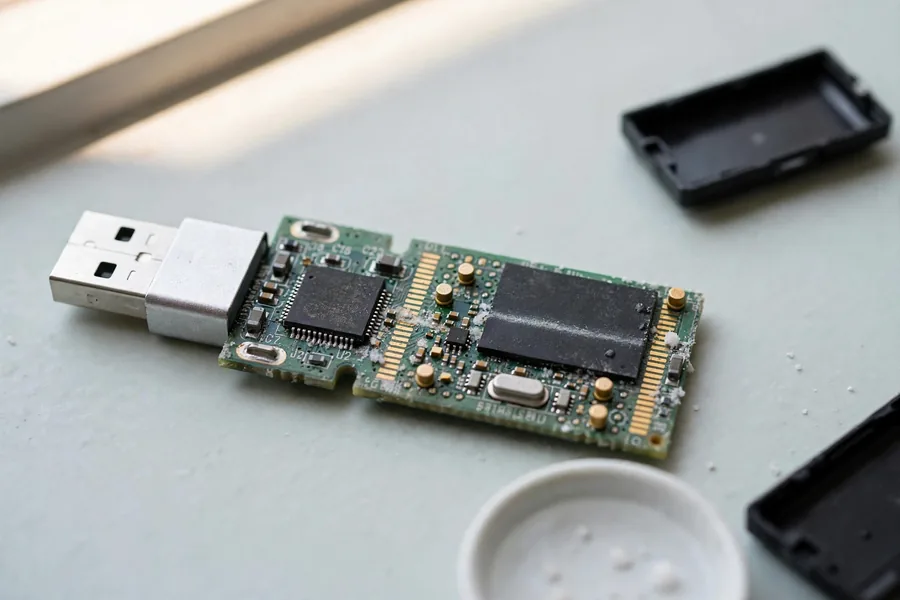
Helios was an electrically powered flying wing with a 247-foot wingspan, built mostly of composite materials. On August 13, 2001, it reached 96,863 feet, a world record for sustained horizontal flight by a winged aircraft. On June 26, 2003, it broke up and fell into the Pacific about ten miles west of Kauai during a checkout flight. The Wikipedia article on the AeroVironment Helios Prototype gives the full flight history. Salt water is hard on any electronics for a plain reason: when sea water dries, the salt stays behind on the board as white crystals, as the illustration shows.
2. Popular Mechanics, 2005
 Enlarge
eProvided had a spotlighted story featured in Popular Mechanics Magazine, where they discussed the internal onboard memory in digital cameras. At the time, reading the memory of a failed camera or flash drive at the chip level was still new enough to be news, and the article quoted Bruce by name. Our Popular Mechanics page shows the 2005 scan and the story around it.
That same chip-level work is still the core of the lab today. USB drives, SD cards and microSD cards keep their data on memory chips that the lab can read directly when the rest of the device fails, which is why flash media has stayed eProvided’s specialty for more than two decades.
3. NASA’s Call About a Data Glitch
NASA has also called founder Bruce Cullen directly regarding a NAND data-transmission glitch on the Mars rover, a case that made national news, and eProvided was also contacted about data storage for the Nancy Grace Roman Space Telescope program.
eProvided Review Facts
4. Unexpected clients. eProvided has some interesting clients, and they often show up and knock unexpectedly. Its casework includes a case for the United States Bioterrorism Department.
5. National forest wildfire. U.S. special agents worked with eProvided to recover crucial information following a significant forest fire that ravaged a substantial area of a United States National Forest. The wildfire not only devastated wildlife habitats and threatened local ecosystems but also claimed vital resources and data stored in facilities affected by the blaze. The recovery aimed to retrieve lost digital records that could provide insight into the fire’s cause and help with future prevention and recovery strategies.
6. Wall Street and quality assurance. Bruce started his career after his time on Wall Street with A.G. Edwards & Sons Securities Inc. He also has prior experience as a Quality Assurance Engineer at the Ingram Micro headquarters in Santa Ana, CA.
Bruce Beyond the Lab
7. Music producer. In his spare time, Bruce is a music producer. He has released electronic dance music that consistently makes it to the top 100 charts. His most recent vocal trance release is Bruce Cullen & Paula Alcasid – Upside Down. His track ‘Princess Bay’ was released on ITWT, a label owned by the famous electronic dance music pioneer Tiësto. ‘Princess Bay’ is named after a quiet inlet on St. John, the island of the Taíno petroglyphs at Reef Bay. Tiësto opened for the Olympics ceremonies in 2004. Another Bruce Cullen release in 2019 came out with Armin van Buuren’s Armada Music & A State of Trance (ASOT): Bruce Cullen – Stellar Stream. Armada Music is the largest independent record label in the world.
8. Hollywood. Bruce, a SAG/AFTRA member, spent two decades working in Hollywood. He appeared on Days of Our Lives, In Living Color and several NBC miniseries, among other projects. With a solid background in film and production, he studied stagecraft and TV & Radio Production at Moorpark College, as well as at UNH and Cal State Fullerton.
| Bruce Cullen at a Glance | |
|---|---|
| Area | Highlights |
| Founded eProvided | 1999, Las Vegas lab |
| NASA work | Helios mission data after 6 weeks in saltwater (the aircraft fell into the Pacific on June 26, 2003) |
| Press | Popular Mechanics Magazine, 2005 |
| Before eProvided | A.G. Edwards & Sons Securities; Quality Assurance Engineer at Ingram Micro |
| Music | Releases on ITWT and Armada Music / A State of Trance |
| Film and TV | SAG/AFTRA member; Days of Our Lives, In Living Color, NBC miniseries |
Bruce Cullen’s Career Before and Beside eProvided
Bruce lists several stages in his working life besides the lab. The table sets each stage next to one public fact about the organization or the show, so the context can be checked. It does not date Bruce’s own years, because this page prints no dates he has not published.
| The Founder’s Other Stages, With Public Context | ||
|---|---|---|
| Stage | What Bruce did | Public context |
| Wall Street | Worked with A.G. Edwards & Sons Securities. | A.G. Edwards was a St. Louis brokerage founded in 1887. Wachovia acquired it, and it was gone as an independent firm by 2007 (A.G. Edwards, Wikipedia). |
| Quality assurance | Quality Assurance Engineer at Ingram Micro in Santa Ana, CA. | Ingram Micro, founded in 1979, distributes information technology products. Its headquarters is now in Irvine, California (Ingram Micro, Wikipedia). |
| Television | SAG/AFTRA member who appeared on Days of Our Lives, In Living Color and NBC miniseries. | Days of Our Lives began on NBC on November 8, 1965 (Days of Our Lives, Wikipedia). In Living Color aired on Fox from 1990 to 1994 (In Living Color, Wikipedia). |
| Music | Producer with releases on ITWT and Armada Music. | The release links are in “Bruce Beyond the Lab” above. |
| The lab | Opened eProvided in 1999 and still works the bench. | The timeline below puts the opening next to dated flash-storage firsts. |
A quality assurance engineer writes down what a product should do, tests it, records every failure and tests again after a fix. The lab keeps those habits in plain form. Each case opens with a no-cost look at the device, no work starts until the customer approves a quote, and every case carries a dated status trail the customer can read. The cases further down show that trail, including the ones that ended without data.
NASA Data Recovery in Plain Terms
People who search for a NASA data recovery specialist usually want to know what was actually done. The table says what the lab did on each job and stops there.
| What the Lab Did for NASA | ||
|---|---|---|
| Job | What the lab did | Public reference |
| Helios Prototype | Recovered the mission data after the storage had spent 6 weeks under saltwater. | Aircraft history in fact 1 above. |
| DAVINCI, a Venus mission | Recovered pre-launch data from a hard drive. This was before launch only. Nothing in flight is involved. | NASA’s DAVINCI mission page |
| JPL | Work done as part of a NASA case. | Part of the NASA record. |
NASA describes DAVINCI as a Venus spacecraft that sends a probe down through the planet’s atmosphere to sample its chemistry, temperature, pressure and winds. Data that exists before a launch sits on ordinary drives, and ordinary drives fail. That is the part of the job the lab handled.
Bruce Cullen, Leveraging Experience and Passion
It’s no secret. Bruce has a passion for providing high-quality data recovery and repair services, and he puts his experience and that passion to work together. That is why eProvided has 27+ years of experience in data recovery services.
Data loss isn’t just about the loss of files. It’s about losing critical business information, irreplaceable photos, and work that took painstaking hours of dedication. eProvided is proud to be a company dedicated to seeing past the mere technicalities of the job. Above all, the team takes pride in strong communication with all its clients and in trying every possible avenue to recover as much information as possible. As a result, eProvided has strong customer reviews from hundreds of satisfied customers.
Who Owns eProvided Data Recovery in Las Vegas?
Bruce Cullen founded eProvided in 1999 and leads it today. He still works the bench in the Las Vegas lab at 9527 Knopfler Ln, where devices are accepted by appointment, and customers also ship devices in from around the world. As a data recovery founder who stayed at the bench, he answers for the lab’s policies, including the pay-only-on-success rule.
Over the years, professionals at IBM, GE, HP, Raytheon, Honeywell, Ford and Cisco have sent devices to the lab. So have people at the U.S. Army, the Navy, the Naval Research Laboratory and the Coast Guard, at the CDC, the FAA and the National Park Service, and at universities such as MIT, Harvard, Stanford and Michigan. That list says a person at each place used the lab. It does not say the organization signed a contract, and a student or a photographer gets the same free evaluation as any of them. The Las Vegas data recovery lab page in the FAQ below has the address, hours and directions.
1999 to Today: What Was New When Bruce Opened the Lab
eProvided opened in the same year the SD card and the first USB flash drive patent application appeared. The table puts the lab’s own dates next to dated, public facts about the media it works on, starting with the invention of the chip type inside most flash media.
| Flash Storage and the Lab, 1987 to 2005 | ||
|---|---|---|
| Date | What happened | Source |
| 1987 | Fujio Masuoka and colleagues present NAND flash at the IEEE International Electron Devices Meeting in San Francisco. NOR flash had been presented in 1984. | Wikipedia, Flash memory (linked in the intro above) |
| 1994 | SanDisk first manufactures CompactFlash cards. | CompactFlash, Wikipedia |
| April 5, 1999 | M-Systems files a patent application for a flash disk that connects through USB. It is granted on November 14, 2000. | USB flash drive, Wikipedia |
| August 1999 | SanDisk, Panasonic and Toshiba introduce the Secure Digital (SD) card. | Secure Digital, Wikipedia |
| 1999 | Bruce Cullen opens eProvided. | The lab’s own record |
| 2000 | The M-Systems DiskOnKey, an early USB flash drive, dates from this year. | Wikipedia, USB flash drive (linked above) |
| June 26, 2003 | NASA’s Helios Prototype breaks up and falls into the Pacific off Kauai. | Wikipedia, Helios Prototype (linked in fact 1) |
| 2005 | Popular Mechanics features eProvided and quotes Bruce by name. | The 2005 scan, shown in fact 2 |
Cases Other Labs Gave Up On
 Enlarge
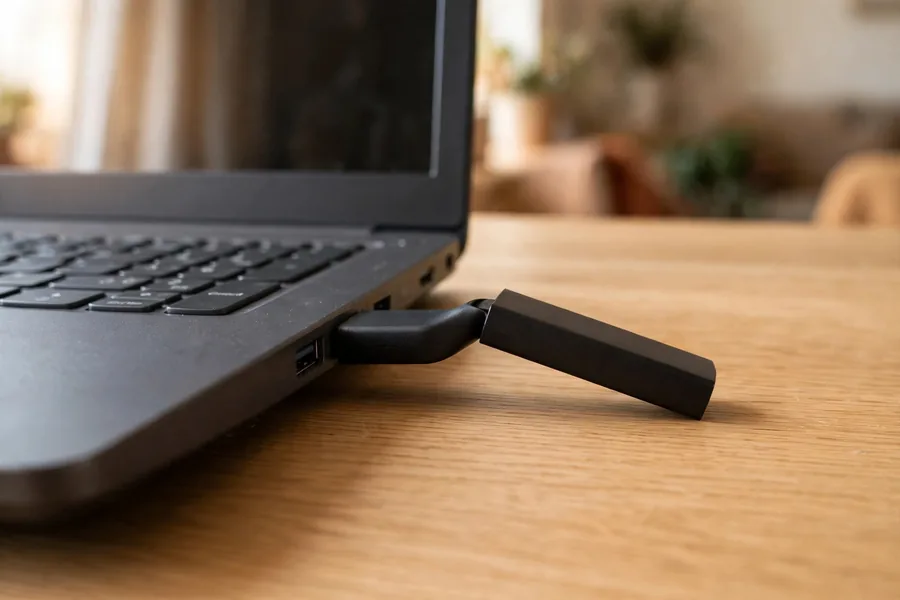
Each case below comes from our own files and began with someone else saying no. Each quote is what the customer typed into the case form, with names and contact details taken out. The outcome is what the record shows, including the cases that did not come back. An account is not an outcome, and nobody can promise one without the device in hand.
Bent flash drive called “fried” by another company, October 2011
The customer wrote:
“The USB was front loaded to the tower located under a desk. I had spun in the chair and bent the USB in the tower with my knee. Now it does not load or register with the computer. I had tried to have the data recovered by another company … who claim that the data is unrecoverable do to the chip being ‘fried’.”
Case DU3TX7. The drive arrived on October 10, 2011. Our record shows a successful recovery on October 12, and the files went back to the customer as a download of about 2.7 GB on October 13. Our USB drive recovery solutions guide shows how the parts of a stick fit together.
Wedding photos on an xD card, January 2012
“I have a faulty XD card that will not read on any card reader. I have taken it to several repair places but they have not had any luck. You’re my last hope of trying to retrieve these photos. The data on this memory card are of a wedding.”
Case DZJ49K. The card arrived on January 19, 2012. Our record shows a successful recovery the next day, and the card shipped back on January 25.
USB drive declared “completely unrecoverable” elsewhere, March 2013
The customer quoted what a recovery company had told them:
“it has been determined that the data is completely unrecoverable due to physical media damage we are unable to bypass.”
Case LXEU9R. The drive arrived on March 1, 2013. This one did not come back: on March 19 our record shows no successful recovery, with too much internal damage to the device.
GoPro microSD card with a tiny crack, May 2021
“My card has a tiny crack through the front of the card. I was told it was unrecoverable. But I don’t believe that my card that had barely any damage is unrecoverable. I want another person to look at it and try to work with it. It has all my go pro vacation videos …”
Case PT2P3X. The card went into the lab in May 2021 for a direct internal data extraction. The record shows it produced no data: the damage was too great. The card was prepared for return on June 1, 2021. A microSD card is sealed, so a crack in its plastic can hide a crack in the memory chip itself, and only a microscope check tells which. Our broken SD card recovery guide covers cracked and snapped cards in more detail.
More Cases From Our Files, 2010 to 2018
The same rules apply to every record below. Each quote is the customer’s own form text with names, software brands and file names taken out, each date comes from the case record, and the outcomes include the ones that did not come back.
Flash drive through the washing machine, June 2012
“USB Drive went through washing machine.”
Case IOBBYH. The drive arrived on June 25, 2012, and the first, basic attempt did not bring the files back. The record shows a success recovering data on June 26, and the device shipped back on June 29. A wash cycle is a hard way to lose a stick, and this record shows it is not always the end.
Plug bent to 45 degrees when a laptop fell, January 2013
“Flash drive was sticking out of the laptop when the laptop fell on the floor. Bent the USB connection at a 45 deg angle breaking 3 of the 4 connecting pins … There is an assortment of documents, pictures, spreadsheets, etc.”
Case 99O2OW. The drive arrived on January 10, 2013. The basic attempt failed on January 11, and the record shows a success recovering data on January 14, the same day the device shipped. Our USB drive damage guide explains how damage severity sets the odds.
Flash drive chewed by a dog, May 2010
“Dog destroyed flash drive that had accidentally fallen on floor. Memory chip (large black square looking thing towards back) has one large crack all the way through. Have been told by some it can be recovered, while being told otherwise by others.”
Case KOFHX7. The drive arrived on May 21, 2010. This one did not come back: on June 3 our record shows no successful recovery, because the memory chip was cracked all the way through, as the customer had seen. The device shipped back. Some cracks do end a recovery, and an honest lab says so.
Cracked microSD card reporting 32 MB, April 2012
“MicroSD card has a physical crack on one side. It is being recognizable as 32MB, with no data. I suspect that flash crystal itself is not damaged.”
Case SL92AF. The card arrived on April 9, 2012, and the basic attempt failed on April 12. A note to the customer on April 17 explains that the memory chip itself was cracked. The customer chose not to go further, and the card shipped back on May 8. Nobody pays for work that has no chance, and the customer decided with the facts in hand.
Reformatted thumb drive after two software tools, May 2014
“Accidentally reformatted a thumb drive that had important spreadsheets which had not been backed up. The drive has not been written to since the reformat. I have tried downloaded programs which were able to recover most files, but of course could not find the ones that matter.”
Case 7UQ0EC. The drive arrived on May 11, 2014. On May 14 our note says the files could not be located and recovered, and the best guess was that they had been overwritten in the main flash memory. The drive went back at no cost on May 15. The customer did the right thing by not writing to it again, and the record still ended without the files.
Connector broken off and soldered by a repair shop, March 2015
“The flash drive was in my laptop and the laptop fell. The USB interface connector was broken off of the flash drive PCBA. A USB dongle was soldered to the PCBA by qualified PCBA repair technicians in an effort to recover the data. The USB drive was unable to connect to a PC after the repair and no further troubleshooting was attempted.”
Case OXN2ZI. The drive arrived on March 2, 2015, and the record shows a successful recovery on March 3, when the device shipped back. An earlier repair attempt did not rule it out.
Thumb drive a local shop could not finish, September 2018
“Laptop fell while thumb drive was still connected. Took thumb drive to a local shop and they were not able to complete the job after they tried to solder some jumpers.”
Case AHLN6E. The drive arrived on September 20, 2018. The lab recovered the files, and on November 19, 2018 the customer received a download of about 1.13 GB.
| What the Record Shows, Side by Side | |||
|---|---|---|---|
| Case | Date | What happened first | Result in our record |
| KOFHX7 | May 2010 | Dropped, then chewed by a dog; chip cracked through | No successful recovery |
| SL92AF | April 2012 | Cracked microSD card; chip cracked | No recovery; card returned |
| IOBBYH | June 2012 | Washing machine cycle | Success recorded June 26 |
| 99O2OW | January 2013 | Plug bent 45 degrees in a fall | Success recorded January 14 |
| 7UQ0EC | May 2014 | Reformatted; two software tools tried | Not recovered; likely overwritten |
| OXN2ZI | March 2015 | Connector broke off; shop soldered a dongle | Success recorded March 3 |
| AHLN6E | September 2018 | Local shop tried soldering jumpers | Recovered; download sent November 19 |
On Your Second or Third Opinion: What Not to Do
- Do not accept “unrecoverable” without a look at the chip. On USB sticks and cards, only a memory chip cracked through, broken off or crushed ends a recovery; a bent plug or a dead controller does not.
- Do not run recovery software on a device that is not detected. Software reads only what the device shows, and an undetected device shows nothing.
- Do not plug a bent or cracked device into more computers. Each insert is another chance for the plug or board to shift.
- Do not agree to a format when the computer asks. A format writes new structure onto the device and can bury the old one; see what to do first in our memory card recovery guide.
- Do not pay for the same diagnosis twice. Ask the next lab for a free evaluation and a firm quote before any work begins.
What Can You Expect from eProvided?
 Enlarge
So, need to hire eProvided for file recovery services? Overall, here is what you can expect:
- Recovery within approximately 1 to 3 days or less. Difficult projects can take an extra 1 to 3 days or more.
- A free evaluation opens every case, and no work starts until you approve a firm quote. The Data Recovery Pricing page gives a full cost breakdown.
- eProvided works on all types of storage and media devices, including cell phones and solid state drives. The method depends on the device: memory cards and USB drives can be read at the chip level, while modern phones and SSDs need board-level or original-controller work.
- Unlike file recovery software, the lab can work on devices that are physically damaged and no longer detected.
- eProvided is one of a handful of service providers dedicated to properly recovering small, mobile devices. To name a few: external USB drives, microSD cards, flash memory cards, CompactFlash, USB devices and SD cards, and the lab can also recover CD, DVD and more.
- If the technicians are unable to recover any data, you won’t be charged. You are only charged if they recover what you do not otherwise have and need.
Trust your data recovery to a proven pro, and contact eProvided today.
If the failed device is a solid state drive, our SSD drive failure guide explains why it needs original-controller work rather than a chip read.
What Our Customers Say
Recovery Services for Every Storage Device Class
Bruce’s lab covers every class of failed storage, along with NAND flash chip-off recovery for USB sticks and memory cards. Each class has its own page:
- snapped or dead USB sticks
- failed NVMe and SATA drives
- clicking or failed hard drives
- damaged SD and CompactFlash cards
- cracked microSD cards, including monolithic cards
Frequently Asked Questions
Work With the Lab Bruce Built
The same bench that recovered NASA’s Helios data will look at your device. The evaluation is free, and you pay nothing if nothing comes back.
Start My Free Evaluationor call (866) 857-5950
Related Recovery Services
The work Bruce built the lab around: