
Virgin Islands National Park · St. John, U.S. Virgin Islands
The Reef Bay Petroglyphs of St. John, and Why They Inspire Our Mark
- Every fact cited to published public sources
- Carved by Taíno ancestors, most scholars agree
- How to visit without harming the stone
- eProvided: 98% success rate since 1999
What are the Reef Bay petroglyphs?
The Reef Bay petroglyphs are rock carvings at a waterfall pool off the Reef Bay Trail in Virgin Islands National Park, St. John. Most scholars attribute them to Taíno ancestors, and most are dated to about AD 1100 to 1400. The carvings are thought to be water symbols and images of ancestors.
Sources: National Park Service public pages, Clio, National Register of Historic Places (1982).
Deep in the Reef Bay valley on St. John, at the foot of a waterfall, faces and spirals are carved into dark basalt just above a still pool. This page shares what published public sources say about them. It also explains a smaller thing. A spiral drawn after one of these carvings has become the quiet mark of our data recovery company, and we want to be open about why. Our daily work is reading data that damage and time have made faint, and the first rule is the one the park teaches: never make a faint thing worse. It is why we warn people about the risks of DIY recovery software on a failing drive.
Take the side trail at mile 1.6 of the Reef Bay Trail to a waterfall pool. The carvings there, most likely by Taíno ancestors, show spiral “eyes”, ringed-eye faces and rows of small pits. The site joined the National Register of Historic Places in 1982. Never touch, rub or chalk the stone.
Where the Reef Bay Petroglyphs Are
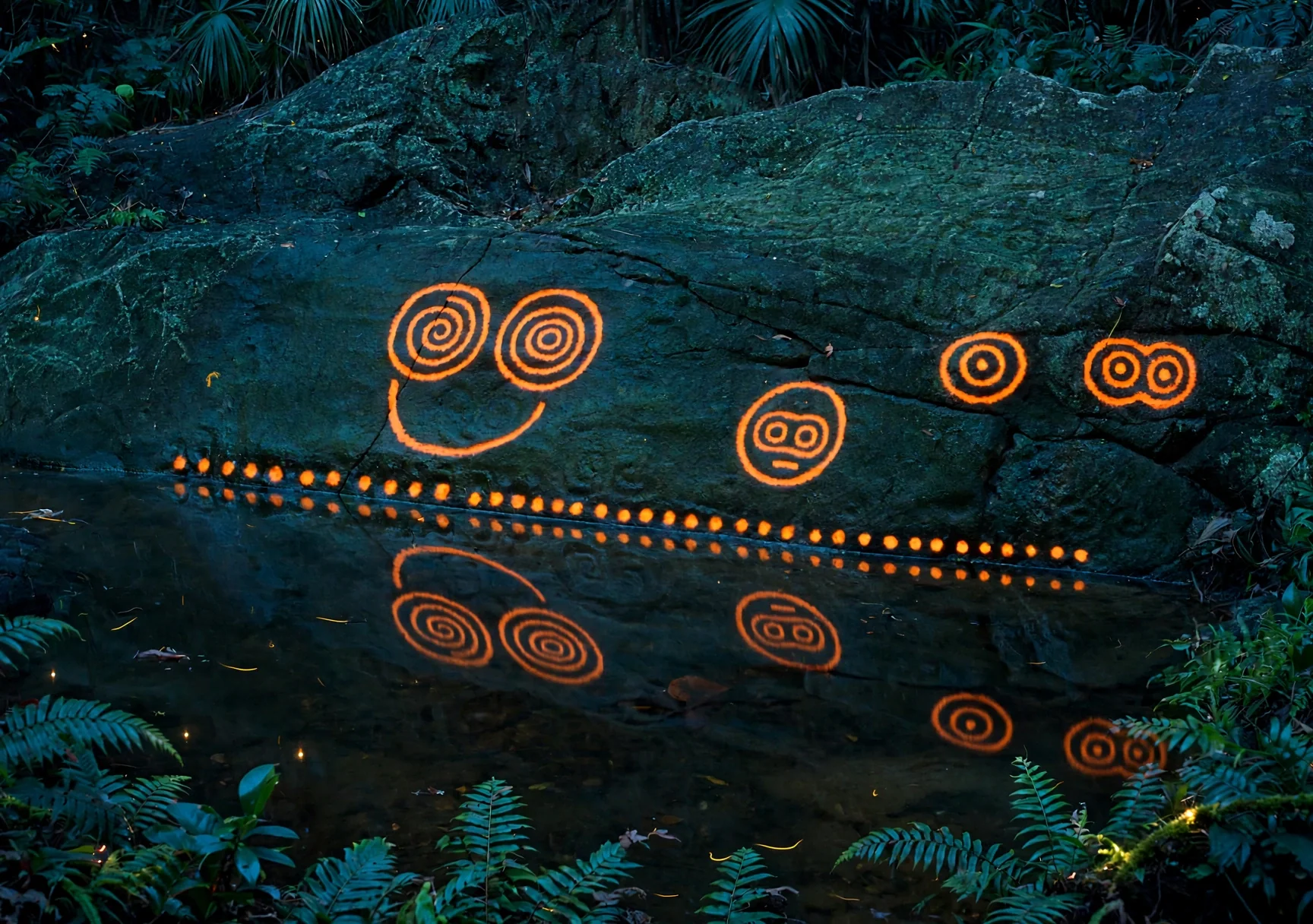
The carvings are inside Virgin Islands National Park on St. John. The Reef Bay Trail descends through shady, moist forest past the ruins of four sugar estates. Signs along the way name the trees and plants and their traditional uses, and the trail ends at the Reef Bay Sugar Estate, with its old buildings and steam-powered machinery. According to the National Park Service, a side trail at mile 1.6 leads to a waterfall and petroglyphs attributed to early Taíno people. The carvings are at the upper waterfall of the Reef Bay valley, on dark rock just above a pool of fresh water, so many of them show their reflection in the pool. The site was listed on the National Register of Historic Places as the “Petroglyph Site” on July 7, 1982. On the north shore, Trunk Bay was named the world’s No. 1 beach by The World’s 50 Best Beaches in 2024, with Cinnamon Bay close by. Many beach visitors never learn that these carvings are on the same island.
What the Carvings Show
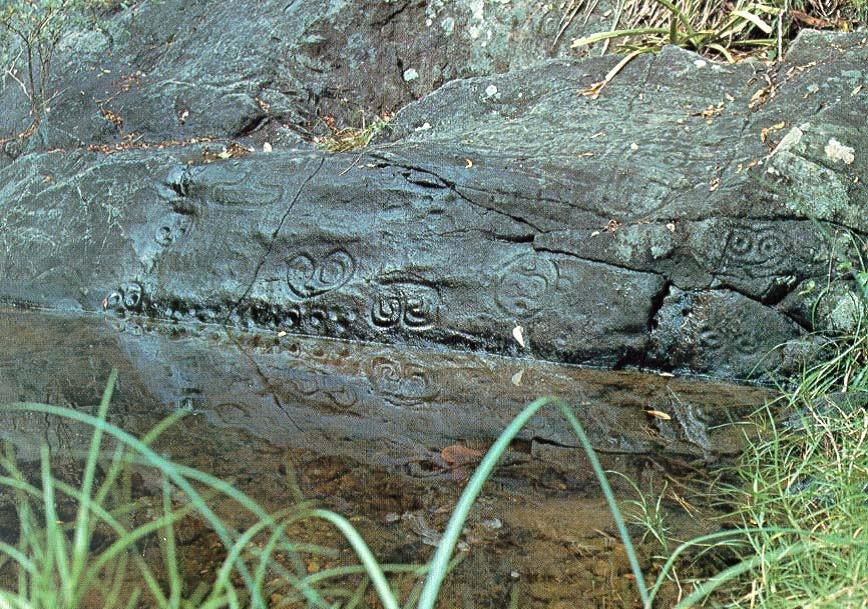
The carvings are shallow grooves pecked and smoothed into the rock, never painted. Time has softened them, so in flat light many are hard to see. Researchers offer their meanings with care, as interpretation rather than certainty.
The Double Spiral
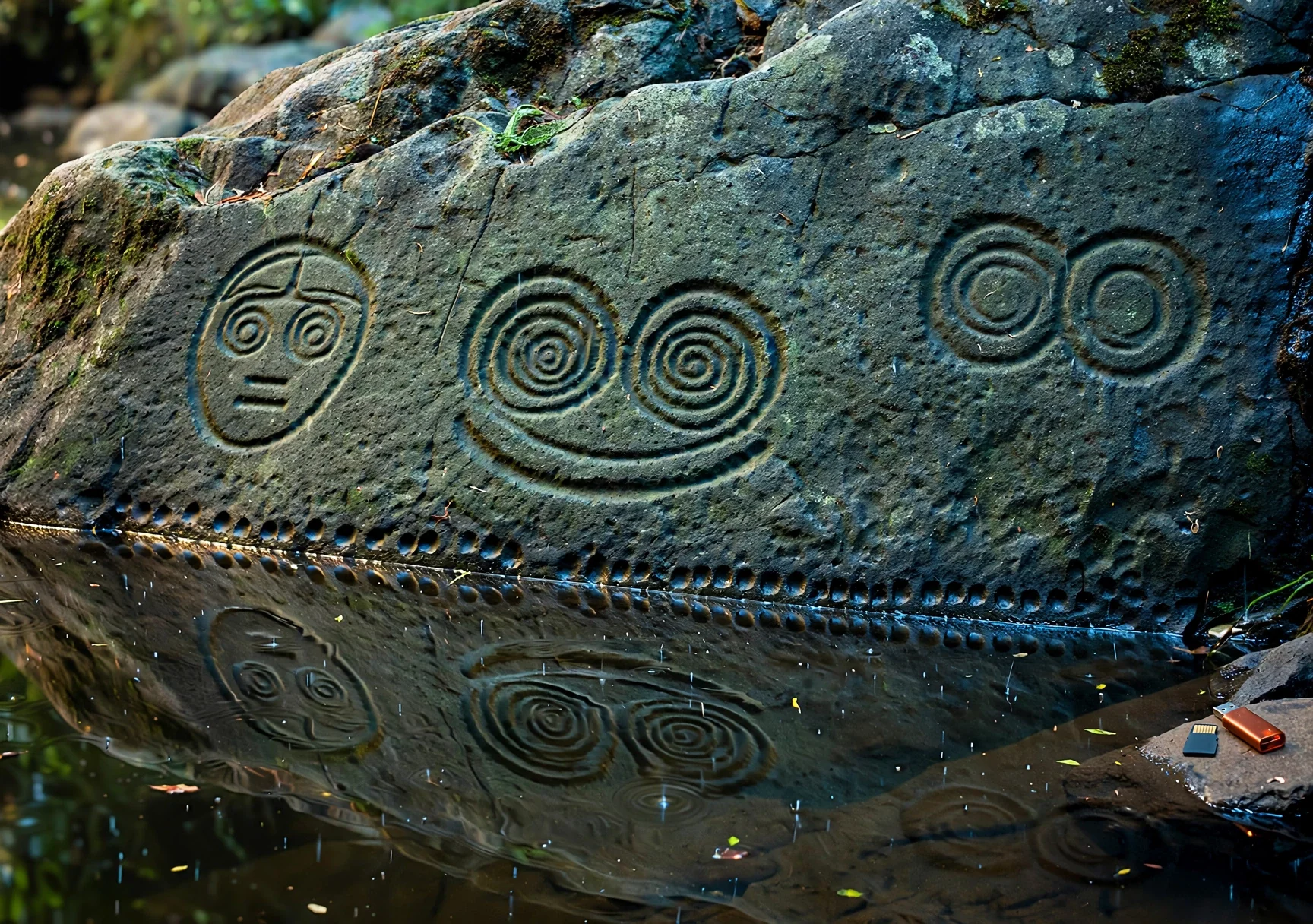
The best-known design is a pair of tight spirals side by side, above a shallow curved line. Together they read like two eyes and a mouth. News of St. John notes that the double spiral is typical of confirmed Taíno work. The same article notes that the shape is so familiar it appears in local logos and island souvenirs, which is why many people know it before they know its source.
Ringed-Eye Faces
Round faces with two concentric-ring eyes appear across the panel. News of St. John notes that these large, round eyes match eyes carved on Taíno artifacts from Puerto Rico and the Dominican Republic, and that similar designs appear on ceremonial pottery used for offerings to ancestors. Clio describes many of the carvings as images of Taíno ancestors.
Rows of Small Pits
Along the water’s edge is a row of small pecked pits. The public sources we used do not agree on a meaning for them, so we only describe what the photographs show.
The Reflection
Some carvings sit just above the pool, and their reflections show in the water. Clio and Wikipedia both note that these carvings are thought to be symbols for water, which fits their place beside the pool.
Who Carved Them, and When
Most scholars attribute the Reef Bay carvings to Taíno ancestors, the Indigenous people of the Greater Antilles and the Virgin Islands. The case rests on comparison: the carved eyes and faces match designs on Taíno artifacts and offering pottery found elsewhere in the Caribbean. Clio dates most of the carvings to about AD 1100 to 1400. Wikipedia adds a fair caution: there is no exact way to prove who carved them, but a Taíno origin is the most widely held view. In 2011, park workers found a roll of old film in the park archives that showed a carving nobody had accounted for. Its face resembles Saladoid-style pottery found at Cinnamon Bay and Trunk Bay, so it may be centuries older than the Taíno period. Why here? News of St. John describes water pools like this one as places where people may have gathered to communicate with their ancestors.
The Taíno Are a Living People
Older writing often says the Taíno “vanished” after 1492. Their societies were devastated within a few decades of European contact, but their descendants and their culture did not disappear. Taíno words such as hammock are still in daily use, and Taíno communities and organizations are active today. The carvings still matter to them. In August 2025 the National Park Service filmed Kasike Maekiaphan Phillips of the Guainía Taíno visiting the Reef Bay site as a sacred place. These carvings are not a curiosity from a lost world. They are part of a living heritage, and the people it belongs to get the final word on what it means.
Reading What Time Wore Away
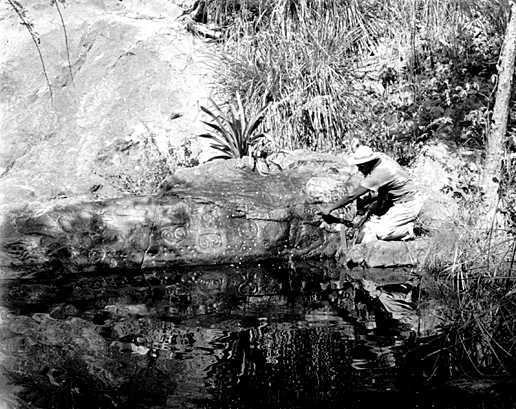
Much of what we know about Reef Bay comes from decades of patient recording. The 2011 rediscovery began with a roll of old film. The same patience protects the carvings. Never touch, chalk, rub, trace or wet the carvings to make them show up better in a photo. Chalk, rubbing and skin oils wear down grooves that are already faint, and the damage cannot be undone. Archaeological sites on federal land are protected by the Archaeological Resources Protection Act, and damaging them is a federal crime. The lesson is simple: when something is faint, the urge to make it clearer can destroy it. That is why the AI illustrations on this page are drawings, not edits of the stone. They trace the designs the real photographs show, so a reader can see the shapes without anyone touching the rock. Our own work has the same rule at its core. A drive that has started to click or a damaged memory card holds data that is faint in its own way. The worst damage we see comes from well-meant attempts to force it to read. We recover data by working on a careful copy, never by pushing the original harder.
Why a Reef Bay Spiral Became Our Mark
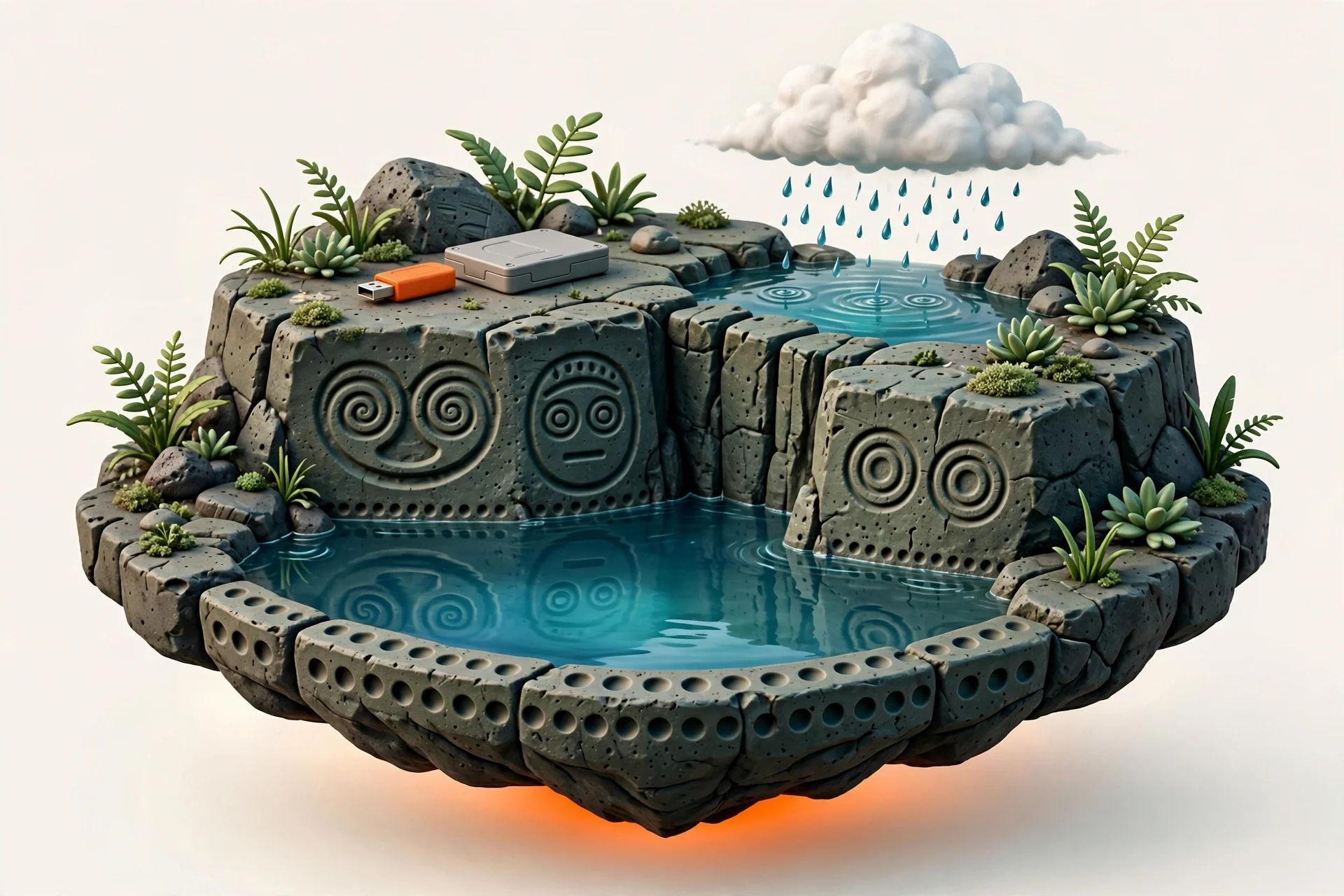
People have always marked stone with what mattered to them, and at Reef Bay the carvings are thought to be symbols for water and images of ancestors. The people who call us have usually just lost something they cannot replace: family photos, a thesis, years of work. They are hoping too. A small spiral drawn after the Reef Bay double spiral reminds us of that hope, and of the job it gives us. We chose this spiral as our mark. We want to be clear about what the mark is and is not. It is drawn after a Taíno carving, with credit to where it comes from. It is not a Taíno symbol for data, and we do not claim any spiritual meaning for it. Our part is practical: a free evaluation if something of yours has stopped reading (or call (866) 857-5950), a firm quote before work, a 98% success rate since 1999, and No Data, No Data Recovery Fee. If a Taíno community or organization would like to tell us how to present this better, we will listen and change it.
How to Visit Respectfully
Do at the Site
- Stay on the trail and the side path to the pool
- Look and photograph from where you stand
- Carry water for the uphill walk out
- Ask the park about ranger-guided hikes
DON’T Do
- Don’t touch, rub or trace the carvings
- Don’t chalk or wet them; it causes lasting damage
- Don’t climb on the carved rock
- Don’t take or move stones, plants or ruin pieces
- Don’t leave anything behind at the pool
The National Park Service offers ranger-guided tours in the park, and it is the best source for current trail conditions. Treat the pool as the sacred place it is to many people. Leave the carvings, the rocks, the plants and the sugar-estate ruins exactly as you found them, so the next visitor, and the people this heritage belongs to, can see them too. And if a phone takes a swim in the pool, switch it off and read what to do for a wet phone before you try to charge it. Questions? Call (866) 857-5950.
Frequently Asked Questions
Sources
- Ken Wild, “Petroglyphs of Reef Bay”, U.S. National Park Service
- National Park Service, Reef Bay Trail and Sugar Plantation
- Clio entry on the Reef Bay carvings (2020)
- News of St. John, “Sacred Symbols: Tracing the Taíno”
- Wikipedia, “Reef Bay Trail petroglyphs” (secondary; National Register listing, 1982)
- Wikimedia Commons, NPS video: Guainía Taíno Kasike visits sacred Reef Bay petroglyph site (2025)
- Photos: NPS panel photo and 1960 photo by Jack E. Boucher, NPS History Collection (both public domain)
- National Park Service, Archaeological Resources Protection Act of 1979 (linked in the body above)

.jpg)
We have shared this page with representatives of the Taíno community and welcome their guidance. We will update it with any corrections or wishes they share.
This page is not affiliated with or endorsed by the National Park Service. The AI illustrations are our own drawings, not photographs. For official information, visit the Virgin Islands National Park website.
More From eProvided
If this story brought you here, these pages explain who we are and how careful recovery work is done: