
SD · microSD · CF · CFexpress · XQD · Memory Stick · xD
Broken Memory Card Recovery — Recover Photos from Damaged or Corrupted Cards
Can You Recover Photos From a Broken or Corrupted Memory Card?
Yes — many broken, corrupted, or physically damaged memory cards still hold recoverable data, and the free evaluation confirms whether yours does. eProvided reads the raw flash memory directly, bypassing the card’s own damaged controller, and rebuilds the file structure to recover photos, videos, and files — with a 98% average success rate since 1999.
“The card’s controller may be dead, but the flash memory underneath it almost never is.” — Bruce Cullen, founder, eProvided
Broken memory card recovery is the engineering process of retrieving photos, videos, and files from SD cards, microSD cards, CFexpress, XQD, CompactFlash, and other memory cards that have failed physically, suffered controller corruption, or developed cell-level data errors. At eProvided we expose the internal NAND chip directly — the chip-off method — and read your data bit-by-bit when standard card readers cannot mount the card at all. Whether you need to recover data from a broken memory card or recover videos from a memory card that no longer reads, our chip-level process retrieves what software tools cannot. Call (866) 857-5950 or start your free evaluation.
Most consumer recovery software fails on broken cards because the failure is hardware-level: a shorted controller, snapped solder pads, water-corroded contacts, or burnt-out NAND interface lines. We open the card in our lab and read directly off the storage chip using NAND programmers, recovering the raw flash data and rebuilding the file system from it. The same chip-off and NAND techniques we used to recover NASA’s Helios mission data (submerged in saltwater for weeks) are what we bring to a damaged microSD card.
eProvided has specialized in broken memory card and SD card recovery since 1999, retrieving lost photos, videos, and files from damaged, corrupted, snapped, or unrecognized SD, microSD, CompactFlash, CFexpress, and XQD cards. For a “memory card corrupted” error, a snapped card, or accidental deletion, our specialists achieve success rates over 98% — with a straightforward guarantee: free evaluation, and No Data, No Data Recovery Fee.
- Signs your memory card is failing
- Common causes of failure
- Memory card types we recover
- CFexpress and XQD cards
- Professional vs software recovery
- Our recovery process
- Why choose eProvided
- Legacy card recovery (CF, SmartMedia, Memory Stick, xD)
- Brand-specific recovery
- Error messages we recover from
- DIY attempts vs eProvided
- Protecting your card data
- Customer reviews
- Memory card recovery FAQ
- Other devices we recover
Signs Your Memory Card Is Failing — Early Warning Symptoms
 Enlarge
A broken SD card — whether it’s a full-size SD card snapped in half, a cracked SD card with visible chip damage, or a micro SD card cracked or split from being stepped on or twisted — falls squarely into our broken memory card recovery specialty. Physically damaged micro SD card recovery is one of our most-requested services because the contact pins often survive even when the plastic shell is destroyed. A snapped SD card that exposes the NAND chip is still recoverable through chip-off techniques.
Memory cards often show clear warning signs before complete failure. Recognizing these early can significantly improve recovery chances. Common symptoms include:
- Files or photos suddenly missing or corrupted when viewed
- Error messages like “memory card corrupted,” “card not formatted,” or “read/write error”
- Device unable to detect or read the card
- Slow transfer speeds or frequent freezing during access
- Card physically bent, cracked, or snapped
If you notice any of these issues, stop using the card immediately. Continued use can overwrite data or cause further physical damage, reducing recovery possibilities. Power down the device and contact a professional memory card and SD card data recovery service. Our engineers have restored files from cards that software tools declared unrecoverable.
One of the first things people try is another reader. If your camera or your card reader cannot see the card — and you have already tried a second card reader and a different computer — the fault is almost never the reader. It is the card’s contacts or its controller, and at that point every extra insertion is a risk rather than a test.
Common Causes of Memory Card Failure and Corruption
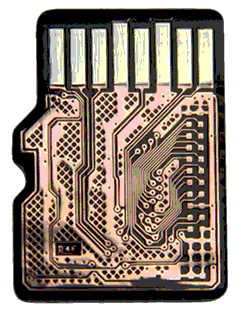
Memory card failures occur for many reasons, from everyday mishaps to environmental factors. Physical damage — bending, cracking, or dropping — is one of the most frequent causes we see, especially with microSD cards pulled from phones or drones; when the whole handset fails we also handle phone data recovery. Other common triggers include:
- Improper ejection during read/write operations
- Exposure to moisture, extreme heat, or direct sunlight
- Low battery during file transfer causing incomplete writes
- Switching cards between incompatible devices
- Natural wear from excessive read/write cycles
- Manufacturing defects or counterfeit cards
Beyond everyday accidents, certain use cases create unique risks. Drone operators frequently experience card failures after crash landings — impact forces can crack the PCB inside an SD card even when the plastic shell looks intact. Our lab has recovered flight footage from cards pulled out of mud, snow, and shallow water after crashes; the NAND chips often survive impacts that destroy the controller.
Dashcam and trail-camera users face a different threat: heat cycling. A card left inside a vehicle or outdoor enclosure endures swings from below freezing to over 140°F (60°C), accelerating solder-joint fatigue and causing intermittent read failures. Action-camera users on GoPro, DJI, or Insta360 push cards to their write-speed limits during 4K and 5.7K recording; cards rated below the recommended speed class often fail mid-recording, leaving partially written files that need lab reassembly (why software falls short).
Counterfeit cards from online marketplaces are another common cause. These report false capacities to the host and overwrite earlier files once real storage fills. Professional recovery addresses both physical and logical issues (why software falls short): a physically broken card may need chip-off extraction of the raw NAND, while corruption needs advanced file carving beyond standard tools.
Memory Card Types We Recover — All Formats Supported
SD cards broken in half present a specific challenge: the customer must not try to glue or tape the pieces back together. A micro SD card that’s cracked or split typically still has an intact NAND die — the crack usually runs along the plastic substrate without damaging the chip itself. Our workflow includes micro-soldering when the crack exposes only the connector ribbon, and full chip-off extraction when the NAND has come loose from the host card.
We recover data from every major memory card format, regardless of brand or damage level — a full-size SD card from a DSLR, a tiny microSD from a phone or drone, or a high-speed CFexpress from a professional mirrorless camera. Our engineers routinely handle cards dropped, bent, snapped in half, water-exposed, or simply worn out. No matter the card format, our SD card recovery workflow can recover data from SD card media that software tools marked as dead.
| Common Memory Card Types & Recovery Challenges | ||
|---|---|---|
| Card Type | Common Uses | Typical Failures |
| SD / SDHC / SDXC | Digital cameras, camcorders, drones | Corruption from improper ejection, physical bends |
| microSD / microSDXC | Smartphones, action cameras, tablets | Cracked shell, controller failure, monolith design |
| CompactFlash (CF) | Professional DSLRs, older cameras | Pin damage, wear from frequent use |
| CFexpress Type A/B | High-end mirrorless cameras | Overheating during 8K video, controller issues |
| XQD | Nikon professional cameras | Contact damage, firmware corruption |
Can You Recover Data From CFexpress and XQD Cards?
Can a lab recover a dead CFexpress or XQD card?
Often, but never with a promise. CFexpress and XQD cards are small PCIe drives with their own controller, so we try board repair on the original card first. We can also read the NAND chips directly. Whether that read gives usable files depends on the card’s controller and how it stored the data.
CFexpress cards carry an NVMe controller, the same kind of chip found in an SSD. Per the CFexpress standard summary, Type A is a small card, about 20 × 28 mm, that uses one PCIe lane. Type B is about 38.5 × 29.8 mm and uses two lanes. Type B has the same size and connector as XQD, the older format that uses one lane. Because of that, a CFexpress or XQD card fails differently from a plain SD card.
How CFexpress and XQD Cards Usually Fail
- Quick format in the camera. The files are often still on the card, but many of these cards can clear deleted blocks in the background. Stop using the card at once.
- Heat. Long 8K takes and warm sets push these cards hard. Heat can freeze the controller or melt the pins, and the card then shows no size at all.
- Physical damage. A bent or burnt contact, a chewed or cracked shell, or a card pulled out while it wrote will each need a different repair.
How We Recover a CFexpress or XQD Card
Board repair on the original card comes first. If the controller can run again, it can read its own data, which matters because on some cards the controller encrypts the data, so the original controller must work. We can also read the NAND chips directly, whether they are surface mount or TSOP. That read is a lab capability, not a guarantee. If the controller encrypted the data, the raw read returns scrambled bytes, and if it did not, the files can be rebuilt. We check which case applies during the free evaluation and tell you before any work is billed. Do not format the card or try a new reader again and again.
Snapped, Corrupted, or Not Detected? We Can Help.
Free evaluation on every card — mail it in from anywhere.
Get My Free EvaluationOr call (866) 857-5950
Professional Recovery vs Software Tools — Why Pros Succeed Where Software Fails

Many people first try free or paid software on a corrupted card. Tools like Disk Drill or Recuva can recover recently deleted files from a healthy card, but they fail on physically damaged or severely corrupted media. Professional labs succeed where software can’t because:
- We perform chip-off recovery on monolith cards (common in microSD)
- Advanced NAND flash reading bypasses damaged controllers
- Proprietary tools reconstruct fragmented or overwritten data
- A controlled lab environment prevents further damage during extraction
The difference is access: consumer software can only work on logical problems, while our lab reads the memory chip itself on physically broken cards. When photos are irreplaceable, professional recovery is worth it. For more guides, visit our data recovery blog.
Our Professional Memory Card Recovery Process
Every broken memory card and SD card recovery case at eProvided follows a structured, lab-tested process refined over two decades. Whether your card suffered physical damage, water damage, or corruption errors, our specialists apply the right technique for each failure type — including cards pulled from crashed drones, overheated dashcams, and water-damaged action cameras:
- Free Evaluation & Failure Diagnosis — ship your card using any carrier (USPS, FedEx, UPS). Engineers assess it within 24–48 hours, identifying the failure type and whether memory card repair, chip-off extraction, or file carving will deliver the best result.
- Detailed quote — you receive a firm, no-obligation price plus a list of recoverable files by name and size. No surprises, no hidden fees.
- Data Reconstruction — physical breaks and severed traces get chip-off recovery (how chip-off works); logical corruption gets proprietary file carving; water damaged memory card recovery involves controlled drying and contact cleaning before imaging.
- Delivery — secure file return through our encrypted portal or on fresh media, originals returned, with documented chain-of-custody.
Every workstation uses hardware write-blockers so your original data is never modified. We handle damaged memory card and damaged SD card recovery across all formats with the same chain-of-custody procedures used for government agencies.
Why Choose eProvided for Memory Card Recovery
With 27+ years of experience, we’ve earned the trust of photographers, consumers, and organizations worldwide. Our work for NASA — including recovering data from saltwater-submerged storage — shows our capability with extreme cases. Clients choose eProvided because we deliver:
- 98%+ success rate on memory card recoveries
- No Data, No Data Recovery Fee guarantee
- Fast turnaround with emergency rush options
- Secure insured shipping to our Las Vegas lab
- Deep specialization in photographer and wedding-photo recovery
Our evaluation process is built for clarity and zero risk. Within 24–48 hours of receiving your card, an engineer performs a full diagnostic and sends a detailed report listing every recoverable file by name and size. You approve the quoted price, and only then do we proceed. Standard turnaround is 5–10 business days after approval; for urgent situations — wedding deadlines, legal evidence, business-critical files — emergency rush service completes in 24–72 hours. We serve clients in all 50 states and over 30 countries.
Lost Critical Data? We’ll Get It Back.
Free evaluation — hard drives, SSDs, SD cards & flash media. No Data, No Data Recovery Fee.
Get My Free EvaluationOr call (866) 857-5950
Legacy Memory Card Recovery — CompactFlash, SmartMedia, Memory Stick & xD Picture Card
Older memory card formats are still in active use, especially in professional cameras, vintage camcorders, and industrial equipment that outlasts the cards themselves. eProvided recovers data from every legacy memory card format that shipped in the United States since 1999, including formats consumer card readers no longer support. We keep specialized hardware adapters and chip-off equipment for every format below.
CompactFlash (CF) Recovery
CompactFlash recovery — CF Type I and CF Type II — is one of our most frequent professional-photographer cases. Common failures: a bent pin connector inside the camera slot, controller failure on cards over five years old, and write corruption from removing the card mid-write. We access the NAND directly when the controller fails, rebuild the FAT or exFAT file system, and return every recoverable RAW, JPEG, and video file — from cards as small as 1GB to as large as 512GB.
Memory Stick & Memory Stick Pro Duo Recovery
Sony’s Memory Stick family — original Memory Stick, Memory Stick Pro, Memory Stick Pro Duo, Memory Stick Micro (M2), and Memory Stick XC — powered Sony cameras, PSP systems, and camcorders. We recover from Pro Duo cards bent in PSP slots, Memory Stick Micro adapters that crack, and original sticks whose controllers failed after years of use.
SmartMedia Card Recovery
SmartMedia recovery covers the thin, gold-contact cards used in Olympus, Fujifilm, and Toshiba cameras from 1995 through roughly 2005. SmartMedia cards have no internal controller — the file system is managed by the host device. We read the raw NAND directly and reconstruct the file system from the host camera’s known data layout, recovering from cracked cards, oxidized contacts, and cards current readers can no longer enumerate.
xD Picture Card Recovery
The xD-Picture Card — Olympus and Fujifilm’s proprietary format from 2002 to roughly 2010 — still powers a large installed base. xD cards used a custom controller that requires our specialized chip-off equipment for reliable recovery.
MultiMediaCard (MMC) and Microdrive Recovery
We also recover from older MultiMediaCard (MMC) cards, RS-MMC, and IBM/Hitachi Microdrive miniature hard drives that lived inside CompactFlash Type II slots in early professional cameras.
Memory Card Brand-Specific Recovery
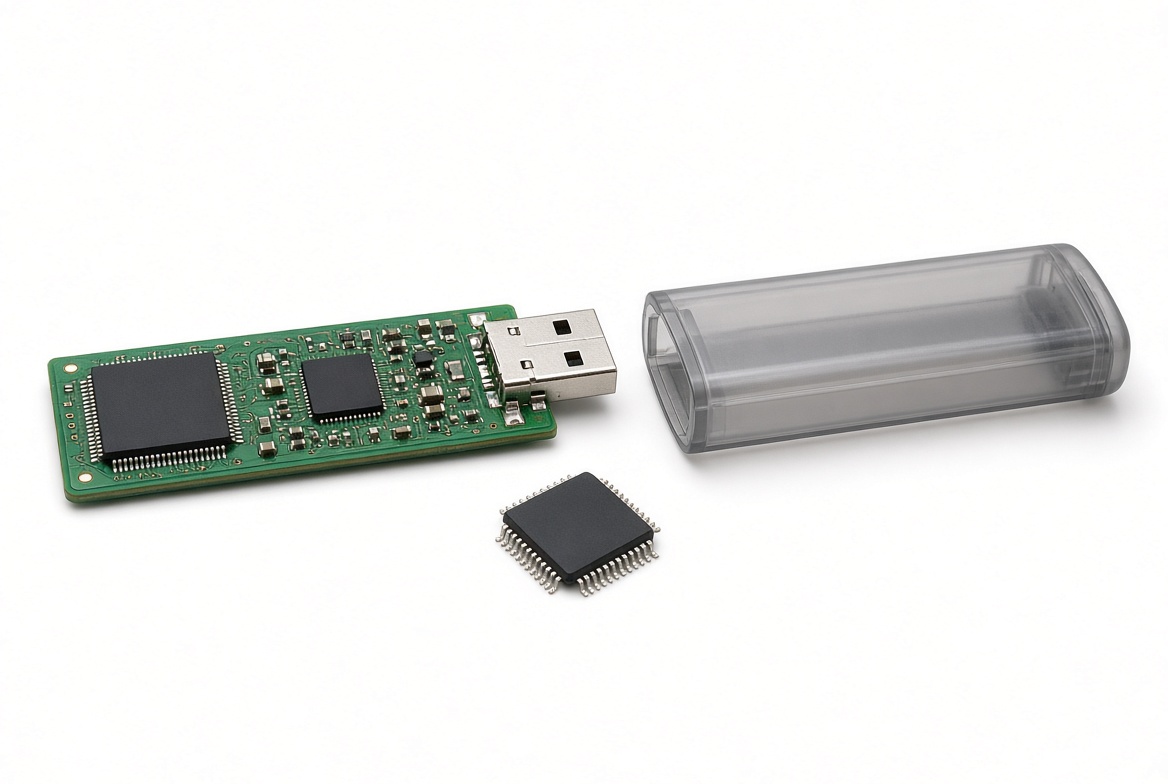
Every memory card brand uses different controllers, different NAND suppliers, and different firmware. Our specialists maintain reference architectures for every major brand, which is why our success rates stay high regardless of which card you ship us:
- SanDisk memory card recovery — Extreme, Extreme Pro, Ultra, Industrial, and consumer lines; SanDisk uses both proprietary and Phison controllers depending on tier.
- Kingston memory card recovery — Canvas Select, Canvas Go, Canvas React; Kingston cards most often present with controller failure rather than NAND wear.
- Lexar memory card recovery — Professional 633x, 1066x, 1800x CF and SD; Lexar’s Skymedi and Silicon Motion controllers respond well to firmware-level techniques.
- Sony memory card recovery — SF-G Tough SD cards, the Memory Stick family, and Sony-branded microSD; the Tough cards are physically resilient but their controllers fail under the same conditions as any card.
- Samsung memory card recovery — EVO Plus, PRO Plus, PRO Endurance; Samsung uses Samsung-branded NAND, which simplifies our chip-off mapping.
- PNY, Verbatim, ADATA, Transcend, Patriot, and Toshiba memory card recovery — all major secondary brands handled; we see a steady volume of every one.
Counterfeit memory cards (resold low-capacity NAND with falsified labels) are increasingly common on online marketplaces. We can identify counterfeits during evaluation and recover from them when the underlying NAND is intact — though counterfeits often fail catastrophically and carry a lower success rate than genuine cards.
Memory Card Error Messages We Recover Data From
If your camera, phone, or computer shows any of these errors, the data on the card is almost always still on the NAND. Stop using the card immediately and ship it to us — further write attempts can overwrite the data we need:
- “Memory card error” or “card error” on a camera display — controller failure or file-system corruption
- “This card cannot be used” — firmware-level rejection; the NAND data is intact
- “SD card not formatted” / “You need to format the disk before you can use it” — do not format; the file system is corrupt but the data is still there
- “No memory card inserted” when a card is inserted — controller has failed and the card is electrically invisible; chip-off recovery applies
- “Cannot read from the source file or disk” — partial controller failure or bad sectors
- “The disk is write-protected” with no lock switch engaged — controller entered read-only failsafe after detecting NAND degradation
- “Memory card locked” when no password was set — encryption corruption
- Camera shows the card but cannot read photos — file-allocation-table damage, recoverable
- Capacity shows as 0 bytes or the wrong size — partition or controller corruption, recoverable
The pattern across every memory card error: the message describes the host’s experience, not the state of your data. NAND flash retains data for years even when the surrounding hardware has failed. Our process bypasses whatever component failed and reads the NAND directly. No Data, No Data Recovery Fee — you only pay if we recover your files.
DIY Recovery Attempts vs. eProvided for Broken Memory Cards
| DIY Attempt vs. eProvided | ||
|---|---|---|
| Recovery Factor | DIY Attempt | eProvided |
| Works when card is snapped clean in two pieces | ✗ No | ✓ Yes — direct NAND read |
| Recovers from card broken inside a camera or device slot | ✗ No | ✓ Yes |
| Handles corrupted or missing partition tables | Partial | ✓ Yes |
| Photo/video file carving (JPEG, RAW, CR2, NEF) | Generic only | ✓ Camera-format priority |
| Works without any functional card-reader connection | ✗ No | ✓ Yes |
| Result on a physically broken card | Software cannot read it | Chip-level read of the NAND in the lab |
| Cost | A physical break needs lab hardware | Free evaluation — pay only on success |
| Risk of additional damage during the attempt | Very high | None — controlled lab process |
Protecting Your Memory Card Data — Prevention Tips
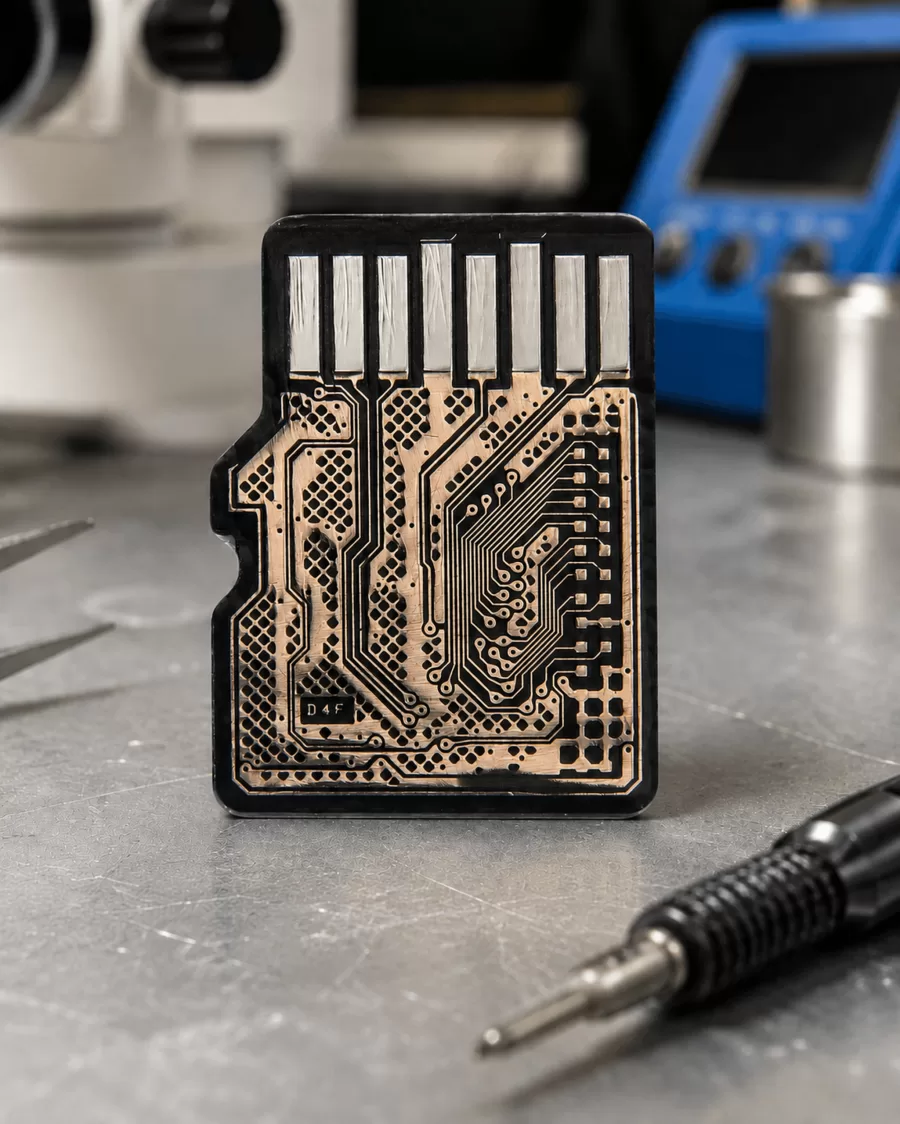
While professional recovery can save data from even severely damaged cards, prevention is always better than cure. A few simple habits dramatically reduce the risk of failure and the stress of unexpected data loss:
- Always eject properly. Pulling a card while files are being written is the single most common cause of logical corruption. Use “safely remove” every time so the file-allocation table writes completely. Switch the camera off before you swap cards, and never pull one while the access light is blinking.
- Back up frequently. Follow the 3-2-1 rule — three copies on two media types with one off-site or in the cloud. A card is a transport medium, not an archive: copy the files off it before you reuse it. Transfer files to a computer and a cloud service after each shoot before formatting for reuse. Label each card and retire any card that has thrown an error twice; replacing a card costs far less than losing a shoot.
- Buy from authorized retailers. Counterfeit cards are common on online marketplaces. Buy direct from manufacturers or authorized dealers, and verify a card's class and speed with free tools like H2testw or CrystalDiskMark before trusting a card. If a high-capacity deal seems too good to be true, it almost certainly is. After buying, write a full-size test file and read it back before the card goes into a camera for a real shoot.
Don’t Risk Your Photos on DIY Software.
One write to a failing card can overwrite what’s left. Get a free evaluation first.
Get My Free EvaluationOr call (866) 857-5950
Customer Success Stories
For more reviews, see eProvided on Reddit (linked in the footer) or read all 67 verified reviews on Trustpilot (linked above). To follow one card case from start to finish, read how we recovered a corrupted SD card, where 1,201 of 1,245 photos came off the card intact and the other 44 were repaired.
Memory Card Recovery FAQ
Q: Can you recover data from a physically broken memory card?
Yes — our chip-off techniques recover data from snapped, bent, or cracked cards by reading the NAND memory chips directly, including an SD card broken in half.
Q: Is it possible to recover photos from a corrupted SD card?
Absolutely. We recover photos from corrupted cards daily, even when software tools fail — see our broken SD card recovery guide.
Q: Can you recover data from a dead CFexpress or XQD card?
Often, but we promise nothing. We start with board repair on the original card, and we can also read the NAND chips directly. On some cards the controller encrypts the data, so the original controller must work. The free evaluation shows which path your card allows before you pay anything.
Q: Should I keep using a CFexpress or XQD card after I delete or format it?
No. Take the card out of the camera and stop using it. Many CFexpress and XQD cards can clear deleted blocks in the background, and every new shot can overwrite old files. A quick format leaves more behind than a full format, but do not format the card again.
Q: How much does memory card and damaged SD card recovery cost?
Evaluation is free and you get a firm quote up front. No Data, No Data Recovery Fee — you only pay if we successfully recover your data.
Q: How long does memory card recovery take?
Standard cases take 3–10 business days. Emergency rush service is available for urgent needs.
Q: Do you recover deleted photos from memory cards?
Yes — our logical recovery techniques can often retrieve deleted photos as long as no new data has overwritten them. Stop using the card to maximize the chance.
Q: Can you recover SD card data that no other lab could touch?
Yes. Most labs run software tools and quit when the card isn’t detected. Our process reads the NAND chips directly once the controller has failed, so we routinely recover data from SD card media other services returned as unrecoverable. Every SD card recovery here follows the same path — free evaluation first, payment only on success.
Q: What if my memory card is not detected by my phone, camera, or dashcam?
When a card stops being recognized, the failure is almost always inside the card — the controller has died, the firmware is corrupted, or the contact pads got bent. Phones, cameras, dashcams, and drones all rely on the card’s controller to talk to the device; when that conversation breaks, the host shows nothing. We bypass the controller, lift the raw NAND chip off the card, and read it on a hardware programmer. Photos, videos, and app data can often be recovered even when no consumer device can see the card; the free evaluation confirms what is readable.
Q: Do you recover snapped or cracked memory cards using chip-off?
Yes. Once the plastic shell breaks, the contact pads are usually destroyed too — so we work the other end. The NAND flash chip is what holds your data; we lift that chip off the broken board, mount it on our reader, and pull a complete dump, then rebuild the file system. The format does not matter for classic cards: we have done chip-off on cracked microSD, cracked SD and SDXC, bent CompactFlash, broken CFast 2.0, Huawei NM (Nano Memory), Sony Memory Stick PRO Duo, and rare older formats like xD-Picture Card and SmartMedia. The same process recovers raw eMMC chips inside tablets and phones, UFS storage, soldered NAND on laptop motherboards, and USB flash drives. Cards and drives with their own NVMe controller — SD Express, microSD Express, CFexpress, and M.2 NVMe SSDs — get a different first step: we identify the controller, then repair the original board, move the controller and NAND chips together onto a donor board, or read the NAND chips directly and descramble them when that controller does not encrypt. Many modern NVMe controllers always encrypt, some only scramble, and some vary by maker and firmware, so we never promise a result before that check. The card being in pieces is not the end of your data.
Ready to Recover Your Photos?
Free evaluation, firm quote, then recovery. Recovering memory cards since 1999 with a 98% success rate.
Get My Free EvaluationOr call (866) 857-5950
Other Devices We Recover
Memory card not your only failure? eProvided recovers every storage class from one lab. Choose your device: