
SSD · USB · eMMC · UFS · microSD · Monolith · Chip-Off
NAND Flash Data Recovery — Chip-Level Recovery from Failed Chips, Cards & USB Drives
What is a chip firmware recovery service?
It’s chip-level recovery when the drive’s own firmware, not the memory, has failed. eProvided reads the NAND chip directly, then rebuilds the controller’s firmware translation — page order, ECC, wear-levelling — in software to reassemble your files. We have done chip-level work since 1999, at a 98% average success rate.
“The memory usually outlives the firmware that indexes it — that’s why we go straight to the chip.” — Bruce Cullen, founder, eProvided
 Enlarge
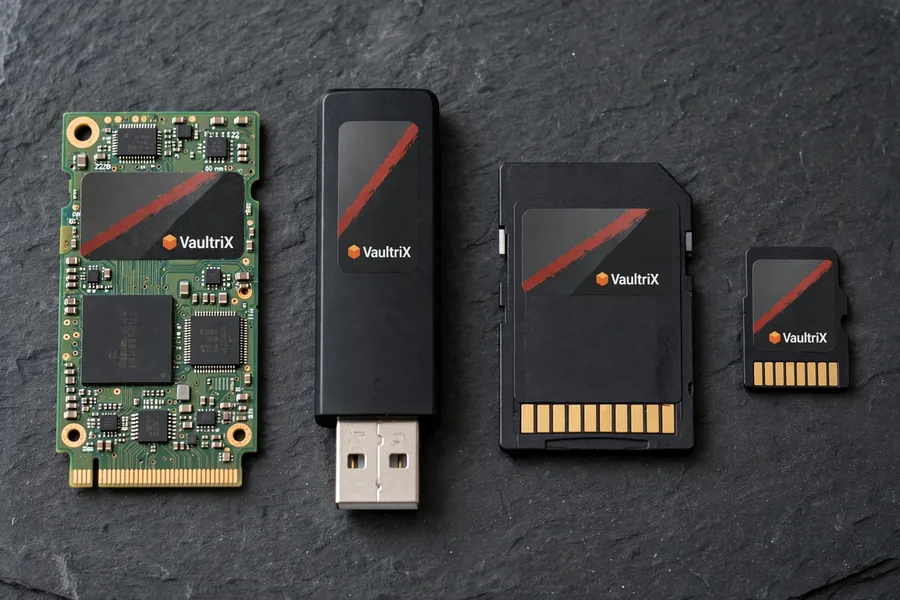
NAND flash data recovery is the engineering process of extracting lost, inaccessible, or corrupted data from NAND-based storage — SSDs, USB flash drives, memory cards, failed smartphones, and embedded eMMC chips. When a controller fails or cells wear out, the data often still lives in the raw silicon. On USB drives, memory cards and monolith devices, eProvided reads the NAND chip directly — chip-off extraction, raw NAND dumps, and algorithmic reconstruction. On SSDs, phones and other devices that encrypt, we identify the controller first, then repair the original board, move the controller and memory together onto a donor, or read the memory directly and descramble it when the controller does not encrypt. We never promise a result before the evaluation. Start with a free chip evaluation, or reach us at (866) 857-5950 if you'd rather talk it through first.
When your device goes silent — no drive letter, no recognition, nothing — the culprit is almost always the NAND flash memory chip inside. NAND flash data recovery is one of the most technically demanding specialties in the entire data recovery industry, and eProvided has spent over two decades perfecting it. From a USB drive with a snapped connector to a buried eMMC chip on a smartphone motherboard, our NAND recovery service retrieves data that consumer software and most labs cannot touch.
NAND memory is everywhere — it powers your SSD, your phone, your USB stick, your camera’s memory card, and your tablet. When a NAND chip fails from physical damage, controller corruption, worn cells, or catastrophic power loss, the data doesn’t vanish; it waits in the raw silicon for the right tools and expertise. eProvided averages a 98% success rate across all NAND-based recovery cases, and every case starts with a Free Evaluation and a simple promise: No Data, No Data Recovery Fee. See our federal & aerospace work.
- What is NAND flash memory
- Why NAND flash fails
- NAND types comparison
- How we recover NAND data
- Which method fits which device
- Recovery architecture, controllers & equipment
- What devices use NAND flash
- Can you recover a dead NAND chip
- What real NAND cases look like
- What not to do
- Used by NASA & government agencies
- How to start your recovery
- Customer reviews
- NAND recovery FAQ
- Further reading: understanding NAND flash
- Related articles & services
- Other devices we recover
What Is NAND Flash Memory?
 Enlarge
The basics
NAND flash is a type of non-volatile storage technology — it holds data even when the power is off. Named after the logical NAND gate used in its cell design, it replaced spinning hard-disk platters in almost every modern portable storage category and now accounts for the majority of all storage shipped worldwide.
Inside every NAND chip, data is stored as electrical charges in millions of tiny floating-gate or charge-trap transistors. These cells are organized into pages, which group into blocks — and that architecture is precisely what makes recovery complex. When a controller fails or cells wear out, the data isn’t gone; it’s simply inaccessible through normal means. A skilled specialist reads the raw charge states directly and reconstructs the file system from those raw dumps.
NAND comes in several flavors — SLC (single-level cell), MLC (multi-level cell), TLC (triple-level cell), QLC (quad-level cell), and modern 3D NAND configurations such as Samsung V-NAND. Each architecture stores bits differently and presents unique recovery challenges. Whether it’s a monolithic NAND chip in a budget USB drive or a 3D QLC architecture in a top-tier NVMe SSD, eProvided has the tools to access and extract your data.
Write endurance varies dramatically by type, and the comparison table below lists the figures. As cells wear, they fail silently — often without warning. Suddenly the drive disappears or the USB stick shows empty folders. That’s NAND wear, and it’s more common than most people realize.
Why Does NAND Flash Memory Fail?
 Enlarge
Silent failure, many causes
NAND flash fails for many reasons, and understanding the root cause is the first step in choosing the recovery path that works. Unlike a traditional hard drive that announces failure with clicks and grinding, a NAND device typically fails silently — one moment it works, the next your computer acts like it never existed. The most common failure modes our lab sees every day are described below.
The usual culprits
Controller failure is the most frequent culprit — the controller manages wear leveling, error correction (ECC), and the mapping between logical and physical addresses through the flash translation layer, and when it dies the NAND cells may be perfectly healthy but completely inaccessible. Worn NAND cells are next: every write cycle degrades cell walls slightly, and after thousands of cycles a cell can no longer reliably hold charge, so data becomes corrupted or unreadable. Physical damage — snapped USB connectors, bent M.2 slots, dropped SSDs, water exposure, heat, or static discharge — can destroy the PCB while leaving the NAND chips underneath intact. Firmware corruption is a quieter failure mode: the firmware that runs on the controller is itself stored on NAND, and a failed update or power cut during a write can trap a drive in a brick state. A power surge can kill a controller and occasionally a NAND bridge chip, but the raw NAND data underneath usually survives. And monolithic construction — the design budget USB drives and some older SD cards use, where the controller and flash are fused in a single chip with no external test points — needs highly specialized reads to extract a raw NAND dump.
Often the data itself is recoverable. eProvided averages a 98% success rate because we attack each failure mode with the right technique, not a one-size-fits-all approach. For related issues, explore our guide to common flash drive failures.
NAND Flash Memory Types — Recovery Difficulty Comparison
NAND fabrication uses different process nodes and cell architectures — SLC, MLC, TLC, QLC, and emerging PLC. Each generation increases storage density but adds recovery complexity: modern QLC and 3D NAND require more sophisticated ECC handling and finer-grain controller emulation than older SLC chips. Our lab maintains tooling for every NAND class we have encountered since 1999.
| NAND Type Comparison: Endurance, Use Case & Recovery Complexity | ||||
|---|---|---|---|---|
| NAND Type | Bits per Cell | Write Endurance | Common Devices | Recovery Complexity |
| SLC (single-level) | 1 bit | 50,000–100,000 cycles | Enterprise SSDs, industrial | Low — reliable, predictable |
| MLC (multi-level) | 2 bits | 3,000–10,000 cycles | Mid-range SSDs, USB | Moderate — ECC complexity |
| TLC (triple-level) | 3 bits | 300–1,000 cycles | Consumer SSDs, flash cards | High — aggressive wear leveling |
| QLC (quad-level) | 4 bits | 100–300 cycles | High-capacity consumer SSDs | Very high — dense, error-prone |
| 3D NAND (V-NAND) | Varies (TLC/QLC) | Varies by cell type | Modern SSDs, smartphones | High — layered architecture |
| Monolithic NAND | Varies | Low (budget chips) | Cheap USB drives, old SD cards | Very high — no test points |
No matter which NAND architecture your device uses, our technicians have the specialized adapters, custom firmware tools, and algorithmic reconstruction techniques to extract and rebuild your data. For SSD-specific failures, see our SSD drive failure guide.
Lost Data on a NAND Device? We’ll Get It Back.
Free evaluation on every case — SSDs, USB drives, memory cards & embedded NAND. No Data, No Data Recovery Fee.
Get My Free EvaluationOr call (866) 857-5950
How Does eProvided Recover Data from Failed NAND Chips?
 Enlarge
The five steps
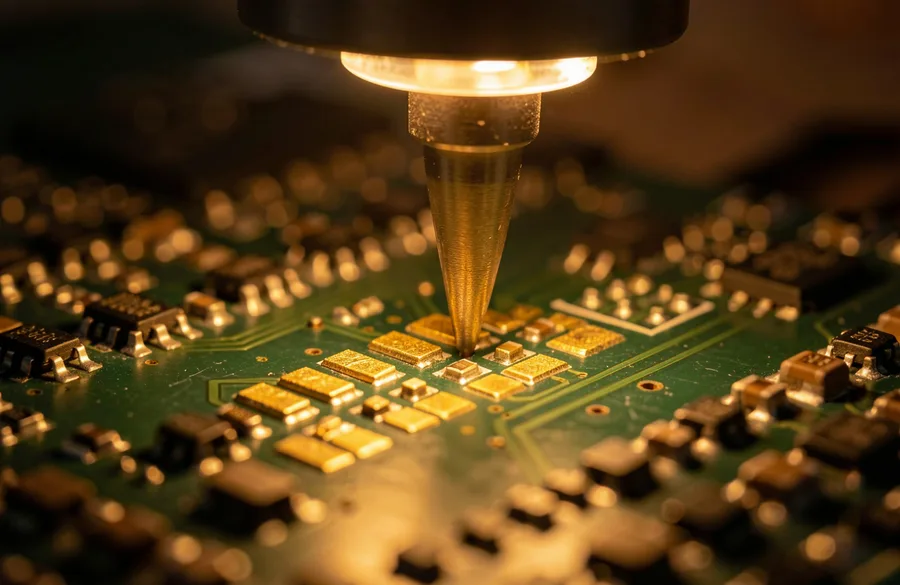
Our NAND chip recovery process is methodical, precise, and built on 27+ years of hands-on experience. When a device arrives, we begin a free evaluation — analyzing the controller, the PCB, and the NAND chips to determine the best path to your data. Beyond chip-off, our toolkit includes JTAG (Joint Test Action Group) test-point access, ISP (in-system programming) reads through controller back-doors, and FTL (flash translation layer) reconstruction from raw NAND dumps. Each targets a different failure mode: JTAG works when the controller is intact but the device won’t boot; ISP works when the controller responds but standard reads fail; FTL reconstruction turns any chip-off output into readable user data. Here is how a successful NAND flash data recovery unfolds:
- Free Evaluation & Failure Diagnosis — we assess the failure mode (logical, firmware, controller, or physical) to decide whether standard lab tools are sufficient or whether chip-off extraction is required.
- Chip-Off / Raw NAND Read — for severe physical damage or controller failure on USB drives, SD and microSD cards, and other monolithic flash media, engineers de-solder or lift the NAND chips from the PCB using precision rework stations, then use a dedicated NAND programmer to capture a full bit-for-bit raw read from each chip; for multi-chip devices we read every chip and reconstruct the interleaved data. SSDs, NVMe drives and phones take a different path: we identify the controller first, then repair the original board, move the controller and memory together onto a donor board, or read the memory directly and descramble it when the controller does not encrypt. This is the core of our nand chip recovery work.
- ECC & FTL Reconstruction — raw NAND data is scrambled by XOR operations, ECC (error correction), and controller-specific FTL (flash translation layer) encoding, all of which must be decoded; our proprietary algorithms handle this for most known controller families.
- File system reconstruction — once unscrambled, we build a single logical disk image and run file-system analysis to recover folders, files, photos, and documents in their original structure.
- File Reconstruction & Delivery — we provide a secure file listing for your review; only after you confirm the recoverable data do you pay. Files are returned on a new encrypted drive or via secure download.
We also handle SSD data recovery; on an SSD the first step is always to identify the controller.
Some jobs arrive as a chip firmware recovery service request: the memory chip is perfectly healthy, but the small program that tells the device how to arrange the data has been damaged, so the device reports nothing, zero capacity, or garbage. Reading the chip directly is only half the work — the raw data then has to be reassembled using the scrambling and error-correction rules that particular controller used, which is the part general recovery shops send out to specialists.
Which Recovery Method Fits Which Device
No single technique suits every NAND device. The right first step depends on what sits between your files and the memory, so the evaluation starts by asking that question for your device.
| NAND Recovery by Device: First Step and Typical Route | ||
|---|---|---|
| Device | First step | Typical route |
| USB flash drive, monolith stick | Check the plug, board and controller | Repair the board, or read the memory chip directly and rebuild the files; a monolith needs its test points reached |
| SD and microSD card | Check the contacts and controller | Read the memory chip directly, then descramble and rebuild; on a standard card no key sits outside the chip |
| SSD, NVMe, SD Express, CFexpress | Identify the controller before anything else | Repair the original board, move controller and memory together onto a donor, or read the memory directly and descramble when the controller does not encrypt |
| Phone (modern iPhone, recent Android) | Find out which chip holds the key | Board repair on the original board, or a donor board that carries the processor and memory together; a memory read alone returns scrambled data |
| Embedded eMMC or UFS (TV, tablet, camera) | Check whether another chip locks the data | If nothing else locks it, lift the chip and read it; if something does, repair the original board |
Every route above ends the same way: you see a file list before you pay, and no recovery fee applies if we cannot return your data. The table shows the usual path, not a promise for your drive.
NAND Recovery Architecture, Controllers & Equipment
 Enlarge
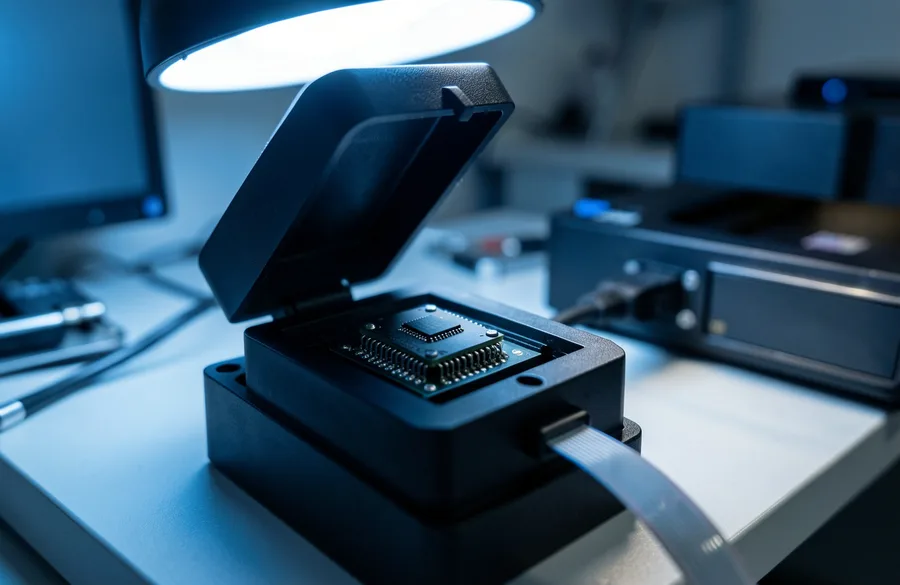
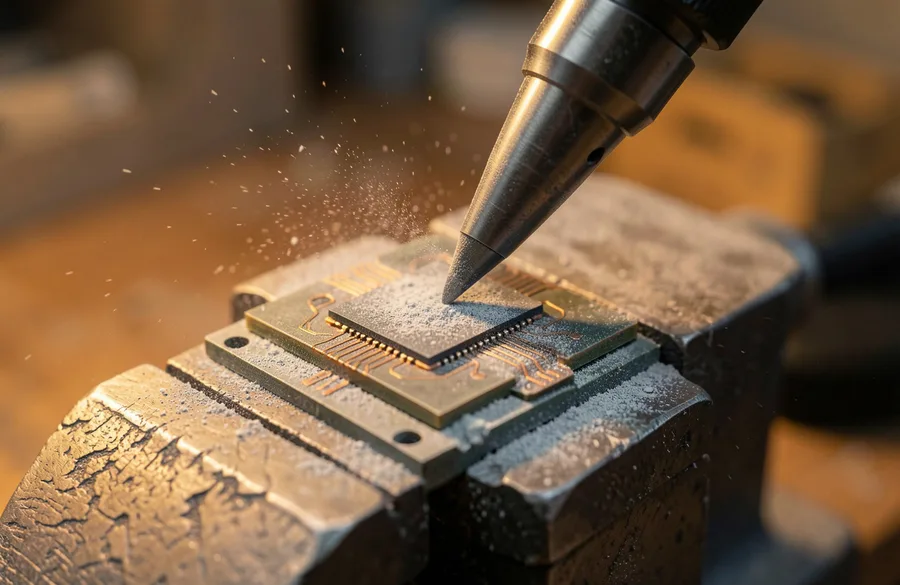
When the surrounding hardware fails, the memory chip has to be read on its own. Its internal organization — die, block, page, with wear leveling distributing writes — is reconstructed from the raw extraction so the file system can be rebuilt. The chip packages we handle include BGA (ball grid array), the dominant modern format: contacts are solder balls underneath, so we desolder with hot-air rework, reball when needed, and read on programmers that map ball pads to NAND signals. TSOP (thin small-outline package) is common on older USB drives and budget cards, where side-accessible pins simplify the job. Monolith designs fuse the controller and NAND into one epoxy unit, as in cheap USB sticks and microSD cards, and call for precision grinding to reach substrate test points with fine probes — the most demanding recovery class we handle. Multi-die packages, found in SSDs and high-capacity drives, stack two to eight dies per package, each accessed via its own chip-enable signal.
Our equipment includes PC-3000 Flash by ACE Lab, Flash Extractor by Soft-Center (monoliths and exotic NAND), VNR (Visual NAND Reconstructor) by Rusolut for raw NAND analysis, and universal NAND programmers for raw die reads. The controller dictates how data is mapped to physical blocks, encrypted, and protected with ECC — without controller-aware flash memory recovery, a raw NAND dump is just noise. We recover from Phison (PS2251, PS5008, PS5012), Silicon Motion / SMI (SM2246, SM2258, SM2263), Skymedi, Alcor, Innostor, and less-common Marvell, SandForce, JMicron, Maxio, and Samsung Polaris controllers. The NAND silicon comes from Samsung (V-NAND 3D), SK Hynix, Toshiba / Kioxia, Western Digital / SanDisk, Intel, and Micron. Where the failure sits upstream of the NAND — controller dead, PCB damaged, connector broken — the answer depends on the device. On USB sticks and memory cards we read past the dead layers; on an SSD we identify the controller first, because an SSD controller often scrambles or encrypts what it stores. Customers ship us failed USB flash drives for exactly this; the devices differ, and the first step is always the diagnosis, which is also how we approach snapped and corrupted memory cards, where the flash is often a single monolith chip.
What Devices Use NAND Flash Storage?
If it stores data and has no moving parts, it almost certainly uses NAND flash. That ubiquity means nearly every device you own is a potential NAND recovery case. Across brands — SanDisk, Lexar, Kingston, Samsung, PNY, and every major flash maker — eProvided recovers data from solid-state drives — SATA 2.5-inch, M.2 (NVMe and SATA), PCIe, mSATA, and enterprise NVMe arrays — and from USB flash drives of every brand, including SanDisk, Kingston, PNY, Samsung, Verbatim, and budget or counterfeit drives. Memory cards make up another large share of our cases: SD, microSD, SDXC, CompactFlash, and Memory Stick. We also recover smartphones and tablets running eMMC or UFS storage — iPhone, Samsung Galaxy, Google Pixel, and Android devices generally — along with digital cameras using internal NAND or CompactFlash storage, and portable devices like voice recorders, dash cams, action cameras, GPS units, and other IoT hardware. Embedded storage — eMMC and UFS chips soldered directly to a motherboard — and gaming console storage, from Nintendo Switch cartridges to PlayStation SSDs and Xbox NVMe drives, round out the list.
One area that surprises clients is embedded NAND recovery — devices where storage is soldered directly to the motherboard with no removable chip, including Chromebooks and smart TVs. Where nothing else locks the data, we can lift a soldered eMMC or raw NAND chip and read it; where another chip holds the key, the answer is board repair on the original board or a donor board that carries the processor and memory together. We also specialize in USB device not recognized errors that leave flash drives seemingly empty.
Can You Recover Data from a Dead NAND Chip?
 Enlarge
Often, yes. A “dead” NAND chip is rarely truly dead. The term usually means the controller has failed, the firmware is corrupt, the PCB is physically damaged, or the device is no longer recognized by any computer. None of those conditions necessarily destroy the data stored in the raw NAND cells themselves.
Think of it this way: if a book’s binding falls apart and the pages scatter, the words are still readable — you just need someone who knows how to reassemble them in order. On USB and card media we lift the individual NAND chips, read their raw contents, and use our reconstruction algorithms to put the pages back in order. Recovery is not possible when the cells themselves are destroyed, such as by extreme heat from fire, a crack through the chip, or a massive electrical discharge that damages the silicon. In many water, broken-connector and controller cases the raw NAND data survives, and a few of the many we have handled since 1999 include:
- USB drives that snapped in half at the connector
- SSDs submerged in water, including saltwater (see our NASA Helios recovery below)
- Flash cards crushed by accident, run through washing machines, and left in the sun
- Smartphones dropped, run over, and even partially melted
- Devices that showed “disk not initialized” or “no media” for months
- Budget USB drives with monolithic NAND construction and no visible solder points
If you’ve been told your data is gone, get a second opinion. Start with our free evaluation form — it costs nothing, and we will tell you honestly what is possible.
Lost Critical Data? We’ll Get It Back.
Whatever failed — a hard drive, an SSD, an SD card, or embedded NAND soldered to a board — we look at it for free before you commit to anything.
Get My Free EvaluationOr call (866) 857-5950
What Real NAND Cases Look Like
These are quotes from real order forms, with names removed, and the lab outcomes from the case notes. They are a mix on purpose.
A flash drive whose metal plug broke off, July 2024
Case 3EWVF5. The owner wrote:
“USB flash drive physically damaged. The metal piece broke off and came out.”
Recovered. The lab note says the data was moved off carefully and a directory list was sent, with all of it recovered. A plug that breaks off is the classic case where the memory chip behind it is usually intact.
A USB drive that went through the washing machine, June 2012
Case IOBBYH. The owner wrote:
“USB Drive went through washing machine. File named BOOKS is the most crucial, though I would like it all.”
Recovered. The case notes record a success and the data was shipped back to the owner. Water is a hazard to the board, but on a flash drive the memory chip can come through it, which is why a wet drive should be dried and sent in rather than plugged in.
A flash drive with a cracked memory chip, May 2010
Case KOFHX7. The owner wrote:
“Dog destroyed flash drive that had accidentally fallen on floor. Memory chip (large black square looking thing towards back) has one large crack all the way through.”
Not recovered. The lab note says the NAND was cracked all the way through. This is the honest limit of everything on this page: when the silicon itself is broken, no controller repair or chip read can bring the data back. Capability is never the same as outcome.
What Not to Do With a Failed NAND Device
- Do not re-solder a broken plug or a chip yourself. Heat lifts the fine pads that a lab later needs, and a bridge of solder can short the memory.
- Do not press on a cracked case or flex a bent drive. The chip sits on a thin board, and one more bend can crack it, which ends the job.
- Do not keep plugging in a drive that drops out. A failing controller can finish failing on any reconnect, and a scan will not read what the controller cannot reach.
- Do not heat, freeze, or bake the device. Those tricks damage solder joints and memory cells and turn a repairable board into a lost one.
- Do not format or re-initialise a drive that asks you to. A format writes new structures over the old map and can make the data harder, or impossible, to rebuild.
Used by NASA, the FBI, and the U.S. Department of the Navy
NASA used eProvided for one of the most challenging data recovery operations in history. The Helios Prototype — a solar-powered unmanned aircraft developed by NASA JPL — broke apart over the Pacific Ocean in 2003 and sank, leaving its onboard storage submerged in saltwater for weeks. eProvided successfully recovered the critical mission data from that water-damaged storage, returning flight and performance information that would otherwise have been lost forever. Learn more about our work with NASA and other government agencies.
That same capability — reading raw NAND data from severely compromised storage — is what eProvided brings to every client case, regardless of scale. We have worked directly with the FBI on bioterrorism investigations, with U.S. Special Agents, and with the U.S. Department of the Navy, among many other agencies. These are not marketing claims; they are the direct result of 27+ years of genuine expertise in NAND chip-level data recovery — the same expertise that makes eProvided the behind-the-scenes recovery lab for retail chains, computer-repair franchises, and enterprise IT departments worldwide. For NASA, military, and other high-stakes assignments, see our mission-critical data recovery services.
How to Start Your NAND Flash Data Recovery
Starting a NAND recovery with eProvided is straightforward, and the entire process is designed to give you confidence and control from day one. Submit the free evaluation form and describe your device and what happened — it takes about two minutes, and we send full shipping instructions right after. Pack the device carefully (we provide guidance) and mail it from anywhere using any carrier; you can track your case status in real time, 24/7, through our online status portal. Once it arrives, our engineers identify the failure mode and proceed with the right method, whether that's a firmware-level fix, a raw NAND dump, or full chip-off extraction. We send a complete file list before you pay a single dollar, so you approve the recovered data before we return your files on a new encrypted drive or via secure download. And if we cannot recover your data, you owe nothing — that's the eProvided promise: No Data, No Data Recovery Fee.
Rush service is available for urgent situations, and standard turnaround is 1–3 business days from receipt. We serve clients worldwide with the same chain-of-custody procedures used for government agencies.
What Our Customers Say
For more reviews, see eProvided on Reddit or read all 67 verified reviews on Trustpilot.
Frequently Asked Questions About NAND Flash Data Recovery
What is NAND flash data recovery?
NAND flash data recovery is the process of extracting lost, inaccessible, or corrupted data from NAND-based storage — SSDs, USB flash drives, memory cards, smartphones, and embedded eMMC chips. Professional recovery often involves chip-off extraction, raw NAND dumps, and algorithmic reconstruction of scrambled data.
How much does NAND flash data recovery cost?
eProvided offers a completely free evaluation on every case, with fees varying by device type and failure complexity. Our policy is No Data, No Data Recovery Fee — you only pay if we successfully recover your files, and you get a firm quote before any work begins.
Can NAND data be recovered after controller failure?
Often, yes, and controller failure is one of the most common NAND recovery scenarios, but the route depends on the device. On a USB drive or memory card the data sits in the NAND chips, not the controller, so we can read the chips directly and rebuild the files. On an SSD the controller may encrypt or scramble the data, so we identify it first and choose the matching route.
How long does NAND chip recovery take?
Standard turnaround is 1–3 business days from when your device arrives at our lab. Complex chip-off cases involving monolithic NAND or advanced ECC reconstruction may take longer. Rush and emergency 24-hour options are available for time-critical cases.
Is chip-off data recovery safe for my device?
Chip-off is a destructive process for the original PCB, but our goal is your data, not the device. Engineers use precision rework stations to extract NAND chips without damaging the silicon, handling them with static-safe protocols throughout. Your original device is returned along with the recovered files.
What if my USB drive is physically broken in half?
A physically snapped USB drive is one of our most common cases. As long as the NAND chip inside is intact — which it usually is, since the chip sits away from the connector — recovery is very often possible. Submit your broken device for a free evaluation and we will assess the chip condition immediately.
Can you read the NAND chips of an SSD or NVMe drive directly?
Only after we know what the controller does. We identify the controller first. Some SSD controllers encrypt or scramble the data, so a memory read alone returns noise; then we repair the original board or move the controller and memory together onto a donor. When the controller does not encrypt, a direct read and descramble can work. We never promise a result before the evaluation.
Why can’t you just remove the memory chip from a phone?
Modern iPhones and recent Android phones tie the decryption key to the processor, not to the memory chip, so a chip read returns scrambled data. Our routes are board-level repair on the original board, or a donor board that carries the processor and the memory together. Capability is never the same as outcome.
How do I know if my drive needs chip-level work?
If the drive does not appear at all, shows 0 bytes or the wrong size, or has a snapped connector, the controller or the connector failed and the memory may be fine. Only a free evaluation confirms which, so stop plugging it in. Our guide to common flash drive failures, linked earlier on this page, lists the signs.
Do you recover data from monolithic NAND flash drives?
Yes. Monolithic NAND devices — where the controller and flash are fused in a single chip with no external solder points — require highly specialized reading techniques. eProvided has the equipment and expertise to handle monolithic NAND recovery, which most data recovery labs cannot perform.
Ready to Recover Your NAND Data?
Free evaluation, firm quote, then recovery. Recovering NAND flash since 1999 with a 98% success rate.
Get My Free EvaluationOr call (866) 857-5950
Further Reading: Understanding NAND Flash
- How NAND flash memory works — a plain-English breakdown of cells, pages, and blocks for readers who want the fundamentals before the recovery detail above.
- When NAND flash is not detected — what a missing drive letter or blank capacity reading actually means, and which failure modes typically cause it.
- NAND wafers vs. monolithic storage explained — the manufacturing difference behind why some chips have test points and others do not.
- NAND flash technology in aerospace systems — how the same NAND principles apply in mission-critical, high-radiation environments like the NASA case described above.
Related Articles & Services
For the technical standards behind NAND endurance and ECC, see the JEDEC Solid State Technology Association. Need a different device? We also unlock and recover locked smartphones — see our full Related Recovery Services listed below.
Other Devices We Recover
NAND failure is the root cause behind most modern device data loss. eProvided recovers every storage class from one lab. Choose your device: