
Used by NASA · the FBI · the U.S. Navy · Since 1999
Salt-Water Phone Data Recovery — We Recover the Photos & Files Others Can’t.
- No Data, No Data Recovery Fee
- Free, confidential evaluation
- 4.9 / 5 on Trustpilot (67 reviews)
- Worldwide lab recovery
At eProvided, our professional file recovery team has seen just about every form of water damage a smartphone can sustain. Fresh water spills, pool mishaps, storm flooding — and yes, full-on ocean submersion. Salt water damage is a category all its own. The ocean doesn’t care how expensive your phone was, and corrosive seawater doesn’t negotiate. The moment your phone hits salt water, an electrochemical attack begins on every metal component inside it.
We’ve recovered data from smartphones that spent weeks submerged in the Pacific — including work we performed for NASA after the Helios aircraft mission crash left critical flight data on water-damaged CompactFlash cards at the ocean floor. If we can do that, your vacation photo collection isn’t beyond hope. eProvided averages a 98% success rate on saltwater-damaged phone recovery, and we’ve helped customers from all over the world through exactly this situation. Dropped your phone in water? Whether it was a pool, toilet, or the Pacific Ocean, we specialize in this.
Our laboratory handles saltwater damaged smartphone recovery for every major brand — iPhone, Samsung Galaxy, Google Pixel, Motorola, OnePlus, LG, and more. The data recovery process is shipping from anywhere in the world, with a free evaluation and our standard No Data, No Data Recovery Fee guarantee. Act fast — salt water damage worsens by the hour.
Can a Phone Damaged by Salt Water Still Give Up Its Data?
Often, yes, but time matters more than with fresh water. Seawater conducts electricity about 10,000 times better than pure water, and its chloride keeps corroding board traces after the phone dries. Because modern phones bind decryption to the processor, recovery means repairing the original board or moving processor and NAND together to a donor.
“Salt keeps working after the phone looks dry. The sooner the board reaches our bench, the more of it we can save.” — Bruce Cullen, founder, eProvided
Why Salt Water Destroys Phones Faster Than Fresh Water
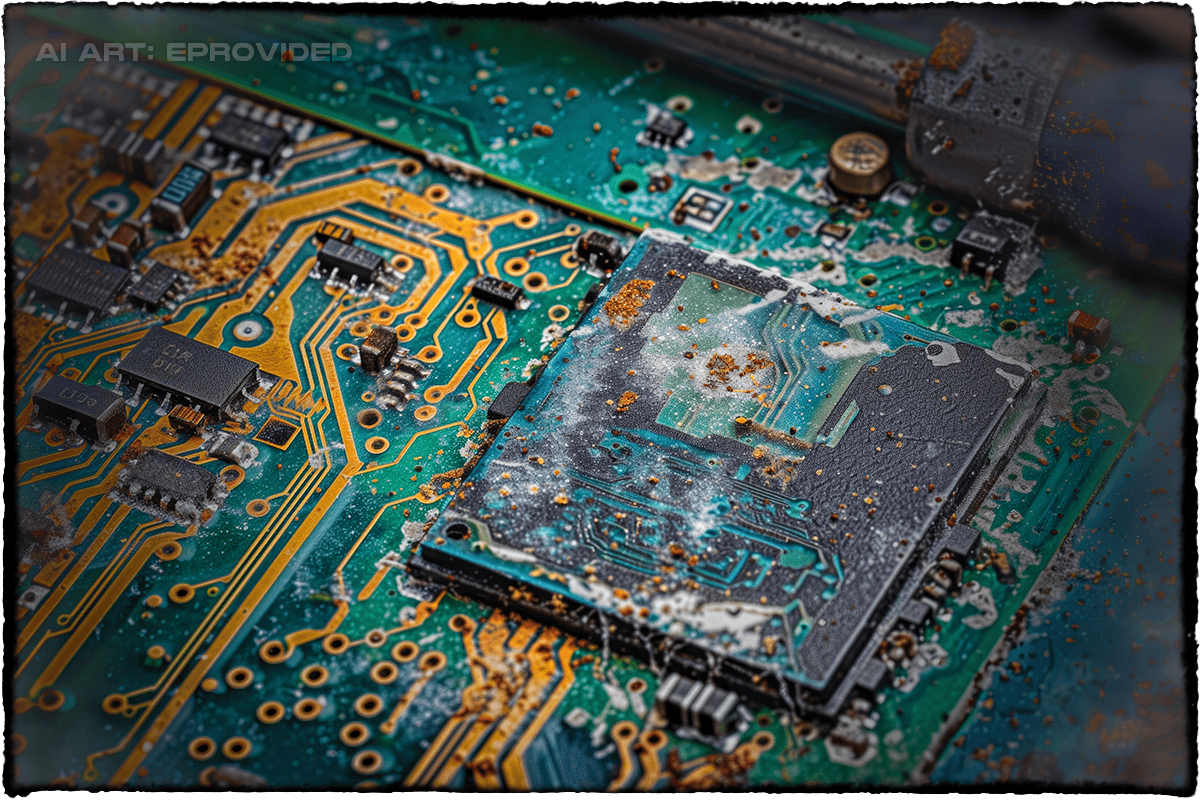
Not all water is created equal — and your phone’s internal components know the difference immediately. Fresh water is a relatively poor conductor of electricity. Salt water is another story entirely. According to the U.S. Geological Survey, even a small concentration of dissolved ions dramatically increases water’s ability to conduct electricity. Seawater, loaded with sodium and chloride ions, can conduct electricity far more readily than tap water or freshwater — enabling near-instantaneous short circuits across your phone’s circuit board.
The National Oceanic and Atmospheric Administration (NOAA) reports that sodium and chloride together make up approximately 85% of all dissolved ions in ocean water, at an average salinity of about 35 parts per thousand. When those ions penetrate your phone’s chassis, they don’t just cause a short circuit — they begin a persistent galvanic corrosion process that continues eating through copper traces, solder joints, and NAND flash chip contacts even after the phone is removed from the water.
Fresh water damage gives you a fighting chance if you act quickly and keep the phone off. Salt water damage operates on a different timeline. Research from USGS confirms that the presence of chloride directly increases water corrosivity — and chloride residue on a circuit board keeps corroding even after the water evaporates. That’s why phones that seem fine immediately after a salt water plunge often fail permanently within 24–72 hours as corrosion progresses invisibly.
Seawater conducts electricity at roughly 5 siemens per meter — compared to approximately 0.0005 S/m for pure water. That makes ocean water about 10,000 times more electrically conductive than pure H₂O, and far more conductive than typical tap or pool water. Even after a phone dries out, residual chloride ions continue corroding copper traces and NAND chip contacts on the motherboard — which is why “wait and see” is almost never the right move with saltwater damage.
Can You Recover Data from a Saltwater-Damaged Phone?
Yes — in most cases, data recovery from a saltwater-damaged phone is absolutely possible. The key variable is time. The longer salt water sits on your phone’s motherboard, the more progressive corrosion damages the components that our engineers need to work with. eProvided averages a 98% success rate on water-damaged device recovery, including phones that spent extended periods submerged. Our engineers have successfully recovered data from phones that sat at the bottom of the ocean for weeks, devices soaked in hurricane floodwaters, and smartphones pulled from saltwater pools months after the incident. The sooner you contact us, the better your odds.
Professional saltwater damaged smartphone recovery is not a DIY project. The NAND flash memory chips that store your photos, messages, and files are durable — they don’t care about water. The problem is the surrounding circuitry. On a modern phone, though, the data on that chip is encrypted with a key that lives in the phone’s own processor, so reading the chip on its own returns only scrambled data. Our lab works the other way round: we clean and repair the corroded board itself, or move the processor and memory together onto a healthy donor board, so the phone’s own silicon can unlock your files again. That board-level work, part of our lab recovery process, is why we can often help after a local repair shop has given up.
Can a phone recover from salt water damage? In most cases, yes — the phone itself may never turn back on, but that’s a different question from whether your data survived. Whether your phone was dropped in salt water at the beach, fell off a boat, or went under during a storm surge, the NAND chip storing your photos is usually still intact even when the rest of the phone is a total loss. The corrosion that kills the phone rarely reaches the chip in time — which is exactly why acting fast, not the exact make or model, is what decides your odds.
Can My Phone’s Data Be Recovered? Use This Quick Checklist
Not sure whether professional recovery is worth attempting? Run through these five scenarios. In our experience, the answers tell you a lot about what to expect before you even send your phone to us.
| Salt Water Phone Recovery Outlook by Situation | ||
|---|---|---|
| Situation | What It Usually Means | Recovery Outlook |
| Phone briefly submerged, immediately powered off — removed from salt water within seconds or minutes, never turned back on | NAND storage is typically intact; corrosion is early-stage and limited to PCB surface layers that our lab can bypass | ✓ Very Likely Recoverable |
| Phone was powered off during entire salt water exposure — no active electrical current flowed while submerged | Without current flow, electrochemical attack is significantly slower; NAND chip data often survives fully intact | ✓ High Recovery Chance |
| Accidental deletion or format on a water-damaged phone — device still has life in it but data was overwritten or deleted | File system damage only; original NAND cells contain the data if not overwritten — standard logical recovery applies | ✓ Excellent Odds |
| Phone completely unresponsive after salt water exposure — won’t charge, won’t power on, no signs of life | Deeper corrosion may have reached the processor or memory contacts; component-level board repair or a donor-board transplant is needed — more complex but still viable | ⚠ Complex — Great Chances |
| Phone submerged in salt water for hours or days — extended exposure to ocean, floodwater, or saltwater pool | Progressive corrosion across multiple board layers demands immediate professional lab intervention — every hour matters | ⚠ Damage Dependent, Great Chances |
Even the yellow-row scenarios have good recovery odds when addressed quickly. Contact our team at eProvided before attempting any home remedies — the wrong move at this stage can make recovery harder.
Immediate Steps After Dropping Your Phone in Salt Water

Speed is everything with saltwater damage. Every minute that passes increases corrosion on your phone’s internal components. Here’s what our engineers recommend doing the moment your device hits salt water — steps we’ve advised thousands of customers through, from vacationers who dropped their iPhone at the beach to homeowners dealing with hurricane flooding.
Step 1 — Turn It Off Immediately
If your phone is on, power it down right now. An active electrical current accelerates the electrochemical damage from salt ions. Do not attempt to check if it still works — the act of powering it on can cause catastrophic short circuits across the motherboard. Remove the SIM card tray if accessible. Keep it still; movement spreads moisture between components.
Step 2 — Remove It From Water ASAP
This sounds obvious, but don’t underestimate it. Every additional second of submersion means more sodium and chloride ions penetrating deeper into the chassis. Extract the phone as quickly and safely as possible. During hurricanes like Helene (September 2024) and Milton (October 2024), we helped dozens of customers who waited too long — flooding in Florida and the Carolinas left phones submerged for hours. Earlier contact with our team always translated to better outcomes.
Step 3 — Rinse With Fresh Water
This is the saltwater-specific step that most people miss. If the phone was submerged in ocean water, briefly rinsing the exterior with clean fresh water helps displace surface salt deposits before they crystallize. Don’t submerge it — just a gentle rinse over the ports and seams. This step does not apply if the phone was in fresh water to begin with.
Step 4 — Try Rice or Silica Gel (With Realistic Expectations)
The classic rice trick — bury your phone in a bag of dry rice and wait 24–48 hours. Does it help? Marginally, for moisture absorption. Will it stop saltwater corrosion? Absolutely not. Rice is like using a band-aid on a shark bite when chloride ions are eating through your PCB traces. Silica gel packets (the little desiccant pouches from shoe boxes) work better than rice for moisture. Neither removes the salt residue causing ongoing damage. Both buy you a small amount of time to get the phone to us — nothing more.
Step 5 — Contact a Professional Immediately
Once you’ve done what you can, start your recovery case with eProvided. Our evaluation is free. We’ll assess your device and tell you exactly what’s recoverable before any work begins. Most “phone repair near me” shops that advertise water damage repair quietly send saltwater-damaged phones to us anyway — skip the middleman and get the outcome faster. Our engineers handle NAND flash recovery with board-level repair and donor-board work, the approaches that let a modern phone’s own processor decrypt your data again after severe saltwater damage.
What Happens Inside a Phone Exposed to Salt Water?
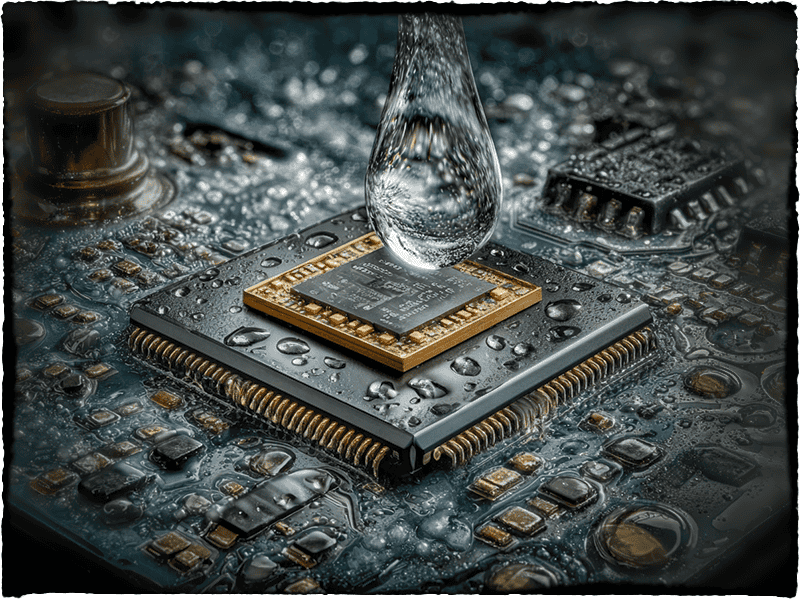
Understanding what salt water actually does inside your phone helps explain why professional recovery is both necessary and effective. Your phone’s data doesn’t live in a single chip you can just swap out — it’s stored across NAND flash memory cells — the same flash technology used in SSDs and NVMe drives — managed by a controller chip, both soldered directly to the motherboard. When salt water enters, it attacks the electrical pathways between these components first.
The sodium and chloride ions in seawater create galvanic cells wherever two different metals meet — and your phone’s motherboard is packed with dissimilar metal junctions. Copper traces, solder (tin-lead or lead-free alloy), aluminum shielding, and gold-plated contacts all react differently to the salt solution. The result is rapid oxidation, dendrite growth across circuit traces, and eventually open-circuit failures that prevent the phone from booting at all. Our lab has seen NAND chips completely isolated from their controllers within 48 hours of ocean exposure — yet the data on the chips themselves was perfectly intact.
This is exactly the scenario we encountered when NASA used eProvided after the Helios aircraft mission crash into the Pacific — recovering data from water-damaged CompactFlash cards submerged in the ocean for weeks, memory that stores no keys of its own. The same lab discipline is what we bring to your saltwater damaged smartphone recovery case — the exact technique differs by device (a memory card and a modern smartphone are not repaired the same way), but the standard is the same. eProvided has also worked with the FBI on bioterrorism-related data cases, U.S. Special Agents, and the Department of the Navy — organizations that entrust us with irreplaceable data under the most challenging conditions imaginable.
When standard approaches fail because of corrosion, our engineers work at board level — cleaning corrosion from under the chips, replacing failed components, and rebuilding damaged traces. If the board is beyond repair, the processor and memory are moved together onto a healthy donor board, because on a modern phone the key that decrypts your data lives in the processor, not in the memory chip. For iPhone data recovery this matters from the iPhone 3GS onward, and it is the reason a chip read on its own cannot recover an iPhone — the original silicon has to be brought back to work. Join the conversation with our community on Reddit at r/eProvided where customers share their real recovery experiences.
eProvided’s Salt Water Data Recovery Process

Our recovery process is designed to be simple for you — even in a stressful situation. Here’s how it works from the moment you contact us to the moment you receive your data back.
- Start your case online — Visit our recovery intake page and describe your situation. Takes about 2 minutes.
- Ship your device — We send you packaging instructions. You send the device to our Las Vegas laboratory via any carrier. Most customers use FedEx or USPS Priority Mail.
- Free evaluation — Our engineers assess the damage and determine the recovery approach within 1–2 business days. You receive a clear report and price quote before any work begins.
- Recovery work begins — Upon your approval, our engineers get to work. Saltwater cases typically take 3–7 business days depending on complexity. Advanced board-repair and donor-board cases may take longer.
- Data delivered to you — Recovered files are transferred to a new drive or secure download link and shipped back. No Data, No Data Recovery Fee — if we can’t recover your data, you pay nothing for the recovery work.
Questions before you start? Click to chat live with our recovery specialists right now — we’re available and ready to help.
Salt-Water Damaged Phone? Don’t Wait — Corrosion Spreads Every Hour.
Our engineers will tell you exactly which photos, messages, and files are recoverable — free, no obligation, completely confidential.
Start My Free Salt-Water Recovery Evaluationor call (866) 857-5950 now
What Our Customers Say
What Does Salt Water Phone Data Recovery Cost?
We understand that cost is a real concern when you’re already dealing with the stress of a damaged phone. Here’s a straightforward breakdown of what to expect from our professional data recovery services.
Basic recovery — For saltwater-damaged phones where the NAND chip is accessible and the damage is limited to the PCB interface, basic recovery is typically under $150. If it turns out to be more complicated, we tell you in advance, after the free evaluation in our lab. This covers logical recovery, simple corrosion bypass, and data transfer to a new medium.
Advanced recovery — When the corroded board needs component-level repair, or the processor and memory have to move together onto a donor board, we provide a detailed quote after your free evaluation. We never begin advanced work without your explicit approval. There are no surprise bills.
No Data, No Data Recovery Fee — If our engineers determine that your data cannot be recovered, you owe nothing for the recovery attempt. We bear the risk, not you. This is how confident we are in our process. Have questions about pricing before you send your device? Click to chat live with our team or call toll-free at 1-866-857-5950. Las Vegas locals can also drop off devices directly — visit our blog for location details and tips on preparing your device for drop-off.
Devices We Recover From Salt Water Damage
eProvided specializes in the recovery of data from any smartphone or mobile device, regardless of brand, model, or the extent of damage caused by salt water exposure. Our experienced team is equipped to handle a wide range of devices, from the latest flagship smartphones to older models and even discontinued devices.
Whether your device has suffered from water intrusion, physical damage, or logical data corruption, we use advanced recovery techniques to maximize the chances of retrieving your valuable information. If your device has previously stored data, we are dedicated to recovering it, ensuring your important memories and files are restored efficiently. We understand the emotional significance of lost data, and we strive to provide our clients with peace of mind throughout the recovery process.
| Salt Water Phone Recovery — Supported Brands & Devices | |
|---|---|
| Brand | Common Models |
| Apple iPhone | iPhone 17, 16, 15, 14, 13, 12, 11, X, SE series, iPhone Air |
| Samsung Galaxy | S24, S23, S22, S21, A-series, Z Fold/Flip |
| Google Pixel | Pixel 9, 8, 7, 6, 5, 4 series |
| Motorola / Moto | Edge, Razr, G-series, E-series |
| OnePlus / Oppo / Xiaomi | All current and legacy models |
| Other Android | LG, HTC, Sony, Nokia, Huawei, and more |
Have a brand not listed here? Call us — if it stores data, we can evaluate it for free. Our engineers also handle iPhone data recovery, where the decryption key has been fused into Apple’s processor since the iPhone 3GS, so the original board or its processor has to be brought back to work.
Frequently Asked Questions
Salt-Water Damaged Phone? Don’t Wait — Corrosion Spreads Every Hour.
A free evaluation confirms exactly what the saltwater didn't reach, with no obligation and full confidentiality.
Start My Free Salt-Water Recovery Evaluationor call (866) 857-5950 now
Data Recovery for Every Device We Handle
A soaked phone isn't the only thing we bring back — if the failure hit a different device, here's where to start: