
Used by NASA · the FBI · the U.S. Navy · Since 1999
NAND Wafers vs. Monolithic Storage: What’s the Real Difference?
- No Data, No Data Recovery Fee
- Free, confidential evaluation
- 4.9 / 5 on Trustpilot (67 reviews)
- Worldwide lab recovery
Not every flash drive or memory card is built the same way inside, and the difference is bigger than most people realize. Some devices keep the memory chip and the controller as two separate parts on a circuit board — the setup behind most chip-level flash recovery work. Others fuse everything — memory cells and controller logic — into a single package with nothing separate to find. That second kind is called monolithic storage, and it changes what a data recovery lab can actually do when the device fails.
In 27+ years of opening thousands of USB sticks, SD cards and microSD cards under the microscope, we’ve learned that what’s inside determines the entire recovery plan before any work begins — and it’s the single biggest reason two visually identical drives can have very different recovery outlooks.
What Is the Difference Between NAND Wafers and Monolithic Storage?
A standard device keeps the NAND memory chip separate from the controller, so it can be removed and read directly — chip-off recovery. A monolithic device fuses both into one package, putting ordinary chip-off out of reach. eProvided reads monolithic devices in place with in-house board-level tools, and has since 1999.
“On a monolith there is nothing to lift. You find the read points on the board yourself, and they move from model to model.” — Bruce Cullen, founder, eProvided
The Two Architectures

Every piece of flash storage — a USB stick, an SD card, a microSD card — stores data on NAND flash memory. But manufacturers build the device around that memory in one of two very different ways. In a standard, or “wafer,” device, the NAND memory sits as its own discrete chip on a small circuit board, connected to a separate controller chip that manages reading and writing. In a monolithic device, there is no separate memory chip at all — the memory cells and the controller logic are fused together into a single piece of silicon.
That single distinction is the reason data recovery on one type can take an afternoon, and on the other can take days of board-level work with no room for error.
NAND-Wafer vs. Monolithic: Side by Side
Both architectures show up across USB sticks, SD cards and microSD cards — you generally can’t tell which one you have from the outside:

The same bench, the same engineers, two completely different workflows depending on which architecture is on the table. A standard device goes to the chip-off station; a monolithic device goes under the microscope for board-level diagnosis first. Neither path is a shortcut — both require identifying the exact failure before any recovery step begins, and guessing wrong at this stage can cost time that a fragile device does not have. That’s why the free evaluation always starts with opening the device, not with a generic quote. We’ve seen cases arrive already misdiagnosed by another shop that assumed chip-off would work on a monolithic package, wasting time before the device ever reached a lab equipped to handle it. The table below lays out exactly how the two architectures diverge, trait by trait.
| NAND-Wafer vs. Monolithic Storage | ||
|---|---|---|
| Trait | Standard NAND-Wafer Device | Monolithic Device |
| Physical construction | NAND memory chip and controller are separate parts on the board | Memory and controller logic fused into one package |
| Chip-off possible? | ✓ Yes — the standard approach | ⚠ No — nothing separate to remove |
| Recovery method | Extract the NAND chip, dump the raw data directly | In-house board-level read-point access on the fused die |
| Manufacturing cost | Slightly higher — two components to assemble | Lower — one component, popular with manufacturers |
| Labs that attempt recovery | Common among data recovery providers | Rare — most labs decline monolithic cases |
Monolithic construction has become increasingly common in USB sticks, SD cards and microSD cards because it is cheaper to manufacture than a separate controller-plus-NAND design. That popularity is exactly why more failed devices arriving at data recovery labs today are monolithic than a decade ago.
What Is a NAND Wafer?
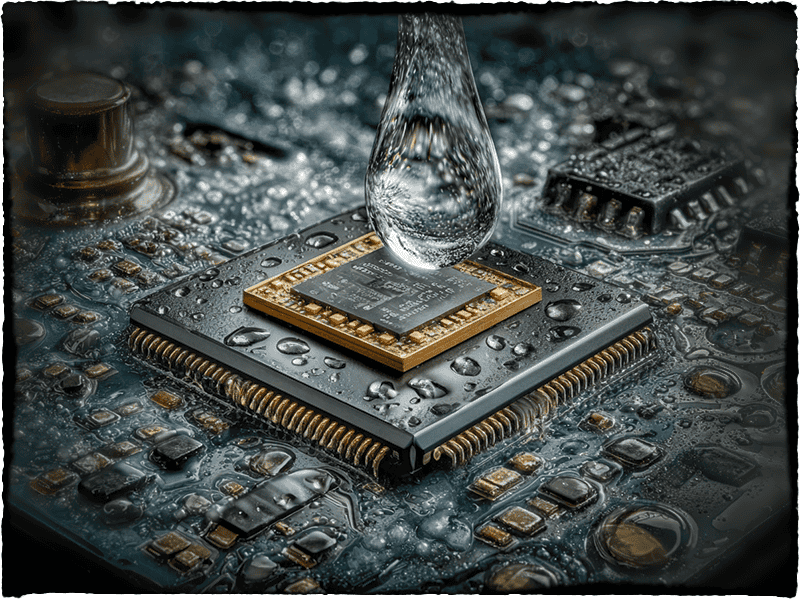
NAND flash memory chips are compact, fast, and inexpensive to produce, which is why they ended up inside nearly every USB stick, SD card, and microSD card on the market. In a standard device, that memory shows up as its own physical chip: some are surface-mounted (SMT) flat against the board, others have small legs on each side connecting them to the circuit board. Either way, the chip is a distinct, removable part — which is exactly what makes chip-off recovery possible. Our engineers extract the chip, read the raw data bank by bank, and reconstruct the file structure from there, the same technique behind most of our flash drive failure recoveries. This is also why a standard device with a snapped connector, a dead controller, or a corrupted file table is almost always fully recoverable — none of those failures touch the NAND chip itself, and the chip is the only place the actual data lives.
What Makes Monolithic Storage More Complex?
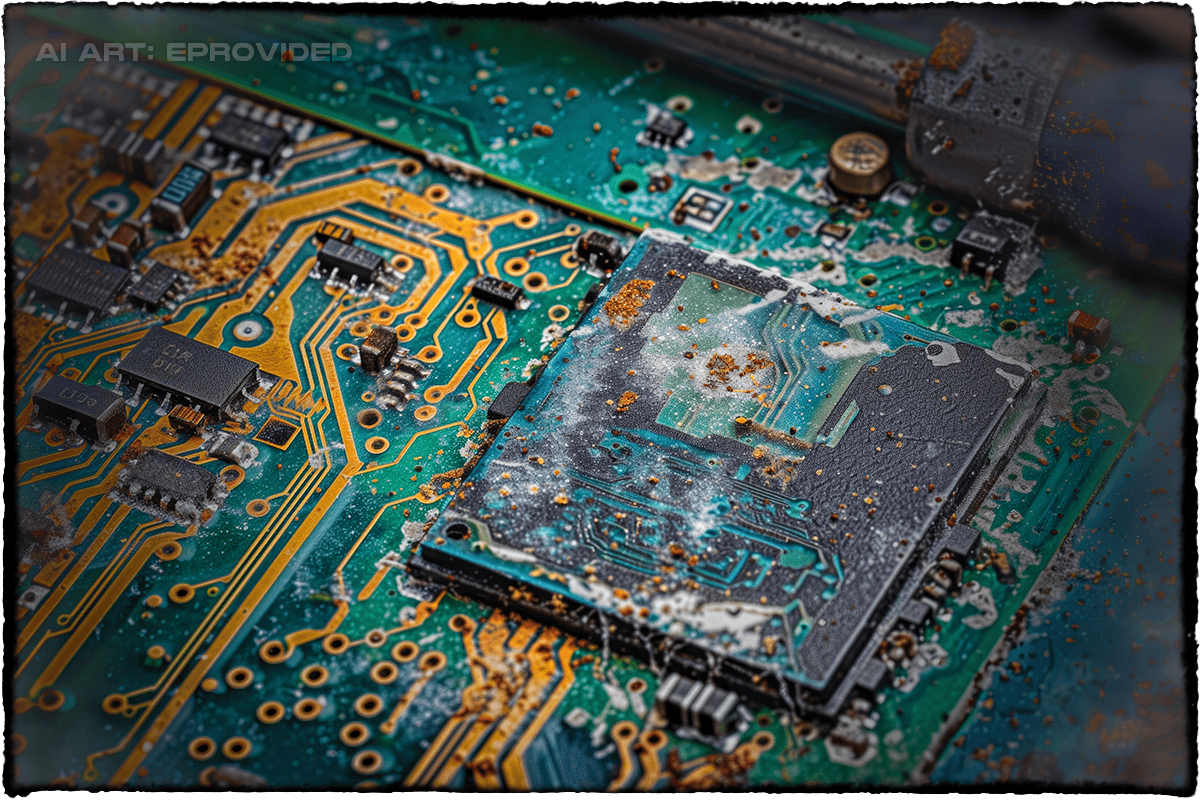
A monolithic device takes the memory cells and the controller and builds them into components on a single semiconductor wafer, which is then diced into one integrated circuit. There is no separate memory chip sitting on the board waiting to be lifted — the entire device is one fused package. That single fact rules out ordinary chip-off recovery by definition, not by difficulty: there is nothing discrete left to extract.
Recovering a monolithic device instead means locating specific test or read points directly on the circuit board and accessing the memory in place, using in-house tools built for exactly this purpose. Those points move from model to model and manufacturer to manufacturer, so there is no universal shortcut — each monolithic case starts with board-level diagnosis under the microscope. Most data recovery companies decline monolithic cases outright because the time and precision required rarely fit a standard workflow. eProvided has treated monolithic recovery as a core capability rather than an exception since 1999.
How Each One Is Actually Recovered
The method always follows the architecture, never the other way around:
- Free evaluation — Our engineers open the device and identify which architecture it uses before any work begins. No Data, No Data Recovery Fee.
- Standard NAND-wafer devices — The memory chip is extracted and read directly (chip-off), then the drive’s wear-leveling algorithm is unscrambled to rebuild the real file structure.
- Monolithic devices — Engineers locate the board’s read points under the microscope and access the fused memory in place, using in-house monolithic-recovery tools — no chip extraction involved.
- Verification & delivery — Recovered files are checked, then delivered on new media or a secure download.
Our lab follows strict confidentiality protocols on every case, from individual customers to government agencies. See how this plays out in a specific case in our thumb drive recovery guide below, or start your case when you’re ready.
Not Sure Which Architecture Your Drive Uses?
Neither are most people — that’s exactly what the free evaluation is for. We open it, identify the architecture, and quote a firm price before any work begins.
Start My Free Evaluationor call (866) 857-5950 now
Protecting Data on Either Type

None of this depends on which architecture is inside your device — a good backup habit protects a monolithic drive exactly as well as a standard one. The safest assumption is also the simplest one: any single piece of flash storage, however it’s built inside, can fail without warning, and usually does so with no visible symptom beforehand. A second copy of anything irreplaceable removes the guesswork entirely, regardless of which architecture the original device happens to use, and it costs far less than a recovery ever will. It also means a failed device becomes an inconvenience instead of an emergency — you can send it in for a calm, unhurried evaluation instead of racing against a deadline to get files back.
Do
- Back up important files to a second drive or the cloud regularly — architecture doesn’t change how fast a backup can save you
- Use “Safely Remove Hardware” before unplugging any flash device
- Stop using a device the moment it shows read errors, on either architecture
DON’T Do
- Don’t assume a monolithic device is unrecoverable — it just needs a lab set up for board-level access
- Don’t try to open or probe a monolithic package yourself; the read points are model-specific and easy to damage
- Don’t keep powering on a device that’s already failing while you decide what to do
These habits matter regardless of which architecture is inside your device. For general best practices on protecting data, see the NIST guidelines on data protection. If your drive already shows symptoms, get a thumb drive recovery evaluation before it gets worse.
What Our Customers Say
Frequently Asked Questions
Still curious about the underlying memory itself rather than the recovery side? Our plain-English guide to what NAND flash actually is covers the basics this article builds on.
Not Sure Which Architecture Your Drive Uses?
Neither are most people — that’s exactly what the free evaluation is for. We open it, identify the architecture, and quote a firm price before any work begins.
Start My Free Evaluationor call (866) 857-5950 now
Recovery Services for Every Flash Storage Type
Whichever architecture your device uses, eProvided recovers it from one lab: