Used by NASA · the FBI · the U.S. Navy · Since 1999
Data Recovery Service at the Best Price
- No Data, No Data Recovery Fee
- 27+ years of recovery experience
- Every device, every brand
- Free evaluation, no obligation
What Makes a Data Recovery Service the Best Price?
The best-price data recovery service is one that quotes after a free evaluation and charges nothing when nothing is recovered. eProvided evaluates every device free, contacts you before any work starts, averages a 98% success rate across all cases since 1999, and returns your files on a fresh USB drive or by secure download.
“The cheapest quote is only cheap if the files come back. Ask what happens when they don’t.” — Bruce Cullen, founder, eProvided
Data Recovery Service Solutions: recover your data for the best price. Whether it’s a hard drive that won’t mount, a USB stick reported as unreadable or a phone full of photos that won’t turn on, the cheapest recovery is the one that starts with an honest, free evaluation — so you know what survived, and what recovery costs, before you spend a cent.
Stop using the failed device, then get a free evaluation. eProvided assesses the problem, contacts you with a quote before any work starts, averages a 98% success rate across all cases, offers a rush service when time is crucial, and charges no data recovery fee if nothing is recovered. Files come back on a fresh USB drive or by secure download.
Do RIGHT NOW
- Stop using the drive, card or phone as soon as files go missing
- Note what happened — a drop, a spill, a clicking sound, an error message
- Get a free evaluation before approving any paid work
- Ask for rush service if you’re working against a deadline
DON’T Do
- Don’t run free repair or recovery software on a failing drive
- Don’t keep power-cycling a drive that clicks or disappears
- Don’t open a hard drive or SSD case yourself
- Don’t pick a lab on price alone without a no-data, no-fee policy
- Why Affordable Recovery Matters
- Unreadable Hard Drive or USB Flash Drive?
- Cost-Effective Data Recovery for Any Budget
- What Moves the Price of a Recovery
- Data Recovery Service Pricing & Options
- Five Questions to Ask Before You Pick the Cheapest Lab
- A Quick, Trusted, Safe and Friendly Service
- Why SSD and Phone Recovery Often Costs More
- How the Service Works, At a Glance
- What NOT to Do When You Shop on Price
- Real Cases From Our Records
- What Our Customers Say
- Frequently Asked Questions
- Get a Free Evaluation
- Related Recovery Services
Why an Affordable Data Recovery Service Matters
So many of us rely on computers, tablets and cellphones, and everyday use is expected. It’s difficult to imagine how we’d cope without these storage devices — they let us organize and maintain our lives with ease. You can store thousands of photos on your cell phone and carry a treasure chest of memories wherever you go. You can create documents on your smartphone at work or at school, then check them hours later on your tablet at home, and keep working on the same presentation across multiple devices as ideas come to you. That convenience is exactly why losing access hurts so much, and why contacting a data recovery service that’s economical is vital when something breaks.
Failure is not rare. Backblaze, a cloud storage company that publishes its drive statistics every year, reported an annualized failure rate of 1.57% for the drives in its data centers in its 2024 report, and 1.31% over the lifetime of those drives. Data-center drives are not home drives, so those figures are not your odds. They do show that drives fail as a matter of routine, which is why a backup and a clear idea of what recovery costs are both worth having before the day you need them.
Have an Unreadable Hard Drive or USB Flash Drive? Use a Data Recovery Service Specialist

Today’s storage drives are astounding, but sometimes things go wrong. Your tablet or USB stick stops saving pictures correctly, or your computer’s disk drive suddenly becomes incredibly slow, and panic sets in. Everyone depends on these bits and pieces to function, so the first question is always the same: what will we do if we lose important data? The answer starts with what you do in the next few minutes — stop writing to the device, don’t run repair utilities on it, and don’t keep power-cycling a drive that clicks or disappears.
At eProvided, we’re data recovery specialists with a wealth of experience retrieving files across all types of storage drives. Our team helps businesses and private customers access lost files, simply and economically, using advanced file retrieval techniques matched to the specific failure. eProvided services SSDs, microSDHC cards, USB flash drives, hard drives and smartphones. Not every device can be recovered — that’s what the free evaluation is for — but whatever device has lost files, you’ll know exactly what’s possible before any work is approved.
When your USB drive is reported as ‘USB unreadable’ (see our USB flash drive recovery guide), or your external hard drive disappears from your computer along with all your data, you still have options. We aim to be affordable. Whether the storage drive has been lost, damaged, corrupted or broken, eProvided evaluates it and looks for a recovery path before you commit to anything.
Unreadable Drive, Card or Phone?
Get a free, confidential evaluation first — you approve the work before anything is done, and there’s no data recovery fee if we recover nothing.
Start My Free Evaluationor call (866) 857-5950 now
Extremely Cost-Effective Data Recovery Services for You, Your Business or Any Budget

eProvided goes to the extremes for every customer. Before we even start work on recovering data, we offer a free diagnosis. Free means we’ll assess the problem and evaluate the work required, and we contact every client before any work has started — nothing is billed without your approval. Across all cases we average a 98% success rate. If we cannot retrieve your data, you will not be charged file recovery costs: No Data, No Data Recovery Fee.
Once your case is finished, the data we recover is returned on a fresh USB drive, and larger cases can be copied to a drive you choose. You can also request your recovered files through a secure email download link, which is often the fastest option for customers who are out of town or need a single folder urgently.
What Moves the Price of a Recovery
 Enlarge
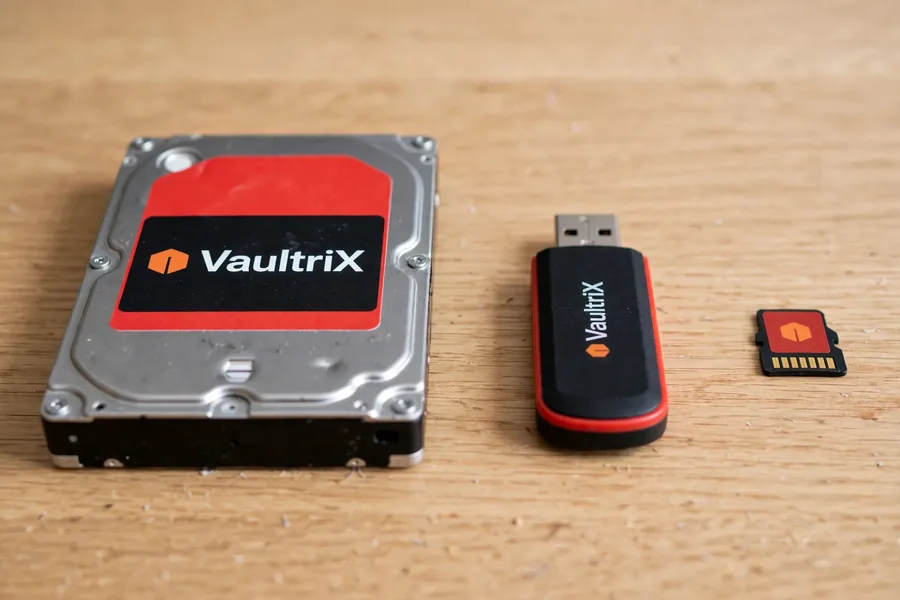
Two recoveries of the same size can cost very different amounts, because the price follows the work and not the number of files. A deleted folder on a healthy drive is a software job. A hard drive that clicks is a mechanical job done in a particle-controlled lab, as our hard drive guide explains. A phone or an SSD that stopped responding is a component-level job on a circuit board, like the broken iPhone case we have written up. Capacity matters less than most people expect; the kind of failure matters most.
That is why a flat price quoted over the phone, before anyone has seen the device, is a guess. Either the number is high enough to cover the worst case, or it is low and changes once the device is open. A fair quote comes from an engineer who has looked at your device, and it comes before any paid work starts.
The table shows the usual steps for each kind of failure. For the dollar side, our pricing page, linked at the top of this article, has the full explanation of the five levels. In short, simple logical recoveries typically cost under $150, and anything more involved is quoted after the free evaluation, with nothing charged until you approve it.
| What Drives the Cost of a Recovery | ||
|---|---|---|
| What went wrong | What the lab does | How it is priced |
| Deleted, formatted or corrupted files; the device still works | Software-led rebuild of the file system, with no physical work on the device | Typically under $150 |
| Drive shows 0 bytes or the wrong size | Firmware tools and repair of the drive’s service area | Free evaluation, then an exact quote |
| Hard drive clicks, will not spin or was dropped | Particle-controlled lab work with matched donor parts | Free evaluation, then an exact quote |
| Snapped USB stick, cracked microSD or monolithic card | Board repair where it helps, or a direct read of the memory chip, then a rebuild of the files | Free evaluation, then an exact quote |
| Phone or SSD that stopped responding | Repair of the original board, or a donor board that carries the processor or controller and the memory together, so the device can decrypt its own data. On an SSD we identify the controller first | Free evaluation, then an exact quote |
| RAID or NAS with several failed drives | Work on each failed member first, then a rebuild of the array | Free evaluation, then an exact quote |
Data Recovery Service Pricing and Options
 Enlarge
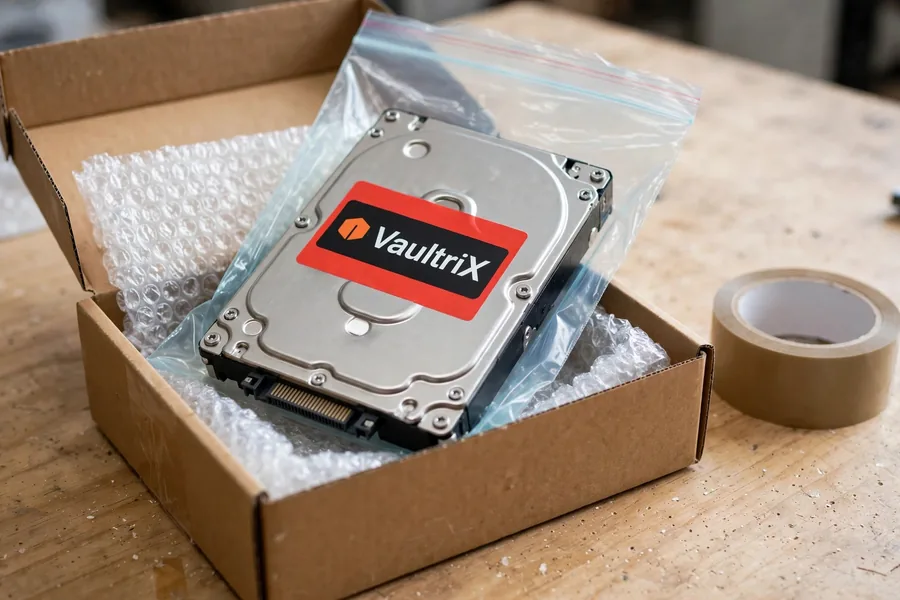
Data recovery service pricing. Our prices cover all storage device types and sizes sold in retail outlets. Among the other services we provide is retrieving data from hard drives, and we recover files from SSDs, microSD cards and smartphones as well. For an additional fee, we can also provide a rush service when time is crucial — a court deadline, a business that can’t open without its accounting files, or photos needed for an event.
You can drop off your media in Las Vegas by appointment or ship it to us by FedEx. Either way, a full file recovery analysis is provided before the recovery goes ahead, so the price you approve is based on your device’s actual condition rather than a guess over the phone. Once the recovery is complete, we ship your data back on a fresh USB drive.
Timing is part of the price you pay in other ways, so ask for it up front. We usually send the quote within one business day of the device arriving, and typical turnaround is a few business days, longer for difficult cases. The rush option can deliver in 24 hours or less. Once you approve a quote it holds about 99% of the time, and if something unexpected appears mid-recovery you hear from the engineer before anything changes.
Five Questions to Ask Before You Pick the Cheapest Lab
 Enlarge
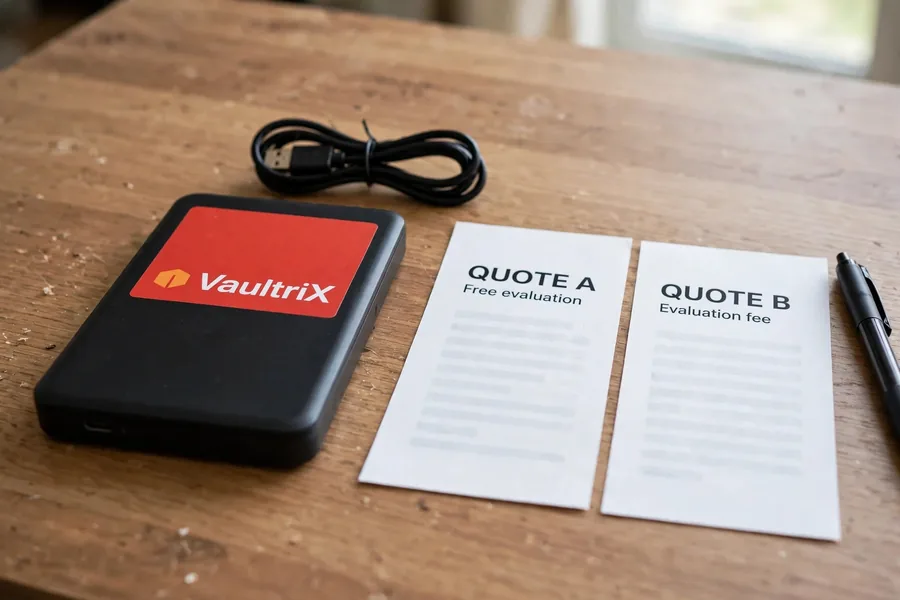
A low headline number tells you very little on its own. These five questions turn a price into something you can compare, lab to lab. Ask all five, write down the answers, and choose on the answers rather than on the lowest figure.
- Is the evaluation free? Some labs charge just to look at the device. We evaluate every device at no charge, and an engineer tells you what was found.
- What do I pay if nothing comes back? A small attempt fee that you owe either way is not a bargain. Here, if nothing is recovered, there is no recovery fee.
- Who gives me the quote? A quote from the engineer who will do the work is firmer than one from a call-center script. Ours comes from the engineer.
- Is the quote written, and can it change? Ask to see it before work starts and ask when it can move. A quote that often rises mid-case is not the price you were told.
- Where is the lab, and how do the files come back? Ask for a street address. Ours is one lab in Las Vegas, and files return on a fresh USB drive or by secure download.
Also check who pays for a “best price” ranking. The US Federal Trade Commission’s endorsement rules require a paid connection to be disclosed when many readers would not expect it, so look for that disclosure before you trust a list of cheap labs.
At eProvided You’ll Enjoy a Quick, Trusted, Safe and Friendly Service
At eProvided, we offer fast, friendly document recovery services, and our data recovery service has been written up in Popular Mechanics. We love what we do and we’re passionate about helping customers access their files. We continually stay up to date with the latest storage devices so the service stays wide-ranging and comprehensive. That dedication has helped us earn an A+ rating from the Better Business Bureau and maintain consistently high performance since we were established in 1999 — more than 27 years.
Since then, digital storage has become far more complex. Tablets, smartphones, laptops and memory sticks each store data differently — and a modern phone ties its encryption key to the device’s own processor, so it is recovered by repairing the original board rather than by reading the memory chip on its own. SSDs vary by controller, so we identify it first. How many more device types will there be going forward? Whatever arrives next, the approach stays the same: evaluate first, explain the options, and only then recover.
Questions about eProvided and other data recovery service topics? Call toll-free (866) 857-5950, or chat live.
Why SSD and Phone Recovery Often Costs More
People are sometimes surprised that a small phone or a thin SSD costs more to recover than a large old hard drive. The reason is the lock. Modern phones encrypt what they store, and the key is held in the main processor, not in the memory chips. SSDs vary by controller: many modern NVMe controllers always encrypt, while some older or budget ones only scramble, so we identify the controller first. Apple states that each of its chips has a unique ID fused in at manufacture, and that the ID is not available to Apple or its suppliers (Apple Platform Security). Android requires file-based encryption on new devices running Android 10 and higher (Android documentation).
For us this means the work is component-level repair of the original board, or moving the processor or controller and the memory together onto a donor board, which takes more time and skill than reading a USB stick. On an SSD whose controller does not encrypt, we can sometimes read the memory directly and descramble it. A USB stick, SD card or microSD card does not lock its data to a separate processor in the same way, so the lab can often read the memory chip directly and rebuild the files. That is the main reason a snapped USB stick can cost less than a dead phone. Our guide to fixing a dead SSD and the article on a microSD card that broke in half show each path in detail. Capability is not outcome: the free evaluation is where an engineer tells you which of these paths your device needs and what to expect.
How the Service Works, At a Glance
| eProvided Data Recovery Service, At a Glance | ||
|---|---|---|
| Step | What Happens | Cost to You |
| 1. Free evaluation | We assess the device and the work required | Free |
| 2. Approval | We contact you before any work starts | Free |
| 3. Recovery | Standard or rush service, your choice | Quoted up front |
| 4. Data returned | Fresh USB drive, your own drive, or a secure download link | Included |
| Nothing recovered? | No Data, No Data Recovery Fee | No recovery fee |
What NOT to Do When You Shop on Price
 Enlarge
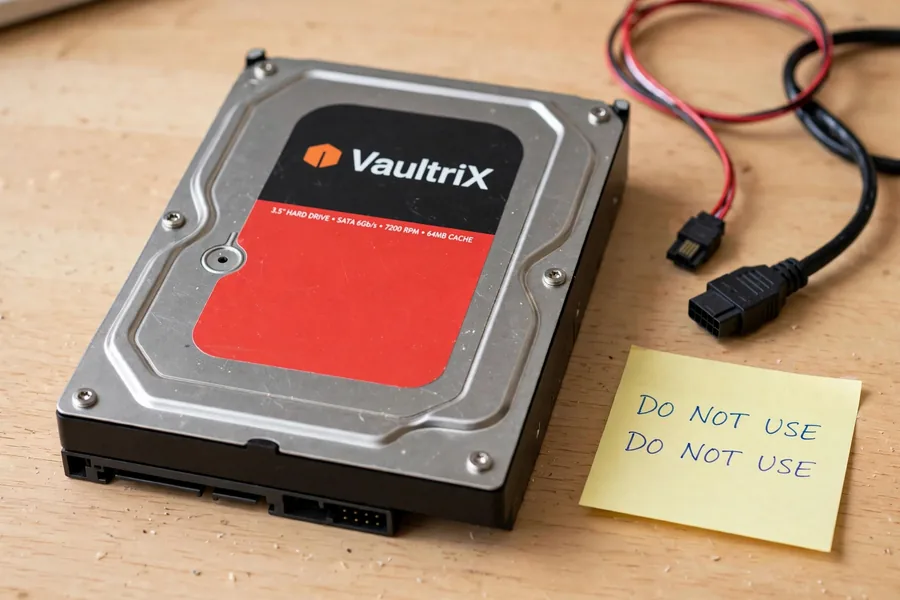
- Do not choose on the headline price alone. A low figure that you owe even when nothing comes back can cost more than a higher one that does not.
- Do not accept a firm price over the phone before anyone has seen the device. The failure decides the work, so a number given blind is either padded or about to change.
- Do not agree to pay a diagnostic fee without asking if it is credited or refunded. Charges that build up while a lab “looks at it” are how a cheap quote turns into an expensive one.
- Do not trust a “best price” list without checking who paid for it. A ranking site can be paid by the labs it ranks, and that should be disclosed.
- Do not let a first, cheaper attempt overwrite the evidence. A repair try that writes to the device can turn a recoverable case into one that is not, which is what the cases below show.
Real Cases From Our Records
 Enlarge
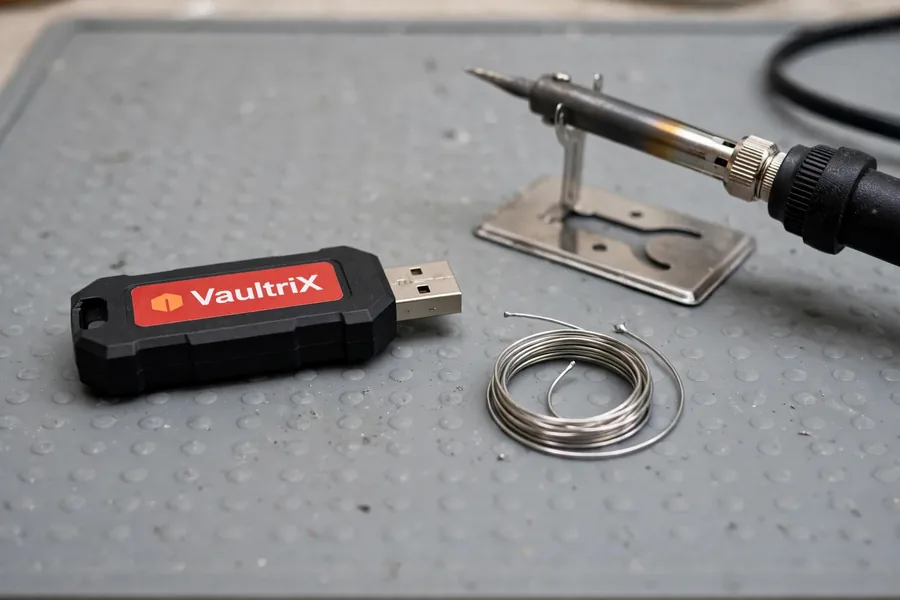
Each case below began with a cheaper first attempt: a shop repair, a repair utility or a recovery program. The quotes are the customers’ own words from their intake forms, trimmed with ellipses, with names and contact details removed. The results run from a full recovery to none, and a lab has to examine a device before it can say which one it will be.
Flash drive that a local shop could not finish, September 2018
The customer wrote:
“Laptop fell while thumb drive was still connected. Took thumb drive to a local shop and they were not able to complete the job after they tried to solder some jumpers.”
Our record shows that the basic recovery did not work, that the customer approved the advanced quote, and that the lab delivered the recovered files in November 2018. The shop’s attempt did not stop the recovery, but it is not a risk worth taking with the only copy.
Thumb drive that Windows could not repair, June 2020
This customer described it like this:
“… it needs to be repaired, I have done this multiple times, says Windows can’t repair it. Tried … to repair files and download, didn’t work.”
The case became a complex recovery and took months. Our record shows the lab wrote to the customer in August and December 2020 to say it was still working, and in January 2021 it reported a success. The lesson for a budget is time as well as money: a hard case can take weeks even in a lab that is working on it every day.
Reformatted thumb drive, May 2014
The customer wrote:
“Accidentally reformatted a thumb drive that had important spreadsheets which had not been backed up … I have tried downloaded programs … which were able to recover most files, but of course could not find the ones that matter.”
This one did not end well. Our record shows that the lab could not locate the files, that its best guess was that they had been overwritten, and that the drive was returned at no cost. Recovery programs can find most of what is there, and still miss the file that mattered.
What Our Customers Say
Frequently Asked Questions
Every Device Class, One Price-Transparent Lab
The same free-evaluation-first pricing applies to every storage class we handle: professional hard drive data recovery for clicking, dead or unreadable Seagate, WD and Toshiba drives; USB flash drive data recovery for snapped or undetected sticks; SSD data recovery service through firmware repair and original-controller revival; microSD card data recovery and memory card data recovery for cracked or corrupt cards; and NAND flash chip-off recovery for unencrypted flash media. Before you budget, browse all data recovery services to see which one fits your device.
Unreadable drive, dead phone or a card that won’t mount — the right first step is the same: stop using it and let us evaluate it for free.
Lost Important Data? Get a Free Evaluation
Hard drive, SSD, USB drive, memory card or phone — our engineers confirm what’s recoverable during a free evaluation. No obligation, confidential.
Start My Free Evaluationor call (866) 857-5950 now
Related Recovery Services
Whatever failed, these services cover it — every one starts with a free evaluation: