Used by NASA · the FBI · the U.S. Navy · Since 1999
Voice Recorder Data Recovery & NAND Flash Memory
- No Data, No Data Recovery Fee
- Chip-off recovery — our specialty
- 27+ years of recovery experience
- Every brand, every capacity
Can Deleted Recordings Be Recovered From a Voice Recorder?
Yes — deleted or corrupted recordings can usually be recovered by reading the recorder’s NAND flash memory chip directly, even when the device will not power on. Most consumer voice recorders store audio on a single sealed NAND chip with no processor-bound encryption key, so a broken housing, dead battery, or cracked circuit board doesn’t touch the memory itself.
“The chip does not care that the recorder is broken. If the memory survived, the audio is usually still on it.” — Bruce Cullen, founder, eProvided
A digital voice recorder that won’t turn on, was dropped, or went through the wash looks like a dead end — but the audio it holds usually isn’t gone. Most voice recorders store recordings on a single NAND flash memory chip, the same category of memory used in USB drives and microSD cards, and that chip is a separate component from the battery, buttons, and circuit board that actually failed — the same principle behind recovering data from a failed hard drive. After 27+ years recovering recordings from broken, waterlogged, and snapped voice recorders, here’s how the memory actually works, why it usually survives what killed the recorder around it, and how the recovery gets done.
Digital voice recorders store audio on a NAND flash memory chip, not on a hard drive or tape. That chip survives most of what disables the recorder — a dead battery, a cracked case, a snapped hinge, even water damage — because it’s a separate sealed component from the parts that failed. Since a standard voice recorder carries no processor-bound encryption key, the honest and correct recovery method is chip-off: removing the NAND chip from the board and reading it directly on dedicated hardware. This is the same moat capability eProvided uses on USB drives, microSD cards, and other monolithic flash media.
Do RIGHT NOW
- Stop trying to power the recorder on repeatedly — repeated attempts on a failing battery or board can stress the memory chip’s solder joints
- If the recorder was wet, do not attempt to charge or power it — let it dry completely and get it evaluated before applying power
- Note the exact make and model (Olympus, Sony, Philips, Zoom, etc.) — it tells us the NAND package type before we open the case
- Keep any broken pieces, including a snapped hinge or cracked internal connector — the memory chip is what matters, not the housing
DON’T Do
- Don’t attempt to pry open a sealed unit yourself — a slipped tool can gouge the very chip you’re trying to protect
- Don’t plug a water-damaged recorder into a computer to check for files — powering a wet circuit board can short the memory chip that survived the water itself
- Don’t record over the device or format it hoping to “reset” a malfunction — this can overwrite the recordings you’re trying to save
- Don’t assume a recorder that won’t power on has no recoverable data — power failure and memory failure are almost always two different problems
Already holding a broken or waterlogged voice recorder with recordings you can’t lose? Ship it in for a free evaluation, or call (866) 857-5950 and tell us what happened.
- How a Voice Recorder Can Fail Without Losing Its Recordings
- Why Digital Voice Recorders Store Audio on NAND Flash
- The NAND Advantage: Cost, Durability & Speed
- Legal, Law Enforcement & Business Recordings — Why the Stakes Are High
- How Voice Recorder Chip-Off Recovery Actually Works
- Every Brand, Every Model
- What Our Customers Say
- Frequently Asked Questions
- Recover Files from a Damaged Voice Recorder
- Related Recovery Services
How a Voice Recorder Can Fail Without Losing Its Recordings

A digital voice recorder is really two separate systems living in one small case: the electronics that power the buttons, screen, and microphone, and the NAND flash memory chip that actually stores the audio once it’s recorded. When a recorder stops working — a battery that won’t hold a charge, a cracked hinge from a drop, a circuit board that shorted after a splash of water — the failure almost always happens in the first system, not the second. The memory chip is a small, sealed, solid-state component with no moving parts, and it doesn’t care whether the rest of the device still works. This is exactly why a recorder that shows zero signs of life, won’t charge, or was snapped in half during a drop is still, in the overwhelming majority of cases, a recoverable device: the recordings never lived in the parts that broke. The same logic applies to a recorder that was dropped in water and appears to have shorted out — corrosion attacks exposed metal contacts and connectors long before it reaches a sealed memory chip, so the timing of when the device was pulled out and dried matters far more to the housing and battery than it does to the audio sitting on the chip.
Why Digital Voice Recorders Store Audio on NAND Flash

Most modern digital voice recorders — from an inexpensive pocket dictation unit to a professional field recorder used in interviews or depositions — use NAND flash memory (explained in plain English below) as their storage medium instead of a spinning disk or magnetic tape. NAND is well suited to this job: it’s solid-state, so it survives the drops and knocks a handheld recorder takes in daily use; it’s compact, which is why recorders can be pocket-sized; and it allows the fast, simple write-then-retrieve cycle a recorder needs every time you press stop. Some recorders use built-in, non-removable NAND soldered directly to the board (monolithic storage); others use a removable microSD card for the same purpose — and if your recorder’s card itself is the damaged part, our microSD card recovery process (covered below) handles it directly, including a card that has been snapped or crushed.
The NAND Advantage: Cost, Durability & Speed

NAND flash became the default storage for small recording devices for three practical reasons. It’s cost-effective to manufacture at scale, which keeps consumer voice recorders affordable rather than pricing them like specialized equipment. It wears gradually rather than failing suddenly — NAND cells degrade slowly over thousands of write cycles, so a recorder used daily for years will typically show slowing performance long before it fails outright, unlike a mechanical part that can snap without warning. And it packs more storage into less space than the alternatives it replaced, which is the entire reason a recorder that once needed a cassette the size of your palm can now hold hundreds of hours of audio in a chip the size of a fingernail. The tradeoff of all three benefits is that when a NAND chip does fail or the device around it breaks, the audio isn’t accessible the normal way — but unlike tape, the actual bits stored on the chip generally don’t degrade the way magnetic tape stretches or breaks, which is part of why chip-off recovery on NAND media has a high success rate — the same reliability that makes SSD data recovery possible on larger NAND-based drives.
Legal, Law Enforcement & Business Recordings — Why the Stakes Are High

Voice recorders carry a different kind of stakes than most consumer devices, because what they capture is often needed later as proof, not just as a personal record. Businesses that record incoming and outgoing calls for compliance or training rely on that audio being retrievable on demand — a corrupted or physically damaged recorder can put a company at real risk if a disputed call can’t be produced. Law enforcement and private investigators use NAND-based recorders constantly in the field, and devices get damaged deliberately as often as they get damaged by accident. And recordings entered as evidence in court cases carry legal weight that a “the device broke” explanation doesn’t satisfy — if a recorder fails or is damaged before its contents are extracted, professional recovery is often the only way to preserve the chain of custody a case depends on. eProvided works directly with legal and law enforcement clients on exactly this kind of forensic voice recorder recovery, documenting each step of the process from intake through the final handoff of recovered audio. That documentation matters as much as the recovery itself in a legal setting: a court or opposing counsel needs to know exactly how the audio was extracted, what tools touched the device, and that nothing about the recording was altered along the way, which is why every forensic case we handle keeps a written record of the chip’s condition, the extraction method used, and the resulting file hashes before anything is handed back.
How Voice Recorder Chip-Off Recovery Actually Works
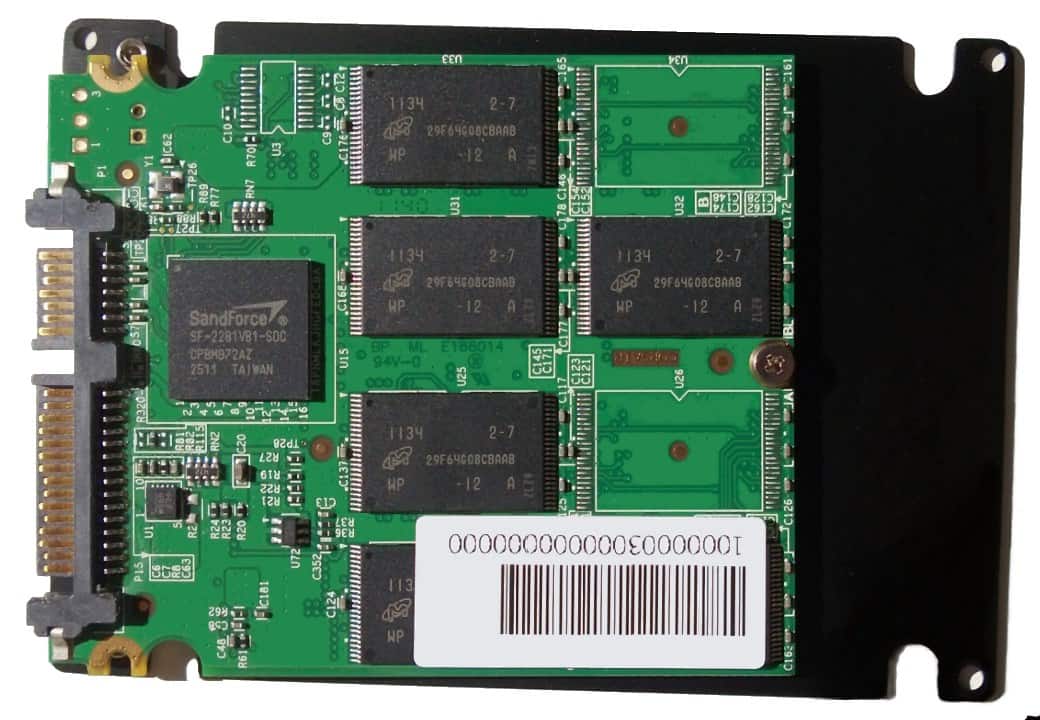
The gating question for any recording or storage device is whether its decryption key is bound to a separate processor away from the memory chip itself. On a standard consumer voice recorder, it isn’t — there’s no phone-style secure enclave locking the NAND chip to one specific board. That makes chip-off the correct, moat-owning recovery method rather than a fallback: our data recovery process begins with a free evaluation to confirm the exact chip package (BGA, TSOP, or a monolithic one-piece chip), then desolders the NAND chip from the damaged board, reads it directly on dedicated chip-reading hardware, and rebuilds the file system that organizes the individual recordings. Because the chip is read independently of the recorder’s own processor, it makes no difference whether that processor still works, whether the case is cracked, or whether the unit powers on at all — the same NAND flash chip-off approach (covered below) we use on USB drives and monolithic microSD cards applies directly to a voice recorder’s internal chip.
Every Brand, Every Model

Because nearly every voice recorder manufacturer sources its NAND chips from the same small group of wafer producers, the chip-off approach isn’t brand-specific — we’ve recovered data from Olympus, Sony, Philips, Zoom, Tascam, and generic USB-stick-style recorders alike, whether the recording was a business call, a police interview, a courtroom deposition, or a personal memo. The extent of physical damage to the recorder’s housing, battery, or circuit board doesn’t change this — a unit snapped in half, crushed, or soaked in water is handled the same careful way, because in every case the target of the recovery is the same sealed chip, not the case around it — the identical principle behind our microSD card data recovery process (covered below) for a recorder’s removable card. That brand-agnostic approach is also why we don’t need a manufacturer-specific tool or a working firmware image before we start — the chip itself carries everything the file system needs to be rebuilt, so a discontinued model or an off-brand recorder with no support left is read the exact same way as a current flagship unit.
| Voice Recorder Failure & What Actually Happens | ||
|---|---|---|
| What you see | What it usually means | Data recoverable? |
| Recorder won’t power on at all | Dead battery, failed power circuit — memory chip typically untouched | ✓ Yes, via chip-off |
| Case cracked or hinge snapped | Physical housing damage — sealed NAND chip inside usually intact | ✓ Yes, via chip-off |
| Recorder was submerged or splashed | Corrosion risk to the board and connectors, not necessarily the chip | ✓ Yes, via chip-off |
| Recordings show as corrupted or missing on playback | File system on the NAND chip damaged, chip itself functional | ✓ Yes, targeted extraction |
| Removable microSD card is snapped or crushed | Same monolithic-chip principle, on a removable card instead of built-in NAND | ✓ Yes, via chip-off |
What Our Customers Say
Frequently Asked Questions
Recovery Services for Every Storage Device Class
A damaged voice recorder isn’t the only device eProvided recovers — we cover every storage class from one lab: memory card recovery (SD, microSD, CompactFlash, all formats), USB flash drive recovery (broken connectors, dead controllers, monolith chip-off), professional hard drive data recovery (Seagate, Western Digital, Toshiba, mechanical and logical failures), and SSD data recovery (Samsung, WD, Crucial, NVMe and SATA, firmware repair and original-controller revival) — see the related services below. See all our data recovery services →
More NAND & Flash Memory Guides
- NAND flash memory, explained in plain English — what NAND is and why it’s used across nearly every small storage device.
Whatever damaged your voice recorder, the memory chip inside it usually isn’t the part that failed — and that’s the difference between a truly lost recording and one a free evaluation can confirm is still there.
Recover Files from a Damaged Voice Recorder
Won’t power on, cracked, or waterlogged — our engineers will confirm what’s recoverable during a free evaluation. No obligation, confidential.
Start My Free Evaluationor call (866) 857-5950 now
Related Recovery Services
A damaged voice recorder isn’t the only device eProvided recovers — these recovery services get the data back from every storage class in one lab: