
Used by NASA · the FBI · the U.S. Navy · Since 1999
2TB Flash Drive: Real vs. Counterfeit — and What to Do When One Fails
- No Data, No Data Recovery Fee
- Free, confidential evaluation
- 4.9 / 5 on Trustpilot (67 reviews)
- Worldwide lab recovery
A 2 TB USB flash drive was once a technical impossibility — until Transcend and Taiwan’s ITRI demonstrated a working 2 TB USB 3.0 prototype and rewrote what flash storage could hold. Today, drives at that capacity ship from multiple manufacturers. The problem is that the market also filled up with fakes: cheap drives that report 2 TB on any computer but store real data into a tiny NAND chip that silently overwrites itself long before it reaches that figure. Whether you have the real thing or a counterfeit, a failed 2 TB flash drive almost always has its data still intact at the chip level — and that’s exactly where chip-level USB recovery begins.
We have been recovering data from flash drives since before 2 TB was even theoretically possible. The NAND chip inside is the same regardless of what the controller reports to the operating system, and that chip is what our lab reads directly when a drive fails.
Are 2TB Flash Drives Real, and Can Data Be Recovered from a Failed One?
Genuine 2TB USB drives exist and are sold by reputable manufacturers. Most 2TB drives sold cheaply online are counterfeits with small NAND chips that silently overwrite data once they fill up. Whether real or counterfeit, the NAND chip inside a failed 2TB drive almost always holds recoverable data — eProvided reads it directly via chip-off extraction.
“A counterfeit 2TB drive is a real data loss risk — but the NAND chip it contains is still readable. We’ve recovered files from drives a customer thought held nothing.” — Bruce Cullen, founder, eProvided
The Transcend/ITRI 2TB Prototype
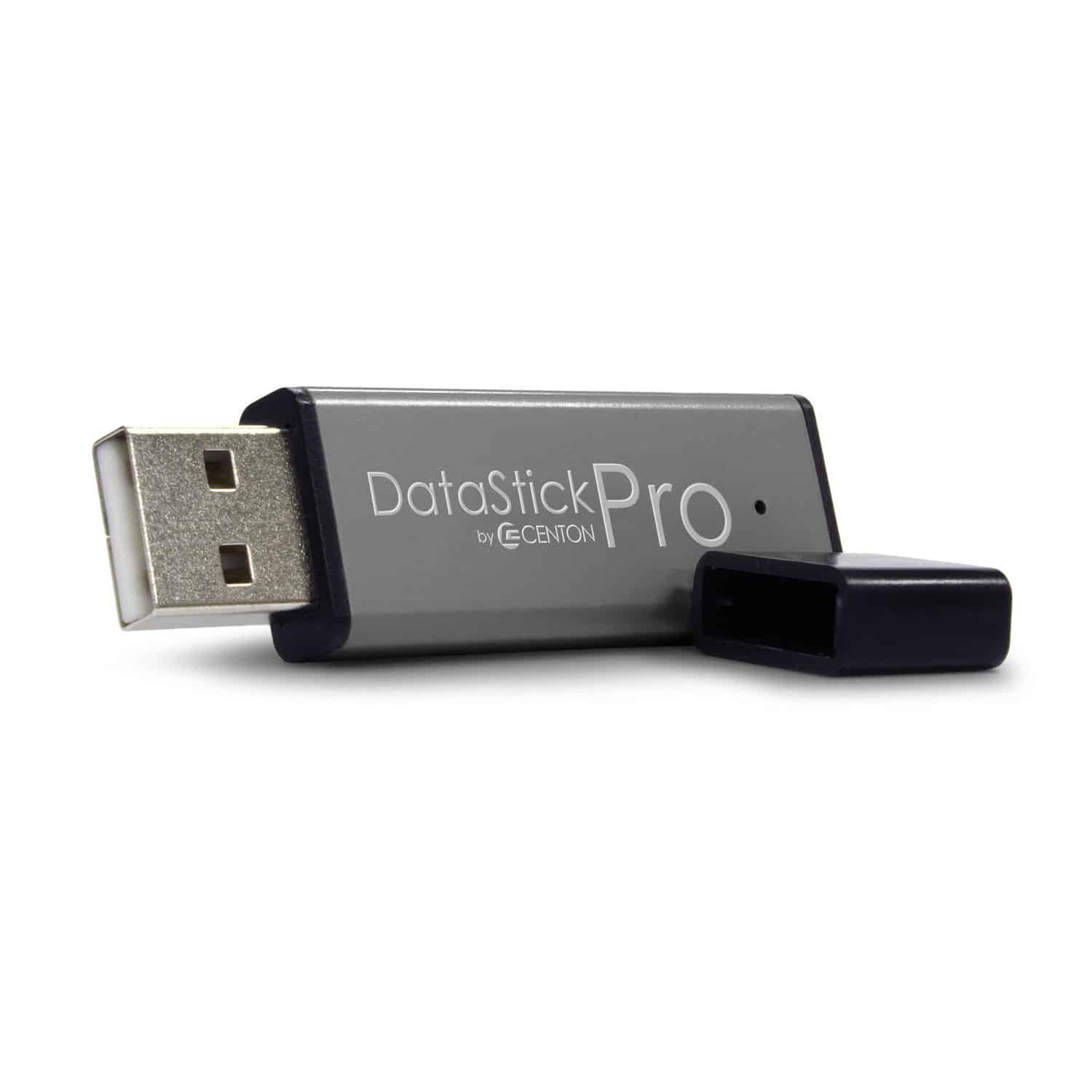
Transcend, a major Taiwanese memory manufacturer, and Taiwan’s Industrial Technology Research Institute (ITRI) jointly demonstrated a 2 TB USB 3.0 flash drive — a storage capacity that had seemed impossible at the time. The prototype marked a real engineering milestone: packing that much NAND flash into the form factor of a thumb drive required breakthroughs in NAND density, multi-level cell architecture, and controller logic that could manage it all over a USB interface.
USB 3.0 is now a global standard, and 2 TB flash drives from major manufacturers are a commercial reality. The same NAND scaling that made the Transcend/ITRI prototype possible also drove SSD capacities from 512 GB to 8 TB in under a decade, and NAND flash recovery has followed — the techniques our lab uses to read a 2 TB drive are the same ones behind NAND chip recovery on every flash device we handle.
Why Most Cheap 2TB Drives Are Counterfeits
The gap between what a flash drive reports and what it actually stores is the oldest trick in the counterfeit storage market. A bad actor purchases a 32 GB or 64 GB NAND chip — the same type found in any budget USB stick — then flashes the controller firmware to report 2,000 GB instead of the real capacity. To your operating system, the drive looks like a genuine 2 TB device. The problem surfaces only once the real NAND capacity fills up: the controller silently begins overwriting the oldest data with new writes, discarding files you believed were safely stored.
By that point, the user has often trusted the drive for weeks or months. Files they thought were backed up are gone or corrupted, and the drive itself shows as full even though only a fraction of the real capacity was ever used. The counterfeit is also far more likely to fail outright — cheap, unbranded NAND chips used in these drives have much shorter working lives than the branded NAND inside a legitimate drive.
A counterfeit 2TB flash drive does not appear corrupt when you first plug it in. It passes a standard format check and reports the full 2TB capacity. The silent overwrite of data begins only after the real NAND chip fills, which can take days or weeks of normal use.
How to Spot a Counterfeit 2TB Drive
Three tests expose a counterfeit before it destroys data:
- Price check — Genuine 2TB USB drives from Transcend, SanDisk, or Samsung cost significantly more than $20 or $30 on Amazon or eBay. If the price is implausibly low, it is a counterfeit.
- Write test — Tools like H2testw (Windows, free) write a full-sized test pattern to the drive and read it back. A counterfeit fails this test by returning corrupted data around the point where real NAND runs out.
- Seller verification — Buy only from authorized retailers, from the manufacturer’s own storefront, or from platforms with real return policies — not third-party marketplace sellers with no buyer protection.
If you already have a 2TB drive and are unsure whether it’s genuine, do not add critical data to it until you run the write test. A drive that passes H2testw at its full rated capacity is almost certainly real; one that fails is a counterfeit.
When a 2TB Flash Drive Fails

A 2 TB flash drive fails the same ways any USB drive does: a snapped connector, a dead controller, corrupted firmware, physical impact, or NAND wear. What changes at 2 TB capacity is the consequence — a drive holding that much data represents a much larger potential loss than a 32 GB stick. Stop using the drive the moment it stops being recognized or throws errors. Every additional connection attempt risks making the controller’s condition worse before the lab ever sees it.
For a counterfeit drive that has already silently overwritten data, the situation is different: what was stored in the overwritten sectors may be partially or fully recoverable at the chip level, because the NAND cells themselves retain charge states even after the controller’s logical-overwrite pass. The window closes over time and with additional writes, which is why stopping use immediately matters even on a device that still mounts.
How eProvided Recovers 2TB Flash Drives
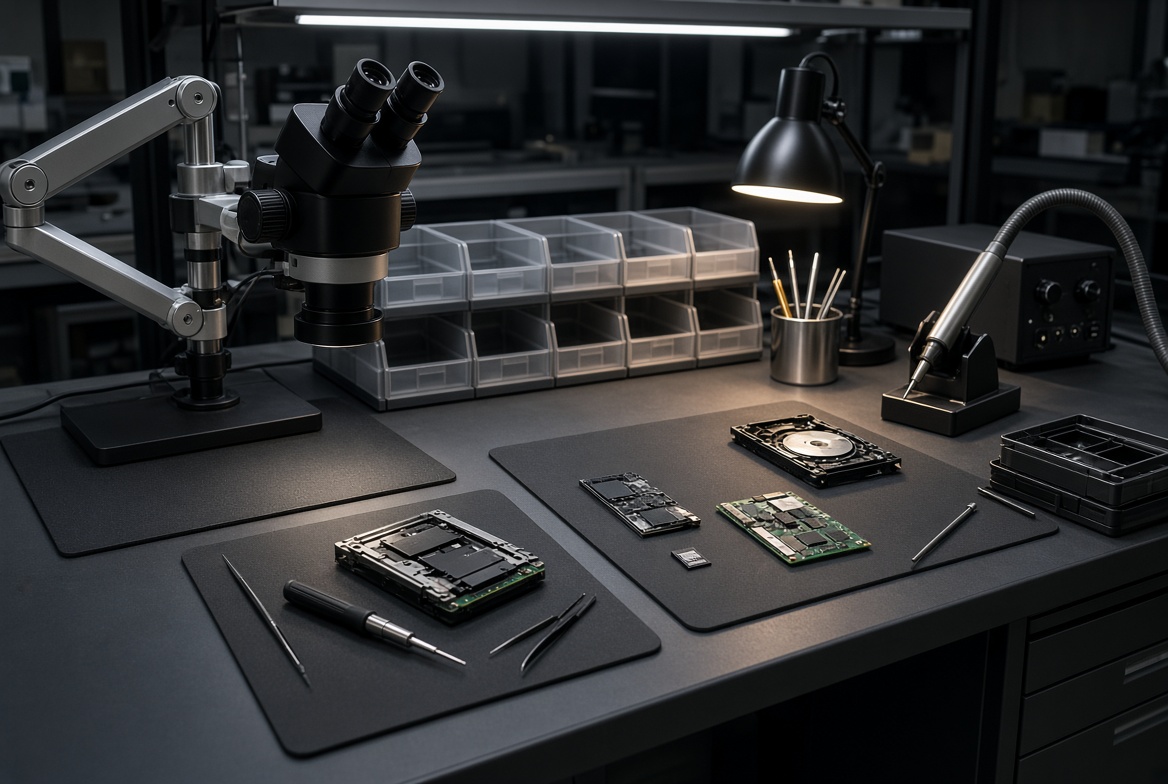
Both genuine and counterfeit 2 TB USB drives use NAND flash memory as their storage medium — and that NAND is readable directly, independent of what the controller reports. The process is the same regardless of what the drive told the operating system:
- Free evaluation — Our engineers inspect the drive, identify the NAND chip type and controller, and give you a firm quote before any recovery work begins. No Data, No Data Recovery Fee.
- Chip-off extraction — The NAND chip is carefully removed from the board and read bank-by-bank using our in-house equipment. This bypasses the controller entirely, whether it has failed or reported false capacity.
- Data reconstruction — The raw NAND dump is processed: the controller’s wear-leveling, bad-block mapping, and scramble algorithm are unscrambled to rebuild the original file structure.
- Verification & delivery — Recovered files are checked and delivered on new media or a secure download.
On a counterfeit drive, the process also reveals how much of the real NAND capacity was used and how much of the overwritten data remains recoverable. It is not always 100%, but the honest answer comes from reading the chip, not from guessing at the controller’s logs.
Lost Data from a 2TB Flash Drive?
Real or counterfeit — the NAND chip inside is still readable. Free, confidential evaluation before any work begins.
Start My Free Evaluationor call (866) 857-5950 now
The Future of Flash Storage Capacity
When the Transcend/ITRI 2 TB prototype was first demonstrated, the largest consumer SSD topped out around 512 GB. Today, SSDs ship at 8 TB and beyond, and NAND cell density has advanced through TLC and QLC (triple- and quad-level cell) technology to pack ever more bits into each cell. The direction is predictable: the same pattern that pushed USB sticks from 1 GB to 2 TB will push SSDs into the tens-of-terabyte range for consumer use within years.
NAND flash recovery has kept pace. The chip-off and board-level extraction techniques that worked on 8 GB drives in 2012 apply directly to 2 TB drives today because the NAND architecture is the same — the cells grew denser, not fundamentally different. Monolithic NAND, where the chip and controller are fused into one package, is a separate architecture that requires different lab access — but for the vast majority of 2 TB drives, whether real or counterfeit, standard chip-off extraction applies.
Do
- Buy 2TB flash drives only from verified manufacturers or authorized retailers with return policies
- Run a full H2testw write test on any large-capacity flash drive before storing important data
- Stop using a failing drive immediately and get a free evaluation before trying anything else
DON’T Do
- Don’t trust a 2TB USB drive from a marketplace seller offering it for $20 — it is almost certainly a counterfeit
- Don’t run recovery software repeatedly on a drive that’s already failing — it adds writes and closes the recovery window
- Don’t assume a counterfeit drive has no recoverable data — the NAND chip inside still holds what was written to it
What Our Customers Say
Frequently Asked Questions
Lost Data from a 2TB Flash Drive?
A genuine or counterfeit 2TB drive both keep the data on the same NAND, readable either way. Free, confidential evaluation before any work begins.
Start My Free Evaluationor call (866) 857-5950 now
Recovery Services for Every Storage Device Class
Whether it’s a 2TB USB drive, an SD card, or an SSD, eProvided recovers data from every storage class: