
Micro SD Card Data Recovery
Micro SD Card Recovery: Recover Data from Broken or Damaged Cards
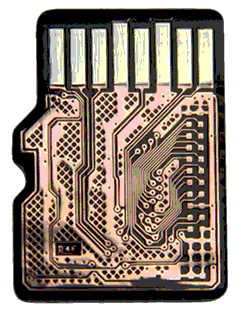
Yes, data can be recovered from a broken micro SD card — even those with massive damage. At eProvided, we physically expose the internal circuitry of damaged microSD cards using a pinout strategy that most data recovery companies don’t have the equipment or expertise to perform. We’ve been doing this since 1999, across thousands of cases involving cracked, bent, water-damaged, and completely unrecognized microSD cards. If you’ve been told your card is “unrecoverable,” there’s a strong chance we can still retrieve your files. Professional microsd recovery at the chip level is what separates eProvided from download-and-run utilities — we read the NAND directly, even when the card no longer powers up.
MicroSD cards are among the most physically fragile storage devices manufactured today. With circuits narrower than a human hair and memory layers thinner than a sheet of paper, a single crack can sever the data pathways entirely. Standard recovery software cannot help when the card won’t mount, isn’t recognized, or has physical damage. That’s where professional microsd recovery becomes essential — and where eProvided excels.
eProvided averages a 98% success rate on microSD card recovery cases. We handle every manufacturer — SanDisk, Samsung, Kingston, Lexar, PNY, Transcend, and dozens more. Every case starts with a free evaluation and our guarantee: No Data, No Data Recovery Fee.
Table of Contents
- What Is Micro SD Card Recovery?
- What Our Customers Say
- Frequently Asked Questions
- Common Causes of Micro SD Card Failure
- Recovery for Drones, GoPro & Smartphones
- Micro SD Card Type Comparison
- Used by NASA: MicroSD Recovery Technology
- How MicroSD Chip-Off Recovery Works
- Micro SD Card Recovery in Action
- Related Articles
- Related Recovery Services
What Is Micro SD Card Recovery?
Micro SD memory card recovery is the process of extracting files from a microSD card that no longer mounts, reads correctly, or is physically damaged. eProvided has performed memory card data recovery since 1999 across every major brand — SanDisk, Samsung, Kingston, Lexar, and Sony — covering microSDHC, microSDXC, and microSDUC standards. Whether the card was snapped in half, water damaged, or simply stopped being recognized, the recovery path begins with NAND-level access, never with a desktop “fix” tool.

Micro SD card recovery is the process of extracting data from a microSD card that has failed due to physical damage, corruption, or electrical malfunction. Unlike standard hard drive recovery, microSD cards are monolithic devices — meaning the controller, NAND flash memory, and interface are all integrated into a single silicon package. There are no separate chips to desolder or swap. Recovery requires physically sanding the card’s surface to expose the buried circuit traces, then soldering microscopic wires directly to those traces.
This is called the pinout method, and it’s the foundation of professional micro SD data recovery. Unlike file-scanning utilities, our microsd recovery process physically bypasses the dead controller, so failure modes that look hopeless to software — unrecognized cards, “0 bytes” readings, no-power cards — are still fully recoverable in our lab. At eProvided, we’ve refined this technique over 25 years and thousands of cases. The pinout connections allow us to bypass the card’s damaged controller and read raw data directly from the NAND flash memory. From there, specialized software reconstructs your files — photos, videos, documents, whatever was stored.
According to the SD Association, modern microSDXC cards can hold up to 2TB of data on a chip smaller than a fingernail. That’s an enormous amount of irreplaceable data riding on an incredibly fragile piece of silicon. When it fails, you need engineers who understand the physical architecture — not just software.
What Our Customers Say
For more reviews, check out eProvided on Reddit where real customers share their recovery experiences. You can also read verified reviews on Trustpilot.
Frequently Asked Questions: MicroSD Recovery
How much does microsd recovery cost?
Recovery pricing varies based on damage severity and card capacity. Every case begins with a free evaluation — we assess the card and provide a detailed quote before any work begins. Our policy is simple: No Data, No Data Recovery Fee. You only pay a data recovery fee if we successfully recover your files. View our pricing page for general ranges.
Can you recover data from a micro SD card that is not recognized?
Yes. An unrecognized microSD card typically has a failed controller or damaged contact pins — the NAND flash cells holding your data are usually intact. Our pinout method bypasses the controller entirely, reading data directly from the memory cells. We recover data from cards that show as “no media,” “RAW,” “please insert a disk,” or simply don’t appear at all.
How long does micro SD card data recovery take?
Standard recovery takes 3-7 business days from the time we receive your card. Expedited service is available for urgent cases — we’ve delivered results in as fast as 48 hours for time-sensitive recoveries like legal evidence or insurance claims. Contact us at 866-857-5950 to discuss expedited options.
Is it safe to attempt micro SD recovery at home with software?
Only if the card is still recognized by your computer and the damage is purely logical (deleted files, formatting). If the card has physical damage — cracks, bends, water exposure, or isn’t recognized at all — do NOT attempt software recovery. Repeated read attempts on a physically damaged card can cause further degradation. Power off the device immediately and contact a professional. For more details, see our guide on broken SD card recovery.
Do you recover data from water-damaged micro SD cards?
Yes — including salt water, fresh water, and humidity damage. Salt water is especially aggressive on copper traces, but the NAND memory cells themselves are sealed and often survive immersion. Our engineers clean corrosion under magnification and rebuild connections to the intact memory. We successfully recovered NASA Helios data that was submerged in the Pacific Ocean for weeks.
What types of files can you recover from a micro SD card?
We recover all file types: photos (JPEG, RAW/CR2/NEF/ARW, PNG, HEIF), videos (MP4, MOV, MKV), documents, contacts, app data, game saves, audio files, GPS/flight logs, and more. The file type doesn’t change our approach — we reconstruct the complete file system from the raw NAND data.
Can you recover data from a micro SD card that went through the washing machine?
We’ve done it many times. The mechanical agitation combined with detergent and water creates a challenging combination of corrosion and potential physical damage. However, the NAND flash cells are remarkably resilient to moisture. As long as the card wasn’t subjected to extreme heat in a dryer afterward, recovery prospects are very good. Ship it to us and we’ll evaluate it free of charge.
Do you offer chip-level microsd recovery when software can’t see the card?
Yes — chip-level microsd recovery is our specialty. When Windows, macOS, or Android reports the card as unreadable, corrupt, or simply absent, it means the controller or contact pins have failed. Our engineers expose the card’s internal NAND traces using the pinout method and read your photos, videos, and documents directly from the memory cells. Software-based recovery tools cannot do this. Every microsd recovery case starts with a free evaluation and our No Data, No Data Recovery Fee guarantee.
Common Causes of Micro SD Card Failure
Memory card failure is rarely caused by the NAND itself wearing out — modern microSD NAND is rated for thousands of program/erase cycles. The far more common failure modes are firmware corruption (controller-level), physical damage (cards snapping, water-damaged contacts), and corrupted SD partitions from improper ejection. A water-damaged microSD card is often recoverable if the customer doesn’t try to power it on while wet; a corrupted SD with intact NAND is almost always recoverable. Each pathway has a different memory card data recovery workflow.
Most microsd recovery cases we handle fall into one of seven failure categories, and the right diagnosis determines whether the card is recoverable through software or requires chip-level work:
- Physical damage — cracks, bends, snapped contacts. Often happens when a card stays in a smartphone case during a fall, or when small fingers force a card the wrong way into a slot.
- Water damage — submersion in fresh water, salt water, or beverages. Common in action camera and drone use cases.
- Electrostatic discharge (ESD) — touching the contacts after walking on carpet can fry the controller in milliseconds.
- NAND wear-out — every NAND cell has a finite number of write cycles. Heavy users (dashcam recordings, security cameras) hit this limit faster than typical.
- File system corruption — pulling a card mid-write or losing power during a save is the leading cause of "card unreadable" errors that send users searching for a micro sd card recovery service.
- Counterfeit cards — fake high-capacity cards (sold as 256GB but actually 32GB inside) overwrite themselves silently and lose data when capacity is exceeded.
- Controller failure — the integrated controller on a microSD is bonded directly to the NAND die; when it dies, the card becomes invisible to every reader. This is when chip-off recovery is required.
If your card is showing symptoms in any of these categories, every recovery starts with a free evaluation — no data, no data recovery fee.
Micro SD Recovery for Drones, GoPro & Smartphones
The microSD form factor shows up across consumer and prosumer devices, and each device class brings its own typical failure mode:
- Drones (DJI Mini, Mavic, Phantom) — impact from hard landings or water landings damages the card while it's mid-write. Drone microsd recovery often involves both physical damage and partial file-system corruption from interrupted writes.
- Action cameras (GoPro, Insta360) — underwater use combined with rapid temperature changes stresses the card. Salt water is especially damaging to the contact pads.
- Smartphones (Samsung Galaxy, Android) — accidental formatting from the phone's storage menu is the most common request we see. The phone marks the card as wiped, but the underlying NAND data remains until overwritten.
- Dashcams — constant write cycles plus summer heat in vehicle dashboards exhaust NAND faster than any other use case.
- Nintendo Switch & Steam Deck — game saves and screenshots stored on microSDXC cards. File system corruption from unexpected shutdowns is the typical recovery scenario.
For all these device classes, our microsd recovery process starts with a free evaluation — no data, no data recovery fee. We image the card, identify the failure mode, and only proceed when we can show you what's recoverable.
Micro SD Card Type Comparison: SDHC, SDXC & Speed Classes
Memory card speed classes (Class 2, Class 4, Class 10, U1, U3, V30, V60, V90, A1, A2) describe sustained-write performance, not capacity or recovery difficulty. A V90 4K-video card has the same NAND chip-off recovery path as a Class 4 card — speed class affects only how fast data was written, not whether we can recover it. SanDisk Extreme, Samsung EVO, Kingston Canvas Go, and Lexar Professional cards all use the same fundamental NAND architecture we recover from daily.
Not all microSD cards are built the same, and the type of card you have changes our recovery approach. Here's the quick reference:
| Card Type | Capacity | Common Failure |
|---|---|---|
| microSD (original) | up to 2 GB | Aging, contact wear |
| microSDHC | 4 GB – 32 GB | FAT32 corruption |
| microSDXC | 64 GB – 2 TB | exFAT corruption, NAND wear |
Speed classes (Class 10, U1, U3, V30, V60, V90, A1, A2) describe how fast the card writes; they don't change the recovery approach but they do tell us how the card was being used (Class 10 in a phone vs V90 in a 4K cinema camera implies very different write-volume profiles).
Our microsdxc recovery process applies to every class — we read raw NAND blocks regardless of the file system the card was using.
Used by NASA: MicroSD Recovery Technology
The chip-off recovery process we apply to consumer microSD cards is the same lab capability that recovered data from NASA's Helios mission CompactFlash cards after sixty days underwater. eProvided consulted on JPL's Mars Rover data glitch and on data integrity for future Mars space missions, including microSD-based storage planning.
What this means for your microSD recovery: every consumer card we work on benefits from two decades of professional-grade NAND recovery research. The same controlled lab environment, the same chip extraction hardware, and the same ECC reconstruction algorithms used on mission-critical agency cases run on the microSD that fell out of your drone or the card your dashcam stopped reading. We've maintained a 98% success rate on physically damaged cards across that entire history.
Every microsd recovery case starts with a free evaluation — no data, no data recovery fee.
How MicroSD Chip-Off Recovery Works (And Why It's Different from Standard SD Card Recovery)
At eProvided, MicroSD recovery on physically broken microSD cards starts after the free evaluation, when our specialists determine that software-only tools cannot read the card. From there, the workflow is fundamentally different from standard sd card recovery on full-size cards — and the difference is the form factor itself.
A microSD card is roughly the size of a fingernail and contains a single embedded NAND flash chip with the controller bonded directly to it. Standard sd card data recovery techniques that work on full-size SD cards (cloning at the controller level, swapping a known-good controller) often cannot be applied to a microSD because there is no separate controller to swap. This is why physically broken micro sd card recovery requires chip-level work, sometimes called chip-off recovery or TransFlash Recovery (the older industry name microSD inherited from SanDisk).
Our MicroSD Recovery process for physically damaged cards proceeds in four stages:
- Free evaluation. We image the card under a microscope, identify the failure mode (cracked substrate, broken contact pads, water exposure, controller failure, or NAND wear), and confirm whether chip-level recovery is required.
- Chip extraction. If the card cannot be read electrically, we extract the NAND die from its plastic housing in a controlled lab environment. This is the most delicate step — the die is roughly 8mm by 11mm, and a single scratch on the silicon surface can permanently damage stored data.
- Raw NAND read and ECC correction. Once extracted, the die is read on specialized hardware that bypasses the failed controller and applies the correct error-correcting code (ECC) algorithm for that NAND model. This is where two decades of NAND experience matters — every manufacturer (Samsung, SanDisk, Toshiba/Kioxia, Micron) uses a different ECC scheme, and the wrong scheme returns garbled data.
- Filesystem reconstruction. Recovered raw blocks are reassembled into the original FAT32 or exFAT filesystem, and your files are written to a new delivery drive. We routinely recover photos, videos, and documents from microSD cards that smartphones, drones, dashcams, action cameras, and Nintendo Switch consoles declared unreadable.
Our microsd recovery success rate on physically damaged cards is part of our overall 98% success rate sitewide. Every case starts with a free evaluation — no data, no data recovery fee.
MicroSD Recovery in Action
Our engineers perform microsd card recovery using the pinout method. This video demonstrates our recovery process for monolithic flash memory devices. Have questions about this method? Click to chat with our team live — or call us toll-free at 866-857-5950.
For digital image recovery from SD cards and photos, we offer the same meticulous approach. Need help with a USB device instead? Our USB flash drive recovery guide covers monolithic USB recovery using similar pinout techniques.
Micro SD DIY Recovery vs. eProvided Professional Recovery
| Recovery Factor | DIY Attempt | eProvided |
|---|---|---|
| Works on physically cracked or snapped microSD cards | ✗ No | ✓ Yes — chip-off technique |
| Works when card is not recognized by any slot or reader | ✗ No | ✓ Yes |
| Recovers from reformatted or overwritten card | Partial | ✓ Yes |
| Handles controller chip failure or dead card syndrome | ✗ No | ✓ Yes |
| Success rate on water-damaged microSD cards | 10–20% | 85–95% |
| Risk of permanent data loss during attempt | High (writes to media) | None — read-only process |
| Cost | $20–$80 tools + risk of permanent loss | $0 evaluation — pay only on success |
| Photo & video file specialization | Generic recovery only | ✓ JPEG, RAW, MOV, MP4 priority |