
Used by NASA · the FBI · the U.S. Navy · Since 1999 · 98% Success Rate
How to Securely Erase a Hard Drive Before Selling, Donating, or Recycling It
- No Data, No Data Recovery Fee
- 27+ years of recovery experience
- Free evaluation if you erased by accident
- Formatted, deleted & logically failed drives
Is Deleting Files Enough to Erase a Hard Drive?
No. Deleting files or reformatting only removes the pointer to your data; the bytes remain until something else overwrites them, which is exactly why formatted drives are usually recoverable. Truly erasing a drive for disposal requires a real overwrite pass or physical destruction — and once that’s done properly, the data is gone for good, including from us.
“People assume ‘I formatted it’ means the same thing as ‘I securely wiped it.’ They’re opposite outcomes for us — one we can usually recover, the other we honestly can’t.” — Bruce Cullen, founder, eProvided
Before you sell, donate, or recycle an old hard drive, simply deleting your files or reformatting the drive is not enough — your social security numbers, financial statements, passwords, and personal photos are almost certainly still sitting on the physical disk, recoverable by anyone with basic software. This guide covers the two legitimate ways to actually make that data unrecoverable, why a quick format doesn’t come close, and — because we run hard drive data recovery for a living — the honest flip side: what to do if you erased the wrong drive, or erased something you actually needed back.
Deleting files and reformatting a drive does not erase the data — it only marks the space as available, and recovery software can usually still read what’s there. To genuinely and permanently erase a hard drive before disposal, either run a full-disk overwrite tool (a single modern pass is generally sufficient; government and enterprise policies sometimes call for multiple passes) or physically destroy the platters. Once a drive has been properly overwritten or destroyed, that data is gone for everyone, including a professional recovery lab. If you erased the wrong thing by accident — a quick format, an accidental delete, a partition wipe — stop using the drive immediately and get a free evaluation; that case is usually recoverable, because nothing has actually overwritten the space yet.
Do RIGHT NOW
- Back up anything you want to keep before you start erasing anything
- Use a real overwrite tool or physical destruction for a drive headed to disposal, sale, or donation
- Double- and triple-check you have the correct drive before starting any erase or destroy step
- If you erased the wrong drive or the wrong files, stop using that drive immediately and get it evaluated
DON’T Do
- Don’t assume “I deleted the files” or “I formatted it” means the data is gone — it isn’t
- Don’t sell, donate, or recycle a drive you have only reformatted, never overwritten
- Don’t keep using a drive you just erased by mistake — every new file you save risks overwriting the very data you want back
- Don’t assume a securely wiped or overwritten drive can be recovered by anyone — it generally can’t, and no lab should tell you otherwise
Erased the wrong drive, or need something back that you deleted by mistake? Stop using the drive and start a free evaluation, or call (866) 857-5950 if you want to explain what happened first.
- Why Deleting Files Doesn’t Actually Erase Them
- Method 1: Physically Destroy the Drive
- Method 2: Overwrite the Drive with Erasure Software
- Can Data Still Be Recovered After a Hard Drive Is Erased?
- Accidental Erasure vs. Secure Erasure: Why They’re Opposite Outcomes
- Protect What You’re Keeping Before You Erase Anything
- What Our Customers Say
- Frequently Asked Questions
- Erased the Wrong Thing?
- Related Recovery Services
Why Deleting Files Doesn’t Actually Erase Them

When you delete a file or reformat a drive, the operating system doesn’t actually erase the data — it removes the file’s entry from the drive’s index and marks that space as available for new data. Until something else is written into that exact space, the original bytes remain fully intact and readable with ordinary, widely available recovery software. This is precisely why data recovery services exist and why a formatted or “emptied” drive is one of the most common cases we see.
That gap between “looks empty” and “actually gone” is also a real security risk. A drive that’s only been deleted from or reformatted is a data bank for anyone who buys it secondhand, receives it as a donation, or pulls it out of an e-waste bin — social security numbers, tax records, financial statements, medical information, business files, and personal photos can all be pulled back with tools anyone can download. If a drive is leaving your possession for good — sale, donation, recycling, or disposal — genuine secure erasure means one of the two methods below, not a quick format.
Method 1: Physically Destroy the Drive

The most certain way to make a hard drive’s data unrecoverable is to physically destroy the platters — the spinning discs inside a hard drive that actually store the magnetic data. Deleting files or reformatting doesn’t touch the platters at all; destroying them removes any possibility of reading them by any method, ours included. To do this properly: open the drive casing, remove the platters, and break or bend them into pieces small enough that no intact section remains — a hammer, drill press, or industrial shredder are all commonly used. The goal is physical fragmentation of the disc surface itself, not just denting the outer case, which does nothing to the data.
Destruction is the right call when a drive is failing anyway, when the data is extremely sensitive and the drive has no resale or reuse value, or when you simply want zero ambiguity. It is, obviously, a one-way decision — there is no recovering from a destroyed platter, so this method should only be used once you are completely certain the drive contains nothing you might need later.
Method 2: Overwrite the Drive with Erasure Software
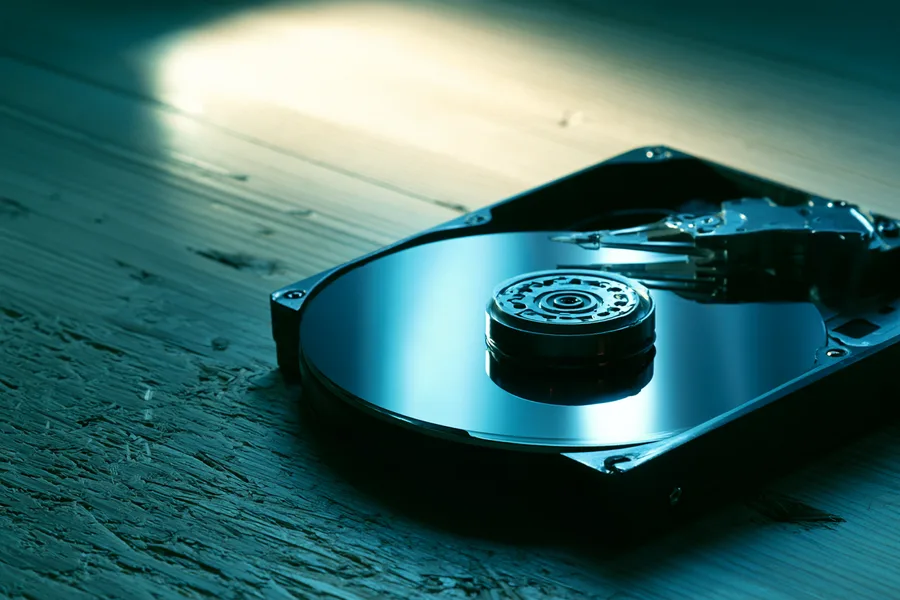
If a drive still has resale, donation, or reuse value, physically destroying it is wasteful — overwriting is the standard alternative. Dedicated erasure software writes new data (typically all zeros, all ones, or random patterns) across every single sector of the drive, replacing whatever was there before. A single modern overwrite pass is generally considered sufficient for typical personal and business use; some government and enterprise data-destruction policies still specify multiple passes as a stricter standard, though the practical difference on a modern drive is small. Free and reputable tools exist for this (built-in options on Windows and macOS, along with dedicated open-source utilities); the key requirement is that the tool overwrites the entire addressable drive, not just the visible files.
One important limitation: overwriting software has to actually run and complete against the whole drive to work. A drive that fails partway through, or one that’s only partially overwritten before the process is interrupted, may still have recoverable sectors — which is exactly why professional erasure services verify completion rather than just trusting the tool ran. If you’re unsure whether a wipe actually finished, treat the drive as not-yet-secure until you can confirm it.
Can Data Still Be Recovered After a Hard Drive Is Erased?
It depends entirely on which erasure method was actually used, and this is the single most important distinction on this page. A properly completed single-pass overwrite on a modern drive is designed to be effectively unrecoverable — the original magnetic pattern is replaced, not just hidden. A government-grade multi-pass wipe is deliberately overbuilt to make recovery impossible by any known method. Physical destruction of the platters removes the possibility of recovery entirely, by us or anyone else. In all three of these genuine secure-erasure cases, eProvided cannot recover the data, and no honest recovery company can tell you otherwise.
The opposite is true for a drive that was only quick-formatted, had a partition deleted, or had files deleted and the trash emptied — none of those actions overwrite the underlying data, so professional recovery can usually retrieve the files, often even after the drive has changed hands or sat unused for a while. The deciding question is simple: was the drive actually overwritten with new data (or destroyed), or was it just told to forget where the old data was?
Accidental Erasure vs. Secure Erasure: Why They’re Opposite Outcomes

Every week, we hear from two very different people who both use the word “erased.” One person is disposing of an old drive on purpose, ran a real wipe tool, and wants confirmation the data is truly gone — for them, that’s a success, not a problem. The other person meant to delete a handful of old files, reformatted the wrong drive by mistake, or accidentally erased a partition they still needed — for them, the drive was never actually overwritten, and the situation is usually recoverable if they stop using the drive right away. The word is identical; the outcome is opposite, and the only thing that decides which one applies is whether new data was actually written over the old data, not how the deletion felt at the time. That’s also why the question “can eProvided undo a wipe I did on purpose” and the question “can eProvided undo a mistake I made by accident” get completely different honest answers from the same lab, on the same day, for the same brand of drive.
| What Happened vs. What Actually Recovers It | ||
|---|---|---|
| What happened | What it actually does to the data | Recovery outcome |
| Deleted files, emptied trash | Removes the file index entry only; bytes remain until overwritten | ✓ Usually recoverable |
| Quick format / reformat | Rebuilds the file system table; underlying data is untouched | ✓ Usually recoverable |
| Deleted or lost partition | Removes the partition map entry; data sectors unaffected | ✓ Usually recoverable |
| Single-pass secure overwrite (completed) | Physically replaces the magnetic pattern across the whole drive | ✗ Not recoverable |
| Multi-pass government-grade wipe | Overwrites repeatedly, deliberately overbuilt for certainty | ✗ Not recoverable |
| Physically destroyed platters | Removes the storage medium itself | ✗ Not recoverable |
If you’re not sure which category your situation falls into — for example, you’re not certain whether a wipe tool actually finished, or whether “format” on your specific device meant a quick format or a secure erase — a free evaluation can tell you which side of that line you’re actually on before you decide anything else. Our full data recovery process starts with exactly that kind of evaluation, before any work begins.
Protect What You’re Keeping Before You Erase Anything
The best time to avoid an accidental-erasure recovery case is before you start erasing the drive you actually meant to dispose of. Confirm the drive letter, serial number, or physical drive you’re about to wipe or destroy matches the one you intend — connecting the wrong external drive to a wipe utility is one of the most common ways this goes wrong. If you’re clearing a drive for reuse rather than disposal, copy anything you want to keep to a separate drive or cloud backup first, and verify the copy actually completed before you start erasing. If you’re not sure whether your evaluation and any eventual repair would be affordable before committing to it, see what a recovery costs up front — there’s never a charge just to find out what’s recoverable. For the broader habits that prevent this kind of accident in the first place — backups, safe ejection, and storage rotation — see our 10 tips for keeping your data safe.
What Our Customers Say
Frequently Asked Questions
About eProvided — Data Recovery Specialists Since 1999
eProvided has recovered data since 1999 from every drive brand and interface: Seagate, Western Digital, Toshiba, Crucial, and Samsung mechanical and solid-state drives, across SATA and NVMe controllers alike, plus SD, microSD, and USB flash memory for every manufacturer. That same breadth is why we can speak honestly about erasure too — we see both sides of it daily, drives people meant to keep and drives people meant to destroy.
Recovery Services for Every Storage Device Class
If what you actually need is data back, not a way to erase it, eProvided recovers from every storage class in one lab: hard drive data recovery (Seagate, Western Digital, Toshiba and Crucial mechanical and logical failures), SSD recovery, and SD, microSD, and USB flash memory recovery for every brand. See all our data recovery services →
More Hard Drive Recovery Guides
- Why hard drives fail — the informational companion to this page, covering failure causes and whether your data is recoverable rather than disposal.
- Power surge data loss — what a surge actually damages on a hard drive, and why it usually isn’t the data.
Whether you’re erasing a drive on purpose or trying to undo an accident, knowing which one you’re actually dealing with is the first step — and it’s free to find out.
Erased the Wrong Thing?
Accidental delete, quick format, or a lost partition — our engineers will confirm what’s recoverable during a free evaluation. No obligation, confidential.
Start My Free Evaluationor call (866) 857-5950 now
Erased the Wrong Thing? Recovery Help by Device
If you meant to delete a few old files or format a drive for reuse — not wipe it forever — here’s where to check what’s still recoverable: