
Used by NASA · the FBI · the U.S. Navy · Since 1999
USB Drive Damage: Can a Broken USB Be Fixed? Severity Decides — Here’s the Honest Ladder
- No Data, No Data Recovery Fee
- Minor to severe — every tier explained
- Written by a 27-year recovery engineer
- Chip-off & monolith NAND recovery in-house
A USB drive never breaks in just one way. A stick that bends in a laptop port, one that went through the wash, and one that simply stopped showing up in File Explorer are three completely different problems — and three very different sets of recovery odds. After 27+ years of USB drive damage cases in our lab, the pattern is clear: severity decides everything. It decides whether a quick fix is safe, whether the drive needs lab work, and how much of your data comes back. This guide walks the full severity ladder — minor, moderate, severe — so you know exactly where your damaged USB sits and what to do next, including what it means when you see a “USB device not recognized” alert.
USB drive damage severity directly determines recovery chances. Minor logical faults recover at near-100%; a snapped connector still recovers well if the NAND chip is intact; even severe controller or board damage is usually recoverable in a lab via chip-off extraction. Stop using the drive the moment damage is suspected.
Worried about specific files? Before trying anything on the drive yourself, you can check if your files are recoverable »
How Much Does Damage Severity Change USB Recovery Odds?
Severity changes the method more than the outcome. Logical corruption carries near-100% odds, a snapped connector usually allows full recovery, and a burned controller usually leaves the NAND chip readable. USB drives bind no key to other silicon, so chip-off reads that memory directly. Only physical destruction of the NAND itself ends recovery.
“A bent plug looks fatal and almost never is. What we ask is whether the memory chip is whole.” — Bruce Cullen, founder, eProvided
- Does USB Drive Damage Severity Affect Recovery Chances?
- The USB Drive Damage Severity Ladder: Minor, Moderate, Severe
- Signs Your USB Flash Drive Is Failing
- Can You Fix a Broken USB Drive Yourself?
- Will Water Destroy a Flash Drive?
- How NAND Flash Memory Affects USB Drive Recovery
- Why Severe USB Drive Damage Requires NAND-Level Recovery
- What Our Customers Say
- Frequently Asked Questions About USB Drive Damage
- Recover Data From a Damaged USB Drive
- Related Recovery Services
Does USB Drive Damage Severity Affect Recovery Chances?
Yes — USB drive damage severity directly affects recovery chances. A logically corrupted drive has near-100% recovery odds. A snapped or bent USB connector usually still allows full recovery, because the NAND chip that actually holds your files is intact. A burned or shorted controller is harder, but still recoverable through direct chip reads. Only physical destruction of the NAND itself makes recovery impossible.
That last sentence is the one to hold onto. Cracked connectors, liquid exposure, electrical surges, firmware corruption — all of these can stop a flash drive from being recognized, and none of them touch the memory cells where the data lives. Severity doesn’t just change the odds; it changes the method. Minor damage responds to logical tools. Severe damage requires a lab. Knowing which tier you’re in is the first step, and it’s what the rest of this page maps out.
The USB Drive Damage Severity Ladder: Minor, Moderate, Severe

Every case of USB drive damage — types and severity levels alike — lands on a three-rung ladder. Minor damage is logical: corrupted file tables, accidental deletion, “please format” errors on a physically healthy stick. Moderate damage is physical but shallow: a bent plug, a cracked solder joint, a snapped connector. Severe damage reaches the electronics: a dead controller, surge damage, a board broken clean through.
Each rung changes both the odds and the safe next step:
| USB Drive Damage Severity — Symptoms, Safe DIY & Recovery Odds | |||
|---|---|---|---|
| Severity tier | Typical symptoms | Safe to DIY? | Recovery odds |
| Minor (logical) | Deleted files, “drive needs to be formatted”, RAW file system, drive mounts but files vanish | ✓ Read-only tools | ✓ Near 100% |
| Moderate (connector / solder) | Bent or snapped USB connector, drive detects only at an angle, connects and disconnects repeatedly | ⚠ No — micro-solder work | ✓ Very high in a lab |
| Severe (controller / board / liquid) | Dead after a surge or liquid exposure, no detection at all, burned smell, board snapped | ⚠ Never — lab only | ✓ Usually, via chip-off |
The encouraging part: even the bottom rung recovers most of the time. Industry success rates on damaged USB sticks run 78–96% depending on the case; eProvided consistently exceeds 95% because severe-tier work is our specialty, not our exception.
Signs Your USB Flash Drive Is Failing
The classic symptoms of a failing USB flash drive are: not being detected when inserted, connecting and disconnecting repeatedly, showing as unallocated or asking to be formatted, sudden read-only lockups, files that open corrupted, and any change after a drop or liquid exposure. One symptom is a warning; two or more means stop using the drive now.
These signs of USB drive damage matter because flash failure is progressive. NAND wears gradually, so a healthy stick rarely dies without hinting first — sluggish copies, folders that take seconds to list, the occasional “USB device not recognized” alert. Every additional plug-in on a failing drive gives the controller another chance to lock, and gives wear-leveling another chance to shuffle data you wanted frozen in place. If the symptoms above sound familiar, treat the drive as evidence, not as storage.
Can You Fix a Broken USB Drive Yourself?
Honestly: sometimes — but only at the minor tier. If the drive is physically healthy and the problem is deleted files or a corrupted file table, recovery software running in read-only mode can work, and trying it won’t destroy anything as long as you never write to the drive. Everything above that tier — bent connectors, boards, liquid, surges — gets worse with DIY attempts, not better.
People search “how to fix a broken USB” and land on tutorials for straightening connectors with pliers or reflowing solder with a heat gun. We then receive those drives, and that step is often the worst damage they’ve suffered. To repair a USB drive at the moderate or severe tier means micro-soldering next to an exposed NAND chip; one slip turns a routine recovery into a hard one. The same goes for “repair” utilities: CHKDSK and format-and-restore tools fix the drive by rewriting it — exactly what you don’t want when the goal is the data.
Do RIGHT NOW
- Unplug the drive and stop using it
- Label it and set it somewhere dry and safe
- Note what happened (drop, wash, surge, snap)
- If wet, let it dry unpowered — never plug in a wet drive
- Get a professional evaluation before any fix attempt
DON’T Do
- Don’t keep plugging it in “to check”
- Don’t reformat, even if Windows insists
- Don’t run CHKDSK or repair utilities on failing hardware
- Don’t bend connectors back or DIY-solder anything
- Don’t open the casing or touch the board
If the files matter, the safest “fix” for a broken USB is no fix at all — preserve the drive and let a lab open it once, correctly. That’s the whole strategy.
Will Water Destroy a Flash Drive?
Usually not — will water destroy a flash drive is one of the most common questions we get, and the honest answer is that water rarely kills the data. NAND cells don’t need power to hold their contents, so a soaked or even laundered thumb drive typically still has every file intact. What water destroys is the circuitry around the chip, especially if the drive is powered while wet.
The real killers are electricity and time: plugging in a wet drive shorts the board, and leaving a wet drive in a drawer for months lets corrosion eat the traces. Founder Bruce Cullen recovered NASA’s Helios flight data from a CompactFlash card that spent weeks underwater in the Pacific — the storage survived; the electronics didn’t need to. Dry it, don’t power it, and get it evaluated. Water damage moves a drive up the severity ladder, but it almost never moves it off the recoverable list.
How NAND Flash Memory Affects USB Drive Recovery
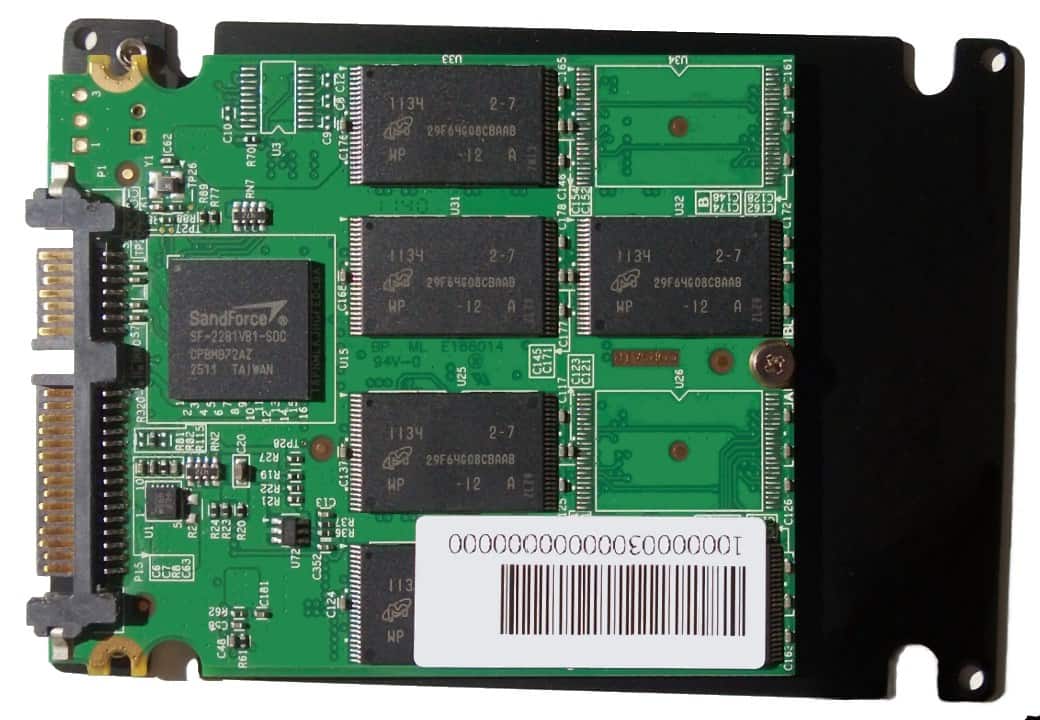
Inside every USB stick, the part you plug in and the part that stores your files are separate components. Data lives on microscopic NAND flash memory cells; a controller chip and a USB connector merely provide access. When USB drive damage occurs, it’s almost always the access path that fails — the connector, the controller, the board — while the NAND holding your files remains untouched.
It helps to understand what flash technology does for a USB drive: the same NAND that powers M.2 NVMe SSDs in laptops sits in your pocket-sized stick, storing charge in cells with no moving parts. That design is why flash drives shrug off drops that would kill a spinning disk — and why recovery focuses on reaching the flash directly: bypass the damaged connector or controller, read the raw NAND, reconstruct the files. Newer monolith drives — NAND, controller, and connector fused into one sealed chip, common in slim USB-C sticks from Kingston, Samsung, Toshiba, and most other brands — make that access harder, which is exactly why severe cases belong in a lab.
Why Severe USB Drive Damage Requires NAND-Level Recovery
Severe USB drive damage — dead controllers, surge-fried boards, snapped monoliths — leaves only one recovery path: reading the raw NAND flash directly. No software can talk to a controller that no longer exists. NAND data recovery on USB storage means physically extracting the memory chip, reading it raw, and rebuilding the file system from the extracted image.
This is USB NAND chip-off recovery: the flash chip is removed from the damaged board, read on specialized programmers, and its contents reassembled with error-correction and wear-leveling algorithms until files come back in their original form. On monolithic drives, where there is no separate chip to lift, we expose test points on the sealed package and read the NAND through the substrate itself. It’s precise work, but it yields the highest success rates in the industry for severe-tier damage, whether the drive rode in a pocket, a camera bag next to CompactFlash cards, or a keychain. Most chip-level recoveries complete within 1–3 business days after the drive reaches the lab. This is also the tier where choosing a specialist matters most — our dedicated USB flash drive recovery service handles broken connectors, dead controllers, and monolith chip-off work daily — Apple-formatted sticks, promotional giveaways, and drives built on the same NAND found in Crucial, Western Digital, and Seagate SSDs.
What Our Customers Say
Frequently Asked Questions About USB Drive Damage
No rung of the severity ladder is automatically a dead end — snapped connectors, cracked boards, water and fire damage all come back when the NAND survives. It’s the same chip-level work behind our most demanding recovery cases for government and enterprise clients, applied to your drive.
Recover Data From a Damaged USB Drive
Whatever rung of the severity ladder your drive is on, our engineers will tell you exactly which files are recoverable — free, no obligation, completely confidential.
Start My Free USB Recovery Evaluationor call (866) 857-5950 now
Related Recovery Services
If your USB drive — or any other device — has already failed, these are the services that get the data back: