

Ready to Recover Your Data?
At eProvided, we stand out as experts in recovering NAND data from virtually any device. NAND flash recovery is more critical than ever in our digital world. But what exactly does this involve? What’s a NAND chip, and how does it work? We’ll delve into the technology and examine the proven methods our team employs to recover your valuable data and files.
Understanding NAND Technology
It’s easy to overlook the tech powering our daily lives. We capture moments with smartphone cameras, enjoy games on tablets that rival old consoles, and browse endless photo libraries on computers. Modern devices deliver incredible convenience, largely thanks to advancements in NAND technology.
NAND Flash Recovery in Mobile Devices
Modern smartphones and tablets rely entirely on embedded NAND flash memory to store photos, videos, messages, application data, and operating system files. Unlike removable storage, mobile NAND chips are typically soldered directly to the device’s logic board, making recovery significantly more complex in the event of failure. For a deeper technical overview, see our article explaining how NAND flash memory works in everyday devices.
Common mobile NAND failure scenarios include devices stuck in boot loops, phones frozen on startup logos, failed firmware updates, exposure to liquid, and sudden power loss during active write cycles. In these cases, traditional software-based tools cannot access the storage at a logical level.
Our engineers specialize in smartphone data recovery using advanced chip-level techniques. By extracting raw data directly from damaged or inaccessible NAND flash, we reconstruct file systems outside the device to recover critical user data. Even when a phone will not power on or is not recognized by a computer, data can often still be recovered through direct NAND access. This process requires precision handling, proprietary tooling, and deep expertise in mobile storage architectures.

Memory Matters – Protect It with Expert Recovery.
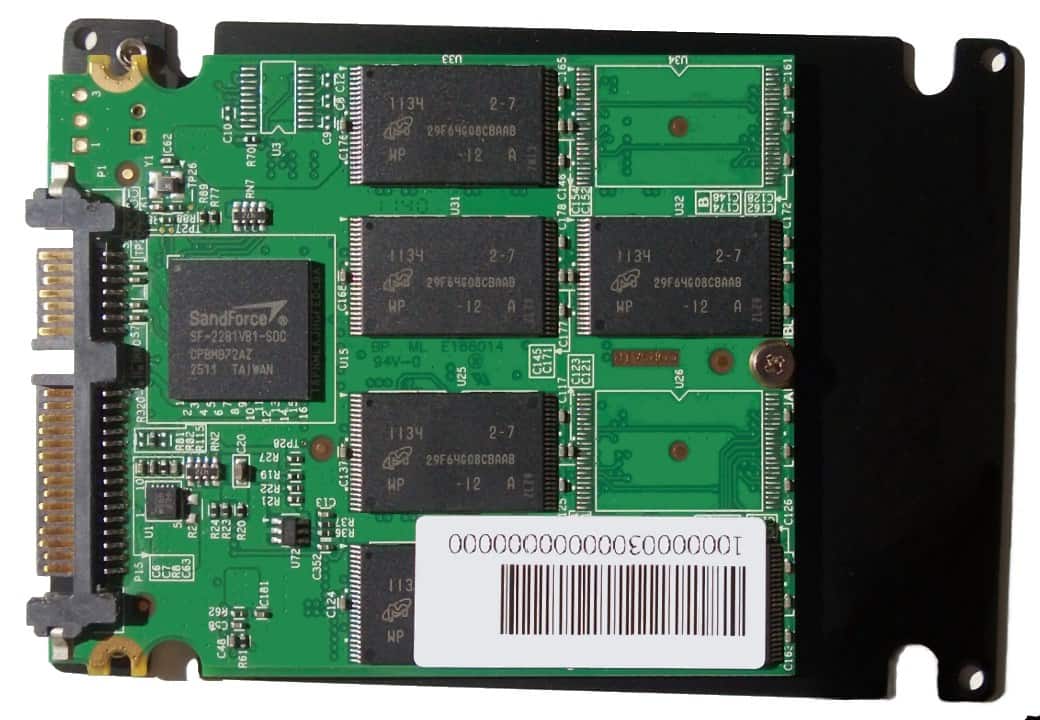
NAND flash microchips store essential data in devices like digital cameras, laptops, phones, tablets, USB drives, and Solid State Drives (SSDs). Gadgets rely on NAND flash memory for seamless, high-speed data management. Created for durability, NAND experiences gradual wear rather than sudden failure. You may notice a slowing performance, indicating it’s time for replacement. When that happens, upgrading to new memory ensures that things run smoothly.
As NAND innovations accelerate—driven by demand for powerful, affordable devices—storage capacities will soar. Imagine storing thousands more photos or videos on your phone in just a few years. However, with great capacity comes the risk of data loss from unexpected issues.
Common NAND failures include retention errors caused by charge leakage over time, which is often exacerbated by high temperatures or oxide degradation. Program disturbances from neighboring cell interference and power failures during writes can corrupt data too. Always back up regularly and update firmware to mitigate risks.
NAND Flash Recovery for SSDs
NAND powers faster, more reliable storage. Whether you’re a gamer, business owner, or everyday user, SSDs outperform traditional drives with higher capacity and lower energy use. Our engineers recover data from bad blocks and even deleted files.
SSDs aren’t immune to issues. Logical failures show as slow loads, crashes, “No boot device” errors, or read-only modes. eProvided handles these and more. Without moving parts, physical damage still occurs—think drops or surges. For damaged SSDs, we remove NAND chips and transfer data safely. Controller or logic board failures? We diagnose and resolve them. Interested in NAND fundamentals, check this out.
SSDs store data in NAND flash cells via interfaces like mSATA, NVMe, PCIe, or SATA (e.g., M.2 drives). We recover all form factors, from common SATA to high-speed PCIe in modern PCs. Our team efficiently restores deleted, corrupted, or missing data from any NAND SSD.
Common Causes of NAND Flash Failure
NAND failures often stem from wear-leveling issues, read/write problems, or environmental factors such as heat. For instance, over-programming can occur in worn-out cells, while file system errors resulting from abrupt shutdowns can lead to corruption. Prevention? Regular backups and avoiding extreme circumstances are valuable, but when failure occurs, professional recovery is crucial.
Expert NAND Data Recovery
We manage NAND flash recovery from any device at eProvided, alongside hard drive recovery solutions. Turnaround? Often 1-3 days after lab receipt, even for overwritten or formatted data. If your computer doesn’t recognize the drive, we can still extract files.
Our intricate process reconstructs data from NAND microchips using advanced algorithms—we reassemble your files just as they were. This also works for external hard drives.
No matter the damage, we recover corrupted or lost files, from essays to photo collections or videos. We charge only for new data retrieved—your satisfaction drives us. Ship your device, and we’ll take care of the rest.
Frequently Asked Questions About NAND Flash Recovery
What is NAND flash data recovery?
eProvided NAND flash data recovery retrieves lost or inaccessible data from NAND flash memory chips. These chips are found in smartphones, SSDs, USB drives, memory cards, and other digital devices. When standard access fails because of hardware damage or corruption, our engineers extract raw data from the NAND memory. We then reconstruct the original file system outside the device.
Can data be recovered if a device will not power on?
Yes, data can often be recovered even if a device won’t power on. In these situations, recovery doesn’t depend on the operating system or motherboard. Specialists access the NAND flash memory directly. They use chip-level extraction and forensic reconstruction techniques to rebuild the stored data.
Is NAND flash recovery possible after water or liquid damage?
NAND flash recovery is often possible after water or liquid damage. Moisture can harm controllers and power circuits. However, the NAND memory chips usually stay readable. Professional recovery aims to safely isolate the memory. This allows for data extraction before corrosion or electrical damage worsens.
Why do software recovery tools fail on NAND flash?
Software recovery tools often fail on NAND flash when logical access to storage is lost. This issue typically arises from controller failures, firmware corruption, encryption, or severe file system damage. Chip-level NAND recovery can overcome these problems. It works directly with raw memory data instead of relying on the operating system.
How long does NAND flash data recovery take?
NAND flash data recovery usually takes one to three business days after the device arrives. The recovery time can vary. It depends on the device type, the extent of the damage, encryption, and the complexity of the data reconstruction.
Samsung Galaxy S24 Ultra Data Recovery
We can recover from any type of storage, even smartphones. The Samsung Galaxy S24 Ultra has high-density embedded NAND flash storage. It includes advanced encryption and file system management. Data loss can happen for various reasons. These include firmware corruption, failed updates, and water exposure. Damage to the logic board or sudden power loss during writes can also cause loss. Recovery is challenging because the NAND is soldered to the board. It requires specialized chip-level access, not just software tools. These recoveries require our specialized tools and chip-level expertise.
Our engineers provide professional Samsung Galaxy S24 Ultra data recovery by extracting and decoding raw NAND flash data outside the device. Even when a phone will not power on, is stuck in a boot loop, or is no longer recognized by a computer, critical user data, such as photos, videos, messages, and documents, can often still be recovered using advanced forensic reconstruction techniques.
Signs of NAND Flash Failure
NAND chips reside inside all electronic devices, including cell phones and all other storage devices. Does your device exhibit any of the symptoms listed below? NAND flash failure may be the cause:
- Device stuck on the startup logo or in a boot loop
- Sudden data loss after an update or restart
- Phone or tablet not recognized by a computer
- Read-only storage or repeated file corruption
- Severe slowdown followed by total failure
- The device does not power on after exposure to liquid
When these symptoms occur, continuing to use the device can worsen data degradation. It is recommended to seek eProvided professional NAND flash recovery as soon as possible to maximize the chances of successful recovery.
Success Stories and Testimonials
Our success rate for NAND recoveries exceeds 95%, thanks to specialized techniques. Founder Bruce Cullen led NASA’s Helios data recovery from saltwater-soaked cards after weeks submerged. He fixed a NAND glitch on the Mars Rover, enabling data transmission to Earth. We’ve consulted on Mars missions and the Nancy Grace Roman Telescope.
Clients say: “Had a severely corrupted micro SD card. eProvided recovered the photos. Bruce and crew worked hard. Highly recommend.” – Anonymous, Trustpilot, Nov 20, 2025.
“I sent my damaged SSD; they retrieved everything. Great communication.”, Trustpilot, Oct 12, 2023.
For more insights, join our Reddit community.
Need NAND Flash Recovery Help?
With 25+ years of leading advanced data recovery, we serve high-profile clients using cutting-edge methods. Questions? Discuss your needs—call 866-857-5950. Ready to get your files back?
Start your case today for secure, fast results.
 Share on X
Written by an eProvided engineering department technician, a data recovery specialist with 25+ years, eProvided, renowned for key recoveries in NASA missions like Helios and the Mars Rover.